
How Long to Mix Cookie Dough in a Stand Mixer Without Overworking It
You’ll mix cookie dough just long enough for ingredients to come together—usually short bursts at low to medium speed so you don’t develop gluten and make cookies tough. Cream butter and sugar 2–3 minutes on medium, add eggs 20–30 seconds, then fold in flour on low for 10–20 seconds until just combined. Chill sticky dough or add a splash of milk if dry. Keep an eye on texture and you’ll get consistent results; more tips follow.
What This Guide Covers and Who It’s For
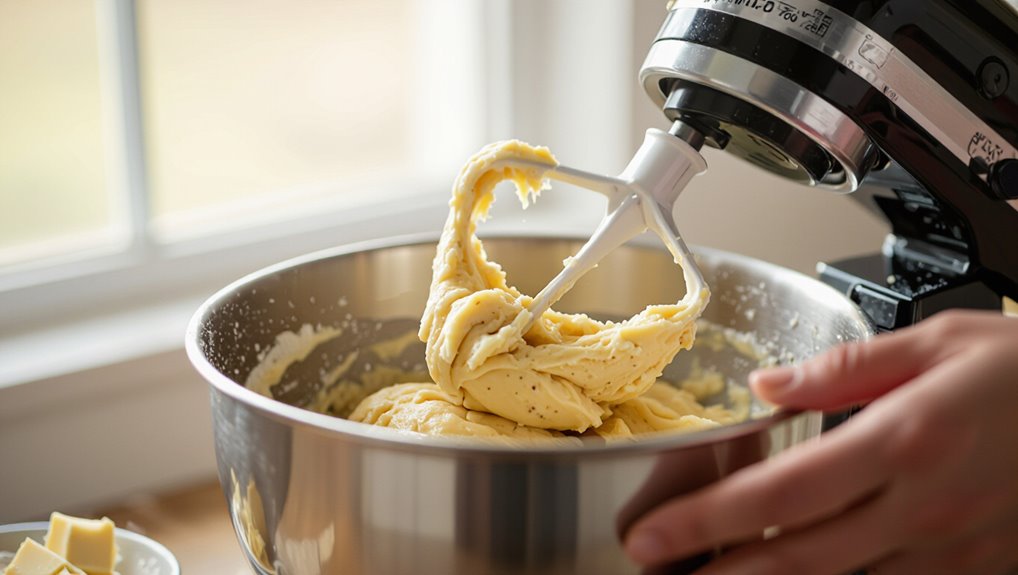
This guide explains how long to mix cookie dough, why mixing time matters for texture and spread, and how to adjust technique for different recipes and mixers.
You’ll find clear criteria for under- and over-mixing, who benefits (home bakers, recipe testers, and small-batch pros), and practical tips to save batches.
Use it to judge dough visually and by feel without guessing.
The Short Answer: Ideal Mix Times by Speed
When you measure mixing by speed, think in short bursts rather than set minutes: low speed (stir/1–2) usually takes 30–60 seconds to just combine wet and dry ingredients.
Medium (2–4) needs about 1–2 minutes to cream butter and sugar or to develop a smooth batter.
High (4–8) should be used only briefly—10–30 seconds—for tasks like whipping eggs or aerating meringue.
- Low: 30–60s
- Medium: 1–2min
- High: 10–30s
Why Mixing Time Shapes Cookie Texture
Because mixing controls how ingredients interact, it directly shapes whether your cookies spread, chew, or stay cakey. You’ll notice short mixing keeps dough dense and cakey, while slightly longer mixing encourages spread and chew by evenly distributing fats and sugars. Stop once ingredients are combined to preserve desired texture.
| Mixing Time | Texture | Tip |
|---|---|---|
| Short | Cakey | Don’t overmix |
| Moderate | Chewy | Mix until combined |
| Long | Thin | Avoid for cookies |
Mixer Speeds and Gluten Development
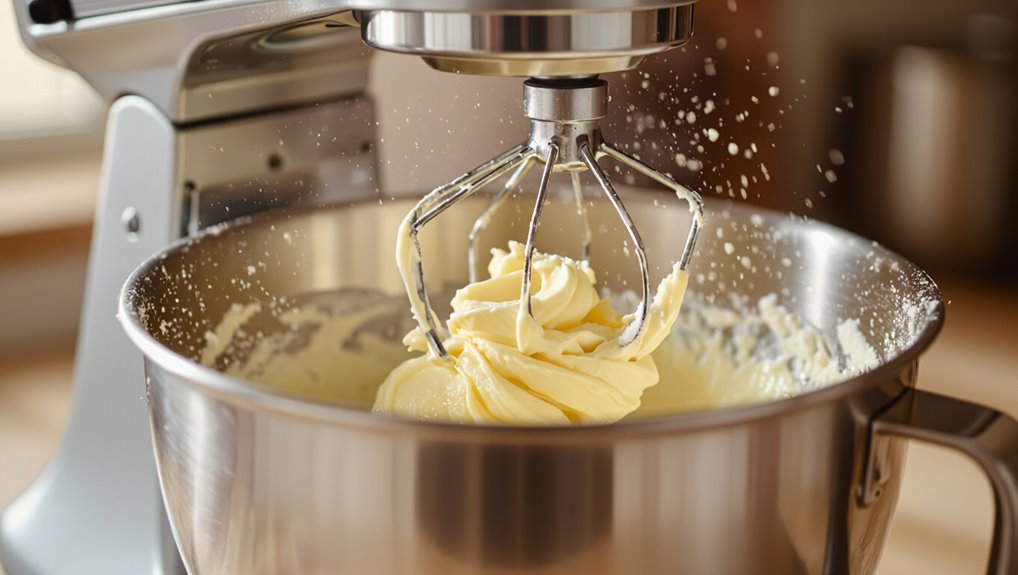
Although it might seem minor, the speed you use on your mixer has a big impact on gluten development: You’ll control structure and chew by choosing speeds carefully.
Try these guidelines:
- Slow (stir): minimal gluten, tender cookies.
- Medium (cream): balanced mixing, light chew.
- Fast (whip): more gluten, denser texture—use briefly to avoid overworking.
Ingredient Order to Avoid Overworking Dough
Start by whisking your dry ingredients together so they’re evenly distributed before anything wet touches them.
Cream the butter and sugar until light and just combined to trap air without overworking the fat.
Add the flour last and mix only until it disappears to keep the dough tender.
Dry Ingredients First
When you add the dry ingredients first, you create a buffer that keeps flour and leaveners from being overworked once the wet ingredients join the bowl.
You’ll control gluten development and mixing time by adding wet ingredients gradually.
Try this simple sequence:
- Whisk flour, salt, leaveners.
- Add dry to creamed fats briefly.
- Pour wet slowly, mixing low until just combined.
Creaming Butter And Sugar
A few quick turns of the mixer get you far: cream room-temperature butter and sugar just until they’re light and fluffy, about 2–3 minutes on medium speed, so you incorporate air without breaking down the fat structure. You’ll keep dough tender and avoid overmixing by stopping as soon as texture looks peppy.
| Texture | Time | Tip |
|---|---|---|
| Pale & fluffy | 2–3 min | Watch for ribboning |
| Slight gloss | 3–4 min | Don’t exceed |
| Soft peaks | — | Stop now |
| Dense | >4 min | Start over |
Add Flour Last
Put the flour in last so you can control how much mixing the dough needs and prevent gluten from overdeveloping.
You’ll add flour gradually on low speed, stopping when dough just comes together. This limits toughness and keeps cookies tender.
- Add flour slowly.
- Mix only until combined.
- Scrape bowl, check texture.
Creaming Butter and Sugar: How Long in a Stand Mixer
When creaming butter and sugar in a stand mixer, you’ll usually run the paddle on medium speed for about 2 to 5 minutes depending on butter temperature and mixer power.
You’ll know it’s properly creamed when the mixture is lighter in color, fluffy in texture, and has increased slightly in volume.
If it looks greasy or still dense, keep mixing in short bursts until you see those signs.
Creaming Time Range
Although you might expect a single magic number, the creaming time for butter and sugar in a stand mixer usually falls between 2 and 5 minutes, depending on butter temperature, mixer speed, and recipe goals.
You’ll adjust based on:
- Cold vs room-temp butter
- Low vs medium speed
- Lightness desired
Watch texture changes; stop once you hit your recipe’s target.
Signs Properly Creamed
After you’ve reached the rough time range, look for visual and tactile cues that tell you the butter and sugar are properly creamed. You’ll see pale, fluffy texture, and the mixture will hold soft peaks and become slightly airy. It should feel smooth, not greasy, and will dissolve sugar granules when rubbed between fingers.
| Visual | Tactile |
|---|---|
| Pale color | Smooth |
| Fluffy | Slightly airy |
Adding Eggs and Extracts Without Overmixing
If you add eggs and extracts too early or beat them in too long, you’ll develop excess gluten and end up with tough cookies; instead, stir them in just until combined so you keep the dough tender and the flavors bright.
- Add eggs one at a time, mixing briefly.
- Scrape bowl, then add extract.
- Stop as soon as mixture is homogenous to avoid overworking.
Low-Speed Mixing Times for Dry Ingredients
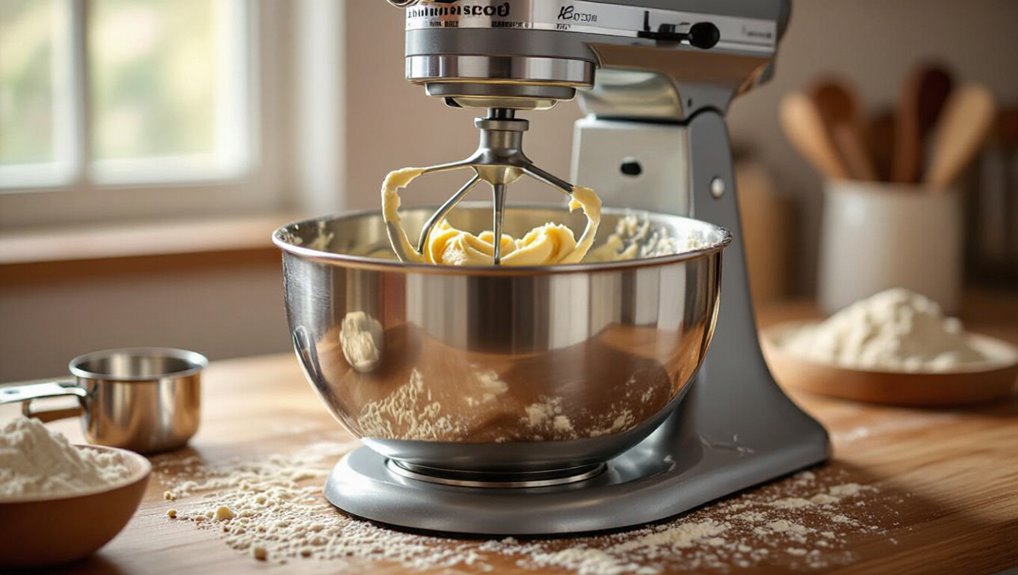
When you add flour, baking soda, and salt, keep the mixer on low so you’re just bringing the dry ingredients together.
Use short pulses rather than a continuous run to avoid overworking the gluten.
Stop as soon as the streaks disappear and the mixture looks uniform.
Combine Dry Ingredients Gently
Because dry ingredients only need to be blended until just uniform, use a low-speed setting and short pulses to avoid overworking the flour and leaveners.
You’ll prevent gluten development and lost lift. Follow these quick steps:
- Add flour, baking soda, salt.
- Mix on speed 1–2 for 5–10 seconds.
- Stop and scrape bowl; repeat once if needed.
Short Pulse Mixing
Keep pulses short and intentional: mix dry ingredients on low for just 3–10 seconds at a time, stopping to scrape the bowl between pulses so you get an even distribution without overworking the flour.
You’ll prevent gluten development and avoid dense cookies. Pulse, scrape, reassess—repeat until ingredients look uniform.
Stop as soon as streaks disappear; don’t keep mixing beyond brief, targeted bursts.
Signs Your Dough Is Overmixed : And Fixes
If your cookies spread too thin, feel tough, or have large tunnels inside, you’ve likely overmixed the dough.
You can fix it by gently folding in ingredients, chilling to relax gluten, or adding a bit more flour.
- Fold gently to redistribute.
- Chill 30–60 minutes before baking.
- Add 1–2 tbsp flour sparingly and test.
Timing Adjustments by Cookie Type: Chewy, Cakey, Crisp
When you want a specific texture—chewy, cakey, or crisp—adjusting mixing time and handling is as important as the recipe itself; small changes in stirring, chilling, and baking will steer your cookies toward the result you want.
You’ll shorten mixing for chewy, gently incorporate for cakey, and mix slightly longer plus flatten for crisp.
| Texture | Tip |
|---|---|
| Chewy | Undermix, chill |
| Cakey | Whip slightly |
| Crisp | Mix more, flatten |
How Ingredient Temperature Affects Mixing Time
Because ingredients at different temperatures behave differently, you’ll need to adjust mixing time to get the dough you want.
Cold butter slows emulsification; warm butter speeds it and can overwork flour. Chill or warm ingredients slightly to control texture.
Quick guide:
- Cold ingredients: mix gently, slightly longer.
- Room temp: standard mixing times.
- Warm: shorten mixing, watch gluten.
Paddle vs Whisk vs Dough Hook: Which to Use?
Which attachment should you reach for first depends on the dough’s purpose and texture you want to achieve.
Use the paddle for creaming butter and sugar and for most cookie batters—it’s gentle and prevents overworking.
Reach for the paddle to cream butter and sugar—ideal for most cookie batters and preventing overwork.
Choose the whisk only for aerated batters like meringue-based cookies.
Pick the dough hook for heavy, yeast-based doughs; it mimics hand-kneading without excess gluten development.
Practical Timing Checklist for Common Recipes
Now that you know which attachment to pick, let’s get specific about how long to run it for common cookie recipes.
- Chocolate chip: cream butter/sugar 2–3 min, add eggs 30s, fold flour 10–20s.
- Sugar cookies: 3 min creaming, 30–45s after egg, 15–25s with dry ingredients.
- Oat/chewy: 2–3 min creaming, 20–30s after mix-ins, brief 10–15s finish.
Quick Fixes for Common Mixing Mistakes
If your dough looks off, don’t panic—most problems have simple fixes you can do right at the bowl.
If it’s too dry, add a teaspoon of milk or an extra egg yolk and mix briefly.
If it’s too sticky, chill for 15–30 minutes.
If ingredients aren’t incorporated, fold gently by hand to avoid overworking the gluten.
Pro Tips for Consistent, Repeatable Stand-Mixer Results
When you want consistent, bakery-quality results from a stand mixer, start by calibrating speed and timing for your specific machine—mixers vary, so the manufacturer’s “medium” might be someone else’s “low.”
You’ll also:
- Use room-temperature ingredients and measure precisely.
- Scrape the bowl once mid-mix for even incorporation.
- Stop at the moment ingredients just combine to avoid overwork.
Frequently Asked Questions
Can I Mix Cookie Dough Entirely by Hand Instead of Using a Stand Mixer?
Yes — you can mix cookie dough entirely by hand. You’ll feel texture better, avoid overmixing, and can cream butter and sugar with a strong spoon or spatula; just stop when dough’s uniform and slightly tacky, not dense.
How Do High-Altitude Conditions Change Mixing Times or Techniques?
At high altitude, you’ll mix slightly less and more gently because drier air and lower pressure speed gluten development; reduce mixing time, add a touch more liquid, and chill dough longer to prevent overworking and spreading.
Are There Specific Flours That Tolerate Longer Mixing Without Toughness?
Yes — you’ll find low-protein flours like cake flour and pastry flour tolerate longer mixing without getting tough, while high-protein bread or whole wheat flours develop gluten quickly and make cookies chewier if mixed too long.
Can Chilling Dough After Slight Overmixing Restore Texture?
Yes, you can chill slightly overmixed dough to relax gluten and firm fats; it’ll improve texture but won’t fully reverse extreme overmixing, so expect some chewiness. Chill at least 30–60 minutes before shaping and baking.
How Should I Clean the Paddle and Bowl to Avoid Dough Residue Buildup?
Rinse off loose dough immediately, then wipe paddle and bowl with warm, soapy water using a soft sponge; scrub seams and crevices, dry thoroughly, and occasionally soak stubborn residue before re-washing to prevent buildup and odors.
Conclusion
You’ve got the basics to stop overmixing and start getting the cookie texture you want. Follow the timing guidelines, use the paddle, add ingredients in the right order, and watch the dough — it’ll tell you when it’s ready. If you’ve overworked it, try quick fixes like chilling or gently folding in add-ins. With a little practice and consistent routines, you’ll get predictable, tasty cookies every time.