
What Mixer Should You Use for Dough? Expert Picks for Every Baking Need
You should match the mixer to dough type and batch size: for heavy bread and high‑hydration doughs use a 4.5–6.5 qt stand mixer with a 500–1000+ W motor and a spiral hook, for small pizza, cookies or quick breads a compact 3–5 qt stand or a powerful hand mixer will do, and for frequent large batches pick an industrial machine with sealed gears and high torque. Keep an eye on speed control, bowl size, and build quality, and keep reading for detailed picks and tips.
How to Choose the Right Dough Mixer: Buyer’s Guide
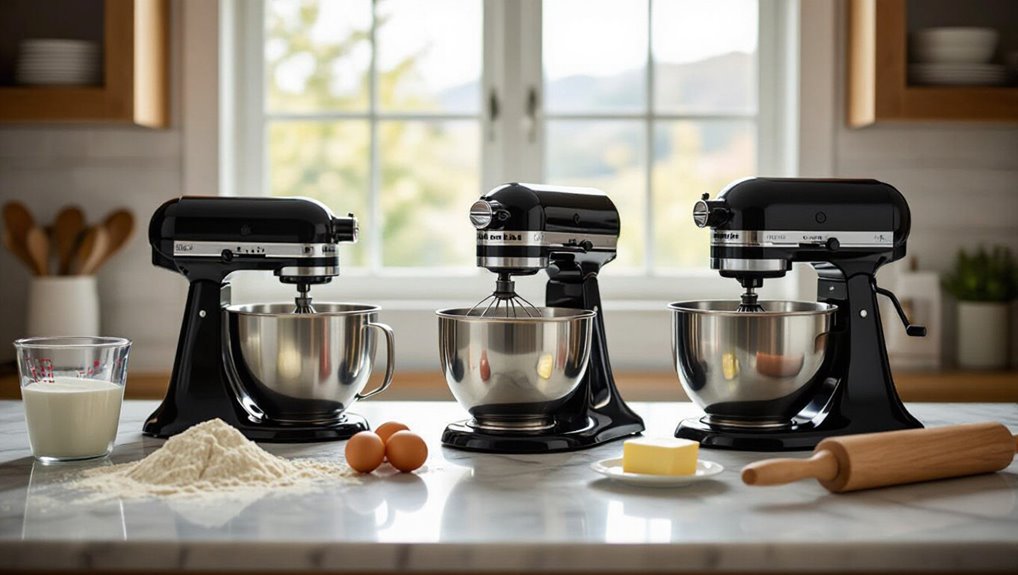
Choosing the right dough mixer comes down to matching capacity, power, and features to how you bake—so start by thinking about the types and volumes of dough you’ll make.
Evaluate motor wattage for heavy breads, bowl size for batch scaling, attachment versatility, and build quality.
Consider noise, speed control, and cleanup.
Prioritize durability and the specific doughs you actually make.
Quick Answer: Best Mixer for Each Dough Type
When you’re matching mixers to doughs, focus first on stand mixer power and bowl capacity so you can handle heavy, high-hydration or large batches without strain.
For lighter batters and small doughs, a hand mixer will do the job quickly and save space.
Next you’ll see which motor sizes and attachments work best for each dough type.
Stand Mixer Power & Capacity
If you bake frequently or tackle heavy doughs, match mixer power and bowl capacity to the task: higher wattage (or horsepower) and a 4.5–6.5‑quart bowl handle large loaves and stiff bread doughs without straining, while lighter mixers with 300–500 watts and 3–4.5‑quart bowls suit cakes, cookies, and small pizza doughs. Choose 500–1000+ W for regular bread; 4.5–6.5 qt for family batches.
| Use | Recommendation |
|---|---|
| Heavy bread | 500–1000+ W |
| Large batches | 5–6.5 qt |
| Everyday baking | 300–500 W |
| Small batches | 3–4.5 qt |
| Durability | Metal gears, cord rating |
Hand Mixer For Light Doughs
A lightweight hand mixer will handle most light doughs—think quick bread batters, cookie doughs, and soft pizza or focaccia mixes—without the bulk of a stand mixer, and you’ll get faster cleanup and easier storage.
Choose models with at least 250–300 watts, variable speeds, and dough hooks for gentle mixing. You’ll save counter space and still achieve smooth, even batters for everyday baking.
Motor Power: Why It Matters for Bread and Pizza
Muscle matters: you’ll need a mixer with enough motor power to handle stiff, high-hydration doughs without overheating or stalling.
Choose based on dough type and frequency; stronger motors reduce kneading time and strain.
Consider these factors:
- Wattage and torque for dense, cold doughs
- Continuous duty rating for regular baking
- Heat management and cooling features
Bowl Capacity: Sizing for Batch Volume
Now that you’ve matched motor strength to dough type, pick a bowl size that fits how much you bake: small 3–4 quart bowls work for occasional single loaves or small batches, 5–7 quarts suit home bakers making multiple loaves or pizza dough, and 8+ quarts handle large batches or commercial needs.
Choose a bowl allowing room for rising and thorough mixing without overflow; consider storage and counter space.
Attachments That Actually Knead Dough Well
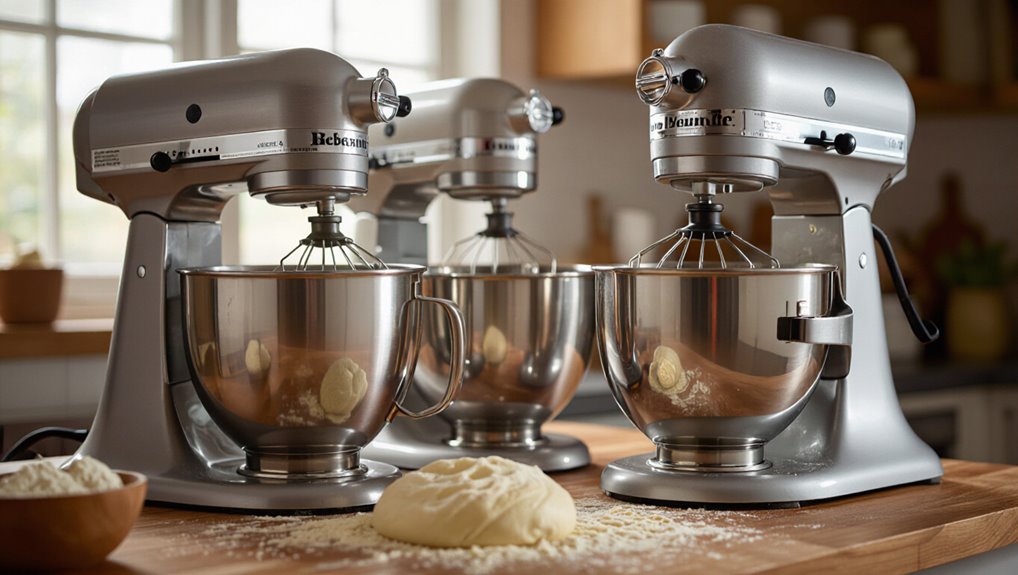
When you’re choosing attachments that actually knead dough well, prioritize a spiral dough hook for heavy, elastic doughs and a sturdy flat beater for softer mixes.
You’ll also want a stainless steel bowl to handle long kneading without warping or retaining odors. These choices make a noticeable difference in dough texture and mixer longevity.
Spiral Dough Hook
A spiral dough hook gives you the closest thing to hand-kneading in a mixer, because its corkscrew shape folds and stretches dough efficiently without overworking it.
You’ll get smooth, elastic gluten development faster and with less heat buildup than with standard hooks. You’ll appreciate consistent results, shorter knead times, and gentle handling for high-hydration doughs.
- Faster gluten development
- Less heat buildup
- Ideal for sticky, wet doughs
Flat Beater Attachment
If you like the spiral hook for high-hydration or sticky doughs, the flat beater offers a different kind of kneading that suits many home bakers’ everyday needs.
You’ll use it for firmer doughs, mixing butter and flour, and developing gluten without overworking. It provides even folding and shorter mix times, is easy to clean, and prevents excessive air incorporation for better crumb.
Stainless Steel Bowl
Stainless steel bowls give you a sturdy, nonreactive surface that helps attachments actually knead dough well. Their weight keeps the mixer stable and their smooth interior prevents dough from sticking, so the hook or beater can work efficiently without repeated scraping.
You’ll notice faster gluten development, easier cleanup, and consistent temperature control.
- Durable, nonreactive
- Stable, heavy base
- Smooth, easy-clean surface
When a Handheld Mixer Is Enough
One or two pounds of dough? You can often stick with a handheld mixer for small batches.
It handles light bread, dinner rolls, and quick pizza dough if you don’t mind occasional hand kneading. Use dough hooks designed for your model, work in short pulses to avoid overheating, and watch gluten development.
Upgrade only when you need larger, heavier batches or long kneading.
Tilt‑Head Stand Mixers: Best for Casual Bakers
When you find yourself making dough more often or want a hands-off option for small to medium batches, a tilt-head stand mixer makes mixing and kneading effortless.
You’ll appreciate easy bowl access, versatile attachments, and compact storage. It’s ideal for home bakers who don’t need huge capacity but want reliable results.
- Easy tilt access
- Space-saving design
- Suitable for 2–6 loaves
Bowl‑Lift Mixers: Why Pros Prefer Them
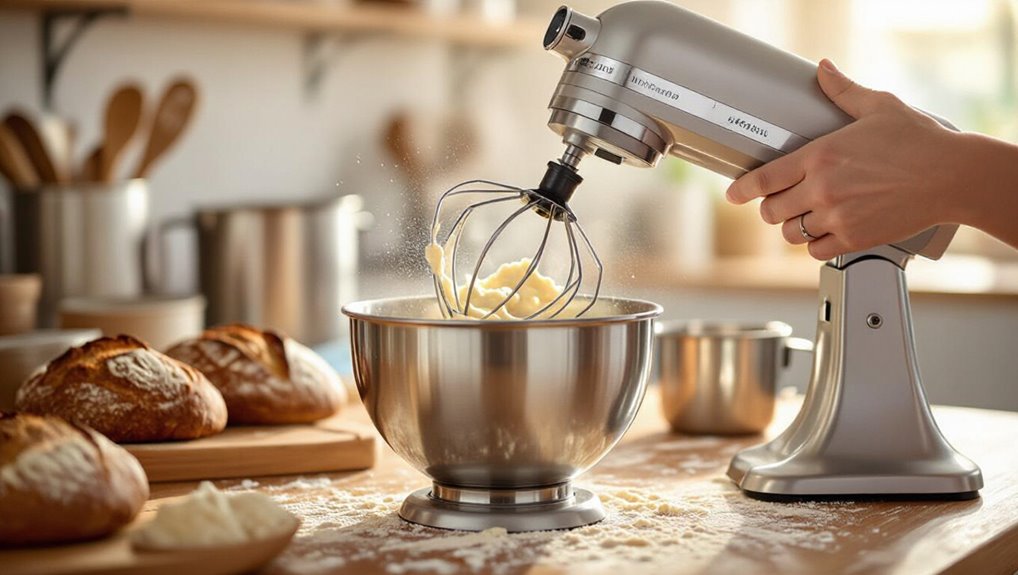
Many professional bakers choose bowl‑lift mixers because they handle large, dense doughs with steady power and minimal fuss.
You’ll appreciate the secure, stationary bowl and rugged motor when kneading heavy bread or enriched doughs. Controls are straightforward, attachments stay firm, and cleanup is efficient.
Choose a reliable model with adequate capacity and stable construction to keep batches consistent and reduce operator fatigue.
Heavy‑Duty & Commercial Mixers for Frequent Large Batches
When you’re running frequent large batches, you’ll want a mixer with industrial motor power that keeps speed under heavy loads.
Check capacity and bowl size to match batch quantities so you aren’t overworking the machine or wasting space.
Look for commercial‑grade durability features—sealed gears, heavy cast‑iron construction, and serviceable parts—to keep production running.
Industrial Motor Power
For frequent, large-batch work you’ll want an industrial motor that’s built to run hard and run long: think high continuous horsepower, robust gearing, and thermal protection to prevent overheating during back-to-back mixes.
You’ll choose motors for reliability, serviceability, and consistent torque.
- Prioritize continuous horsepower and torque
- Guarantee thermal overload protection and cooling
- Check modular, serviceable components for uptime
Capacity And Bowl Size
Pick a bowl that matches the batch sizes you actually make: too small and you’ll overwork the mixer or need multiple runs, too large and you’ll waste energy and space. Choose capacity for typical dough weight, allow headroom for rising, and match bowl shape to attachment reach.
| Batch Size | Bowl Volume | Typical Use |
|---|---|---|
| Small | 4–6 qt | Home prep |
| Large | 20–60 qt | Frequent big batches |
Commercial Durability Features
Because you’ll be running heavy loads day after day, choose mixers built with reinforced gears, high-torque motors, and industrial-grade seals.
You’ll want materials and serviceability that withstand constant use, reduce downtime, and simplify maintenance. Consider these features when selecting a commercial model:
- Cast-iron or stainless-steel gearbox and housing
- Variable-speed, high-torque motor with thermal protection
- Easily replaceable parts and accessible service panels
Best Mixers by Dough: Cookies, Brioche, Sourdough, Pizza, Pastry
Whether you’re making crisp cookies, pillowy brioche, tangy sourdough, chewy pizza, or delicate pastry, choosing the right mixer changes how the dough develops and how much hands-on work you’ll do. Pick a paddle for cookies, a heavy-duty stand for brioche, a slow fold for sourdough, strong power for pizza, and gentle speed for pastry.
| Dough | Mixer type |
|---|---|
| Cookies | Paddle |
| Brioche | Heavy-duty stand |
| Sourdough | Slow-speed stand |
| Pizza/Pastry | High-torque / Low-speed gentle |
Budget Mixers That Reliably Handle Basic Doughs
If you’re on a budget, compact stand mixers give you the power and stability to handle basic doughs without taking up much counter space.
You can also opt for a heavy-duty hand mixer with dough hooks if you need something more portable and affordable.
Both choices will save money while still mixing cookie, pizza, and simple bread doughs reliably.
Compact Stand Mixers
Compact stand mixers give you reliable dough-mixing power without the bulk or expense of professional machines.
You’ll get steady speed control, sturdy dough hooks, and a small footprint ideal for smaller kitchens.
Choose models with decent motor torque and a 3–5 quart bowl to handle everyday bread or pizza doughs.
- Good torque for kneading
- 3–5 quart capacity
- Durable dough hooks
Hand Mixer Options
Hand mixers offer a lightweight, budget-friendly way to mix basic doughs like pancake batter, quick breads, and small pizza crusts without needing a bulky stand mixer.
You’ll want one with at least 200–300 watts, multiple speeds, and beater attachments.
It won’t handle heavy bread or large batches, but it’s perfect for quick prep, easy storage, and occasional doughs when you don’t need heavy power.
Feature Checklist: Speeds, Torque, Build, and Warranty
When choosing a mixer, focus on speeds, torque, build quality, and warranty because these determine how well the machine handles different doughs and how long it’ll last;
you’ll want variable speeds for control, strong low-end torque for heavy doughs, a robust metal build for durability, and a clear warranty that covers motor and gearbox issues.
- Variable speeds for precision
- High torque at low RPMs
- Metal construction and solid warranty
Common Mixing Mistakes and How the Right Mixer Prevents Them
Those features don’t just affect longevity—they help you avoid common mixing mistakes that wreck texture or waste ingredients.
You’ll prevent under- or over-mixing with consistent speeds and torque, avoid overheating with proper motor cooling, and stop ingredient fallout using secure bowls and agitation patterns.
A steady planetary action and reliable speed control keep gluten development and aeration predictable so your dough turns out right every time.
How to Test a Mixer Before You Buy (In‑Store and Online Checks)
Curious how a mixer will perform under real kitchen conditions? Try it in person or vet it online: check motor sound, test with dough or ask staff about torque, and inspect construction.
Online, read hands-on reviews, watch video tests, and confirm warranty.
- Listen for strain under load
- Look for stable base and metal gears
- Verify real dough performance videos
Frequently Asked Questions
Can a Mixer Affect Sourdough Starter Activity or Fermentation Timing?
Yes — a mixer can affect starter activity and fermentation timing. If you overmix or heat dough, you’ll speed yeast and bacterial activity; gentle mixing preserves structure and temperature, so you’ll control fermentation and flavor development more predictably.
How Do Mixers Impact Gluten Development Versus Hand-Kneading?
Mixers develop gluten faster and more consistently than hand-kneading, so you’ll get a stronger, more elastic dough quicker; they can risk overworking, while hand-kneading gives you more tactile feedback and gentle control over structure.
Are There Mixers Designed Specifically for Low-Fat or Gluten-Free Doughs?
Yes — you can get mixers tailored for gluten-free or low-fat doughs. They’ll offer slower speeds, gentle attachments, and programmable cycles so you’re not overworking delicate batters, and you’ll achieve consistent, reliable results.
What Maintenance Schedule Prevents Motor Burnout With Heavy Doughs?
You should run heavy-dough sessions in short bursts, let the motor cool between batches, clean and inspect vents after each use, change grease and belts per manual, and schedule professional service annually to prevent motor burnout.
Can a Mixer Be Safely Used With Metal Bowls in a Dishwasher?
Yes, you can usually wash metal bowls in the dishwasher, but check your mixer manual first; some finishes or welded seams can corrode, and high heat or detergent may dull polished surfaces or damage nonstick coatings over time.
Conclusion
You’ve got options, and the right mixer comes down to power, capacity, and attachments that match your dough habits. Pick higher wattage and planetary action for heavy bread and pizza dough; smaller, budget-friendly stand mixers or powerful hand mixers work fine for pastries and cookie dough. Check build quality, warranty, and user reviews, and test torque and noise if you can. Choose what fits your batch size and baking frequency, and you’ll knead less effort for better results.


