Can You Use a Mixer in a Glass Bowl Safely? Tips, Risks, and Best Practices
You can safely use a mixer in a glass bowl if you pick sturdy, heat‑resistant glass, avoid sudden temperature changes, and start mixing on low so the beaters stay centered. Inspect for chips or hairline cracks, stabilize the bowl on a non‑slip surface, and pause if it vibrates or the mixture feels heavy. For tough doughs, consider metal or silicone instead. Keep these precautions in mind, and you’ll find practical tips and deeper guidance ahead.
Quick Answer: Is It Safe to Mix in a Glass Bowl?
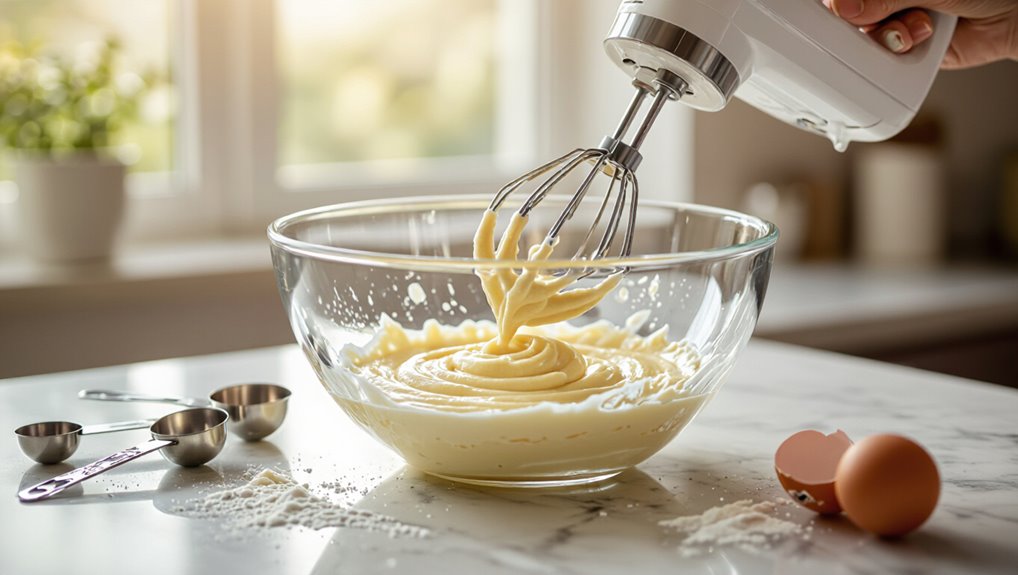
Wondering if it’s safe to mix in a glass bowl? You can, if you choose sturdy, oven-safe glass and avoid extreme temperature changes.
Keep beaters centered, start slow, and don’t press the bowl with the mixer. Inspect for chips or cracks; they weaken glass.
For heavy-duty mixing or high speeds, consider alternatives to reduce risk and protect your bowl.
How Glass Bowls Behave Under Mixer Stress
If you follow the basic precautions—sturdy, oven-safe glass, centered beaters, and gentle speed—you’ll reduce many risks, but it helps to understand how glass actually responds to the forces a mixer creates. You’ll feel vibration, flex, and pressure transfer; heavier mixtures amplify stress. Monitor for wobble, avoid off-center loading, and stop if you see movement.
| Force | Effect | Action |
|---|---|---|
| Vibration | Flexing | Slow speed |
| Pressure | Local stress | Center beaters |
| Impact | Cracks | Stop mixing |
Shattering, Chipping, and Thermal Shock Risks
Because glass can fail suddenly when stressed or heated unevenly, you should treat shattering, chipping, and thermal shock as real hazards when using a mixer in a glass bowl.
Avoid striking the bowl with beaters, don’t overload the mixer, and never transfer very hot or very cold ingredients rapidly.
Inspect for hairline cracks and discard any compromised bowl immediately to prevent injury and contamination.
When Glass Bowls Are Safe to Use
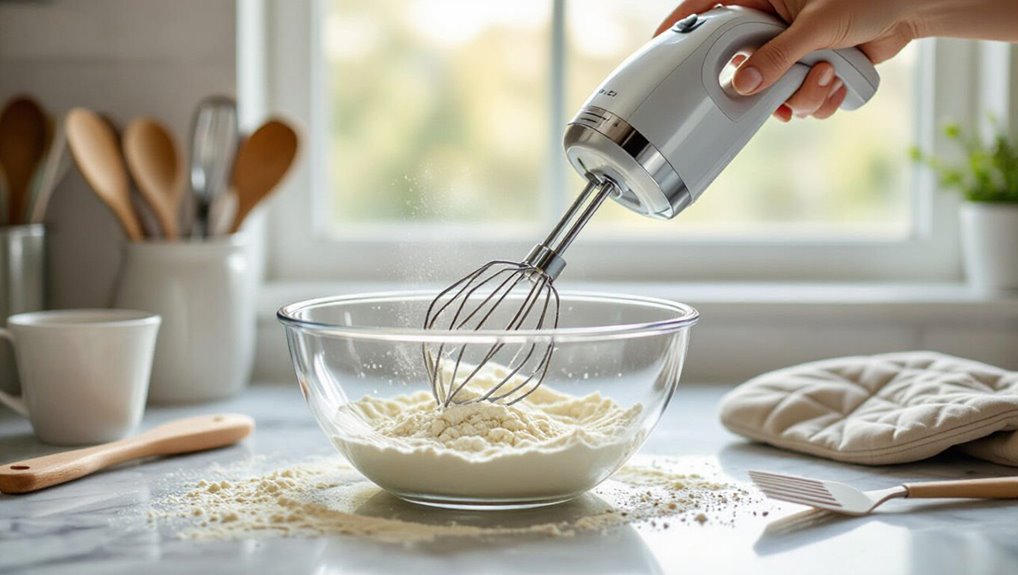
Check the bowl’s heat resistance rating to make sure it can handle both the ingredients and any heat from your mixer or attachments.
Choose a bowl size that gives your mixer room to operate without tipping, and set it on a stable, non-slip surface.
Also confirm the bowl is compatible with your appliance model and accessories before you start.
Heat Resistance Rating
When you’re choosing a glass bowl for mixing hot ingredients, look for its heat resistance rating—usually listed as a maximum temperature or described as “thermal shock resistant”—so you know whether it can handle hot liquids, oven use, or rapid temperature changes without cracking.
Check manufacturer specs, avoid exceeding the listed temperature, and let bowls cool gradually; tempered glass offers better protection.
Bowl Size And Stability
Pick a bowl size that matches the task and set it on a stable, non-slip surface before you start mixing. Use a deep bowl for high-volume beating and a wider one for folding. Keep weight manageable and avoid overfilling. Check rim thickness and sit it against a damp towel to prevent sliding.
| Situation | Recommendation |
|---|---|
| High volume | Deep, roomy bowl |
| Light mixing | Shallow, wide bowl |
Intended Appliance Compatibility
After you’ve settled on the right bowl size and secured it, make sure the glass bowl is actually designed to work with the appliance you’ll be using.
Check mounting, rim fit, and heat tolerance so vibrations won’t crack the glass. Confirm compatibility by manufacturer specs and testing at low speed.
- Manufacturer-approved
- Stable mounting surface
- Appropriate heat rating
- No direct motor contact
Hand vs. Stand Mixers: How Risk Changes
When you use a hand mixer with a glass bowl, you’re responsible for keeping the beaters steady so the bowl doesn’t tip or slip.
A stand mixer reduces that stability risk by holding the bowl in place, but its greater power means you need finer speed control to avoid splashing or stressing the glass.
Compare how much control and force each tool applies before you start mixing.
Hand Mixer Stability
Although both hand and stand mixers can turn ingredients into a smooth batter, their stability and risk profile differ enough that you should choose based on the task and your comfort level.
You’ll find hand mixers require active steadiness; you control angle and pressure. Consider:
- Grip strength and wrist fatigue
- Bowl movement on countertops
- Beater splash risk with glass edges
- Temporary pauses to reset position
Stand Mixer Power Control
Shifting from hand mixers’ need for steady hands and bowl control, consider how power control changes the risk picture with stand mixers.
You get consistent speed, stronger torque, and hands-free stability, but higher power can fling batter if you start too fast.
Always begin low, use splash guards, and monitor attachments; gradual increases and secure bowl seating minimize glass stress and splatter risk.
Bowl Shape and Size That Reduce Vibration
A rounded, deeper glass bowl will cut down on vibration because its curved walls help disperse the mixer’s energy more evenly across the surface; you’ll want a bowl that’s neither too shallow nor excessively large for the mixer head.
- Choose a bowl diameter matching the mixer’s beaters
- Prefer heavier glass for dampening
- Avoid thin rims that flex
- Guarantee stable base contact with countertop
Mixing Speeds, Attachments, and Techniques to Protect Glass
Start on the lowest speed and only raise it as ingredients combine and the bowl stays steady.
Use the correct attachment—beaters for batters, whisks for aeration, and paddles for thicker mixes—to avoid hitting the glass.
Move the mixer gently and keep it centered to reduce stress on the bowl.
Start Slow, Increase Gradually
When you begin mixing in a glass bowl, set the mixer to the lowest speed and keep it there until the ingredients start to combine; increasing power too quickly can jostle the bowl or fling contents against the sides.
You’ll then raise speed incrementally, watching for vibration and splash.
- Start slow for dry and wet blends
- Pause if glass vibrates
- Use short bursts to build speed
- Stabilize the bowl with a damp cloth
Use Proper Attachments
Although it might be tempting to grab whatever beaters you have, choose the right attachments and speeds to keep glass bowls safe.
Use flat beaters or paddles for thicker batters, avoiding whisking attachments that splash or press hard.
Start on low, increase slowly, and stop to scrape.
Securely fit attachments and don’t force frozen or heavy mixtures that strain glass.
How to Inspect a Glass Bowl for Hidden Damage
Before you mix anything, give the glass bowl a careful once-over for chips, hairline cracks, cloudiness, or repairs you might’ve missed—hold it up to the light, run your fingers along the rim, and turn it slowly to spot irregularities that could worsen under vibration.
Check for:
- Tiny chips along the lip
- Faint stress lines
- Uneven thickness or warping
- Discolored or cloudy patches
What to Do If a Bowl Cracks or Breaks Mid-Mix
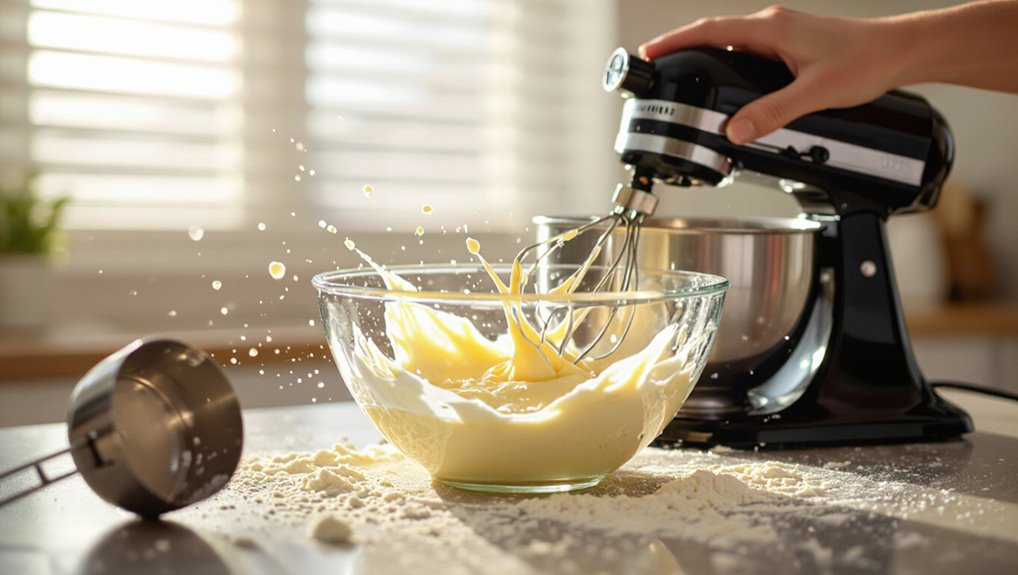
If the bowl cracks or shatters while you’re mixing, stop the mixer immediately and unplug it before you do anything else; vibrating equipment can fling glass and make cuts worse.
Wear thick gloves, clear everyone away, and scoop solid food into a safe container without dragging glass.
Use a damp paper towel to pick up tiny shards, then vacuum and wipe with a wet cloth.
Use a damp paper towel to gather tiny shards, then vacuum and finish wiping with a wet cloth.
Inspect hands and cut skin if needed.
Safer Glass Bowl Types for Mixing (Tempered, Borosilicate)
After dealing with a cracked or shattered bowl, you’ll want to choose glass that resists breakage in the first place.
Pick tempered or borosilicate for mixing; both tolerate shocks and temperature changes better than regular glass.
Consider features before buying:
- Tempered: stronger, shatters into granules
- Borosilicate: thermal shock resistant
- Thickness: adds durability
- Manufacturer rating: check limits
Non-Glass Alternatives and Why Choose Them
When you want durability and peace of mind while mixing, consider non-glass bowls like stainless steel, heavy-duty plastic, or silicone; they won’t shatter if dropped and often weigh less for easier handling.
You’ll prefer stainless for heat resistance and stability, plastic for lightweight tasks, and silicone for flexibility and easy scraping.
Each resists impact better than glass and reduces breakage risk.
Picking a Bowl for Heavy Doughs and High-Torque Mixing
For heavy doughs and high-torque mixing, you’ll want a thick, sturdy glass bowl that can stand up to stress without flexing.
Check for a stable, non-slip base so the bowl won’t wobble or shift under force.
Also pick glass rated for temperature shock resistance to avoid cracks from rapid changes in heat or cold.
Glass Bowl Thickness
Choosing a bowl with sufficient thickness matters most when you’re tackling heavy doughs or using a high-torque mixer, because thin glass can flex, crack, or transmit vibrational stress that shortens its life.
Pick tempered or borosilicate glass and inspect for chips.
Consider:
- Minimum thickness around 3–5 mm for sturdier bowls
- Even wall thickness to distribute stress
- Reinforced rims to resist cracks
- Replace if hairline fractures appear
Bowl Stability Base
1 solid base keeps your mixer steady under heavy loads, so pick a bowl with a wide, flat bottom and low center of gravity to prevent tipping or wobble when you knead dense doughs. You’ll also want non-slip pads, thick glass, and compatible mixer clamps for torque control.
| Feature | Benefit | Tip |
|---|---|---|
| Wide base | Stability | Test on countertop |
| Non-slip | Grip | Use rubber mat |
| Thick glass | Strength | Match mixer size |
Temperature Shock Resistance
When you’re mixing heavy doughs at high torque, pick glass that resists temperature shock so sudden changes—like adding warm water to a cold bowl or running a hot rinse—don’t crack or shatter; tempered or borosilicate glass is best because it handles rapid temperature shifts and retains structural integrity under stress.
- Choose borosilicate for best thermal shock resistance
- Avoid thin, decorative glass
- Inspect for chips or hairline cracks
- Pre-warm slightly before adding hot liquids
Storage and Handling Tips to Prevent Impact Damage
Because glass bowls chip or shatter from sudden knocks, you should store and handle your mixer with cushioning and clear placement rules.
Keep the bowl on padded shelves or in cabinet sections with non-slip liners. Don’t stack heavy items above it.
Set the mixer down gently, secure detachable parts, and use a dedicated spot to avoid collisions during busy prep or when reaching for other tools.
Quick Pre-Mix Safety Checklist
Before you plug in the mixer, run a quick checklist to confirm the bowl, paddle or whisk, and splash guard are clean, dry, and properly attached.
Check seating, speed settings, and cord position before starting. Inspect glass for chips. Balance ingredients and avoid overfilling.
- Verify bowl sits snugly
- Confirm attachment clicks
- Scan for hairline cracks
- Set low speed to start
When to Replace Your Bowl vs. Repair
If a crack, deep scratch, or chip compromises the bowl’s integrity, replace it rather than risk a repair; glass damage can hide stress points that grow under mixing stress and heat.
For minor surface scratches or small cosmetic chips that don’t penetrate, you can keep using the bowl cautiously.
Always discard any bowl with unknown impact history or visible internal fractures.
When to Consult a Professional About Bowl Safety
When you notice persistent wobbling, unexplained micro-cracks, or the bowl behaving oddly under normal mixing speeds, consult a professional to assess whether it’s safe to keep using it.
You should also seek help if you’re unsure about repairs, the bowl endured heat shock, or impact damage.
- Visible hairline fractures
- Vibration beyond normal
- Recent drops or bangs
- Heat-induced crazing
Frequently Asked Questions
Can Glass Bowls Leach Chemicals Into Acidic Ingredients During Mixing?
No, glass bowls generally won’t leach chemicals into acidic ingredients during mixing; you can safely use them, assuming the glass is intact and lead-free, but avoid damaged or low-quality decorative glass to prevent contamination.
Can Vibrations Cause Microfractures Over Long-Term Repeated Use?
Yes — repeated mixer vibrations can eventually cause microfractures in glass bowls, especially if they have preexisting flaws or receive frequent high-speed use; you should inspect for hairline cracks and replace damaged bowls promptly to avoid failure.
Are Glass Bowls Dishwasher-Safe After Being Involved in a Crack Incident?
No, you shouldn’t; dishwasher cycles can worsen hidden cracks and cause sudden failure. If you see any fracture or suspect microfractures, discard the bowl or stop using it for food; replace it to avoid injury and contamination.
Can Using a Silicone Mat Under the Bowl Fully Prevent Slippage?
No, a silicone mat won’t fully prevent slippage; it’ll greatly reduce movement and cushion the bowl, but you should still secure the bowl, avoid overloading or high speeds, and inspect for cracks to guarantee safe mixing.
Do Glass Bowls Affect Ingredient Temperature Compared to Metal or Ceramic?
Yes — glass affects ingredient temperature differently than metal or ceramic: it warms and cools slower than metal but faster than thick ceramic, so you’ll notice milder temperature shifts, impacting whipping, chilling, and heat retention modestly.
Conclusion
You can usually use a glass bowl with a mixer, but take care—glass can chip, crack, or shatter from impact, thermal shock, or heavy beaters. Use sturdy, thick glass, avoid high-speed scraping, and don’t run a mixer unattended. Inspect for nicks, store to prevent knocks, and replace any bowl with visible damage. If you’re unsure about a crack or need to mix very stiff doughs, use metal or plastic bowls or consult a pro for safety guidance.