
How Many Watts Is a KitchenAid Mixer? Power Ratings Explained for Every Model
KitchenAid mixers span roughly 250 to 1,200 watts, so you’ll pick power by what you mix: minis and tilt‑head models sit around 250–325W for light batters, Artisan/classic types are about 300–500W for everyday baking, and heavy‑duty bowl‑lift or pro units run 500W+ for dense doughs and big batches. Wattage shows electrical power and helps estimate torque, but gearing and amps matter too — keep going to see model‑specific recommendations and circuit tips.
KitchenAid Mixer Watts: Quick Answer and Recommendations
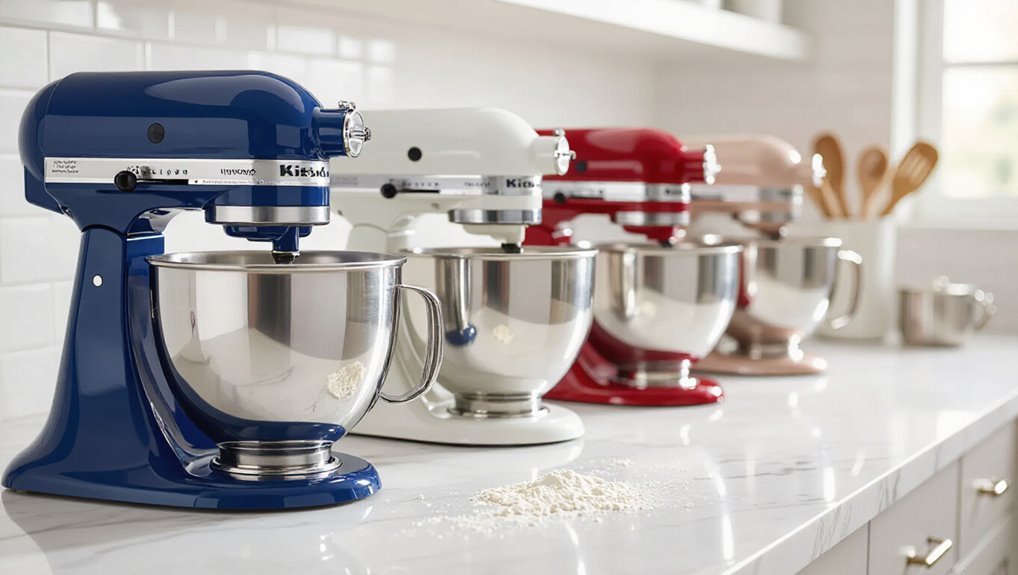
Wondering how many watts your KitchenAid mixer uses? You’ll usually see models rated between 250 and 1,200 watts.
Household tilt-head and mini mixers sit lower, while heavy-duty bowl-lift and professional lines hit higher wattages.
Tilt-head and mini models use lower watts; heavy-duty bowl-lift and professional mixers demand much higher power.
Pick a wattage matching tasks you tackle: low for light mixing, mid for regular baking, high for dense doughs.
Higher watts give motor durability and consistency.
What Wattage Measures in a Mixer Motor
Wattage tells you how much electrical power the mixer’s motor uses and how much work it can do: higher watts mean the motor can deliver more torque for heavy doughs and keep speed under load, while lower watts suit light batters and everyday mixing.
It indicates energy consumption and practical capability, helping you match a mixer to tasks like kneading, whipping, or continuous heavy use.
How KitchenAid Reports Power (Amps, HP, Watts)
Because KitchenAid wants specs that fit different buyer needs, they report motor power in amps, horsepower, and sometimes watts—each tells you something different about performance and how the mixer will handle loads.
You’ll see amps on consumer models (electrical draw), horsepower for marketing and relative mechanical strength, and watts occasionally listed; compare all three to match a model to your mixing habits.
Why Wattage Isn’t the Whole Story: Torque, Gearing, Efficiency
Although the wattage number gives you a quick sense of electrical power, it doesn’t tell you how hard the mixer will actually push through heavy doughs or thick batters. You should consider torque, gear ratios, and motor efficiency—these determine real mixing strength and heat buildup under load.
| Factor | Impact |
|---|---|
| Torque | Resistance handling |
| Gearing | Speed vs. force |
| Efficiency | Heat, runtime |
| Design | Shaft stability |
Mixer Types: Tilt-Head vs. Bowl-Lift Power Differences
Understanding torque, gearing, and efficiency helps you compare raw power to real-world performance, but mixer layout also changes how that power’s delivered.
Tilt-heads give easier access and slightly less stability under heavy loads, while bowl-lifts provide sturdier handling and often better torque transfer for dense doughs.
Choose based on tasks, counter space, and how much heavy mixing you’ll do.
- Tilt-head: convenience
- Bowl-lift: stability
- Match to use
Entry-Level KitchenAid Models and Watt Ratings
When you’re choosing an entry-level KitchenAid, pay attention to motor wattage, which typically ranges from about 250 to 325 watts.
You’ll often see tilt-head models like the Artisan Mini and Classic at the lower end of that spectrum.
Knowing which models are lower-power helps you match a mixer to lighter tasks like whipping and small-batch baking.
Motor Wattage Range
Entry-level KitchenAid stand mixers typically pack motors rated between about 250 and 325 watts, giving you enough power for basic home baking tasks like mixing batter, creaming butter and sugar, or whipping cream.
You’ll handle small to medium batches reliably, though heavy doughs may strain the motor. Consider attachments and duty cycle for frequent use.
- Small batches and light doughs
- Quick whipping and creaming
- Occasional heavier tasks
Common Low-Power Models
Although they’re geared toward everyday cooks, many low-power KitchenAid stand mixers still pack enough punch for routine baking tasks. You’ll usually see motors rated between about 250 and 325 watts on these models.
You’ll find entry-level Artisan Mini and Tilt-Head variants in this range; they handle doughs, batters, and frostings well but won’t sustain heavy commercial use.
Mid-Range Models: Wattage and Real-World Performance
If you want reliable performance without the bulk and cost of a pro model, mid-range KitchenAid mixers usually deliver 300–500 watts of motor power and handle most home baking tasks with ease.
You’ll mix doughs, batters, and frostings reliably, though very heavy or continuous commercial loads may tax them.
- Good for daily home baking
- Suitable for medium doughs
- Efficient and energy-conscious
Heavy-Duty and Commercial KitchenAid Models

When you step up to KitchenAid’s heavy-duty and commercial models, you’ll get considerably more motor power—often 500 watts and above, with some professional series motors rated well over 1,000 watts—to tackle large batches, dense doughs, and continuous use without overheating.
You’ll benefit from reinforced gear systems, longer duty cycles, and better heat dissipation, so you can run heavy mixes reliably in professional or frequent high-volume home settings.
Model-by-Model Watt Table (Artisan, Classic, Professional, Heavy Duty)
Here’s a clear, model-by-model breakdown so you can compare wattage across KitchenAid’s Artisan, Classic, Professional, and Heavy Duty lines at a glance:
- Artisan: typically 300–325 watts; great for everyday mixing and medium batches.
- Classic: around 250 watts; lighter-duty, budget-friendly for simple tasks.
- Professional/Heavy Duty: 500–970+ watts depending on commercial specs for large or dense mixing.
How Wattage Affects Common Tasks: Batters, Creams, Egg Whites
Because wattage determines how much power your mixer can deliver, it directly affects how well it handles batters, creams, and egg whites; lower-watt mixers get the job done for light batters and small batches, while higher-watt models give you faster, more consistent results with dense doughs and large volumes.
You’ll notice whipping egg whites peaks quicker on higher-watt units, and creams stay smoother without overheating.
Wattage You Need for Yeast Dough and Bread Mixing
If you plan to tackle yeast doughs regularly, aim for a mixer with at least 300–500 watts for light-to-medium bread recipes and 500+ watts for heavy, high-hydration loaves or large batches.
For regular yeast baking, choose 300–500W for light loaves and 500W+ for heavy or large batches
This range gives you enough torque to knead thoroughly without straining the motor, keeps the speed steady as the dough develops, and reduces the risk of overheating during long mixes.
- Choose 300–500W for small batches.
- Pick 500W+ for frequent, large loaves.
- Check motor cooling and duty cycle.
Wattage Guidance for Pastry and Delicate Mixing
For pastry and other delicate mixing tasks, aim for a mixer with 200–400 watts so you get smooth, controlled results without overworking batters or creams.
You’ll want gentle, consistent torque for folding, whipping, and creaming. Choose models with low-speed stability and good attachments to prevent aeration or gluten overdevelopment.
That wattage range balances control and reliability for pastries.
Do Higher-Watt Models Mix Faster? (Speed vs. Load)
You’ll notice motor wattage doesn’t automatically mean faster whisking at every speed.
Under heavier loads, higher-watt (higher-torque) models keep speed steadier and finish mixing sooner, while low-load tasks won’t show much difference.
Motor Power Versus Speed
Higher wattage doesn’t automatically mean faster mixing; it means the motor can deliver more torque under load, so your mixer keeps speed when you tackle dense doughs or large batches.
You’ll notice steadier RPMs and less stalling, but top speed often matches across models. Choose power for consistency, not raw RPM.
- Steadier performance under heavy loads
- Less motor strain and overheating
- Better handling of large batches
Load-Dependent Performance
Power matters most when the mixer’s under strain, but does a higher-watt model actually mix faster once you load it? You’ll see speed hold better under heavy batter; higher wattage resists bogging. Expect modest time savings for light tasks, bigger gains with dense dough. Compare practical results:
| Load | Effect |
|---|---|
| Light | Similar |
| Medium | Slightly faster |
| Heavy | Noticeably faster |
| Wet | Better consistency |
Torque And Mixing Time
When you load a mixer, its torque — not just wattage — determines how quickly it keeps the beat under strain.
So higher-watt models often maintain speed better on dense doughs. You’ll notice lower-torque units slow or stall under heavy loads, extending mix time.
Choose by task: kneading dense doughs needs torque; whipping egg whites needs speed.
- Dense doughs: torque wins
- Light batters: speed suffices
- Big batches: higher torque reduces time
Motor Wattage, Longevity, and Overheating Risks
Curious how motor wattage affects how long your KitchenAid mixer will last and whether it might overheat?
Higher wattage generally means the motor runs cooler under load, reducing wear and extending lifespan.
Lower-watt models work fine for light use but can strain with heavy or prolonged mixing, increasing overheating risk.
Proper ventilation, duty cycles, and avoiding sustained high-load runs preserve motor health.
Accessories and Attachments That Increase Motor Load
Because attachments change how the motor works, you’ll notice some accessories put much more strain on a KitchenAid mixer than the standard paddle or whisk.
You should match speed and dough type, avoid prolonged high-speed use with heavy tools, and monitor motor heat to prevent wear.
- Pasta rollers and extruders
- Meat grinders and slicers
- Grain mills and juicers
Circuit Planning: Amps, Breakers, and Dedicated Outlets
Heavy attachments can draw steady, high current, so you should plan your kitchen circuits to handle that load safely. Check your mixer’s wattage, convert to amps (amps = watts ÷ volts), and use a breaker and outlet rated above that. Consider a dedicated 15–20A circuit for heavy usage.
| Item | Guideline |
|---|---|
| Watt to Amp | Watts ÷ 120V |
| Breaker | 15–20A |
| Outlet | 20A preferred |
| Dedicated circuit | Recommended for heavy use |
Kitchen Electricity Checklist Before You Buy
Before you buy, run through a quick checklist so your kitchen’s wiring can handle the mixer: Make sure your outlet is on a proper circuit, confirm breaker capacity matches expected load, and check cord condition and plug type.
- Verify outlet amperage and grounding.
- Ascertain the circuit isn’t shared with heavy appliances.
- Inspect cord, plug, and placement for safe use.
How KitchenAid Watts Compare to Rival Mixer Motors
Once you’ve confirmed your kitchen’s wiring can handle a stand mixer, compare watts to see how KitchenAid models stack up against rivals.
You’ll find KitchenAid ranges from compact 250–300W hobby units to professional 500–1000W motors.
Rival brands often offer similar or higher wattage at comparable prices, but check build quality, motor type, and warranty—wattage alone doesn’t guarantee durability or performance.
Home-Baker Power Tests: Real-World Dough and Batter Trials
Put your mixer to the test with real dough and batter trials that mirror what you’ll actually bake at home.
Put your mixer through real dough and batter trials to reveal torque, overheating, and mixing consistency you’ll actually face.
You’ll assess torque under load, overheating risk, and mixing consistency across recipes. Track runtime and speed drops during heavy kneading to judge real performance.
- Knead a stiff bread dough for 10 minutes.
- Whip cake batter for texture checks.
- Mix cookie dough batches.
When to Upgrade: Choosing a Higher-Watt KitchenAid
If you regularly tackle heavy doughs or large batches, you’ll want to assess your actual power needs to avoid overworking the motor.
Consider motor durability factors like gear type and cooling when deciding whether a higher-watt model is worth it.
Finally, weigh long-term cost considerations—repair bills and lifespan can make a stronger mixer more economical in the long run.
Power Needs Assessment
When you’re deciding whether to upgrade to a higher-watt KitchenAid, focus on what you actually make and how often you use the mixer: heavier tasks like kneading large batches of dough, grinding meat, or running attachments continuously demand more power and a sturdier motor than light everyday mixing.
Assess batch size, frequency, and attachment use to match wattage to workload.
- Large dough batches
- Frequent heavy use
- Continuous attachment operation
Motor Durability Factors
Because motor longevity depends as much on design and cooling as on raw wattage, you should look beyond the number stamped on the label when deciding to upgrade to a higher-watt KitchenAid.
Check bearing quality, ventilation, thermal protection, and build materials.
If you frequently tackle heavy doughs or long batches, a sturdier motor with better cooling and serviceability will reduce breakdown risk and downtime.
Long-Term Cost Considerations
You’ve looked at motor construction and cooling; now weigh how those features affect long-term costs and whether a higher-watt model pays off for you.
Consider usage, repair frequency, and resale value to decide if higher upfront cost yields savings. Higher watts help heavy tasks but may be overkill for occasional bakers.
- Longer lifespan reduces replacement costs
- Fewer repairs with better cooling
- Resale value offsets upgrade price
Energy-Saving Tips: Use Less Power Without Losing Results
Though your KitchenAid mixer is built for efficiency, you can cut energy use further with a few smart habits that don’t sacrifice performance.
Match bowl capacity to batch size, use paddle or whisk attachments appropriately, avoid prolonged idling, and pre-measure ingredients to reduce run time.
Clean and maintain gears for smooth operation, and combine tasks to finish mixing in fewer sessions.
Common KitchenAid Wattage Myths Debunked
You might’ve seen conflicting numbers about KitchenAid motor wattage and wondered which to trust.
We’ll clarify the difference between peak and continuous ratings and point out how marketing can make specs seem better than they are.
Motor Wattage Confusion
Curious why people argue over KitchenAid mixer wattage? You’ll find confusion comes from labels, marketing, and assumptions about performance.
Don’t guess—check specs and planned use.
- Manufacturers list different ratings (input vs. output).
- Higher watts don’t always mean better for your recipes.
- Ratings can vary by model vintage and market region; compare directly.
Peak Versus Continuous
Because manufacturers often quote peak wattage, it’s easy to mistake that short burst of power for what the mixer can sustain; but peak and continuous ratings are different, and only the latter tells you how the motor will perform during long tasks like kneading.
You should prioritize continuous wattage when judging durability and heat management, since peak values only indicate brief torque capacity, not sustained performance.
Misleading Marketing Claims
After sorting peak versus continuous wattage, it’s worth calling out how some marketing muddles the picture.
You’ll see big numbers that suggest raw power, but real performance depends on motor design and duty cycle.
Don’t be swayed by labels alone; check specs and reviews.
- Biggest number may be peak, not continuous
- Accessories affect usable power
- Independent tests reveal true performance
How to Check Your Mixer’s Actual Wattage and Label
Want to know exactly how many watts your KitchenAid mixer uses? Check the nameplate under the base or the manual, note “W” or “Watts,” and confirm voltage and amperage. If unclear, multiply volts × amps for watts. Record model number and search the manufacturer’s spec sheet.
| Location | Label info | Action |
|---|---|---|
| Base | Watts | Read |
| Manual | Volts/Amps | Multiply |
| Spec sheet | Confirmed watts | Verify |
| Sticker | Model # | Search |
Buying Checklist: Pick the Right Wattage for Your Needs
Think about how you’ll use the mixer and match the wattage to tasks like light whipping, regular baking, or heavy dough.
Don’t just chase high watts—look for motor durability and construction that handle sustained loads.
That combo guarantees you get performance and longevity for your cooking habits.
Match Wattage To Use
Because the wattage you pick directly affects what the mixer can handle, match it to how you’ll actually use the machine rather than to the highest number you can find.
Think about recipes, batch sizes, and frequency so performance meets your routine.
- Small batches, light mixing: 250–300W
- Regular home baking: 300–500W
- Frequent heavy use: 500W+
Consider Motor Durability
When you’ll be using the mixer often or for tough doughs, motor durability becomes the deciding factor — not just the wattage number. You’ll want a robust motor, sealed bearings, and good ventilation; check warranty and user reviews to gauge longevity.
| Feature | Why it matters |
|---|---|
| Bearings | Reduce wear |
| Ventilation | Prevents overheating |
| Warranty | Indicates confidence |
| Reviews | Real-world durability |
| Materials | Strong housing |
Appendix: Quick Reference – Watts, Amps, and Recommended Uses
Below is a compact quick-reference you can use to match KitchenAid mixer wattage and amperage to common tasks: watts and amps indicate motor power and electrical draw, and choosing the right range helps you avoid overloads and get consistent performance for mixing, kneading, whipping, or heavy-duty jobs.
- 250–300 W, ~2–3 A: light mixing, beating eggs, sauces.
- 300–500 W, ~3–5 A: regular baking, cookie doughs.
- 500+ W, 5+ A: dense doughs, frequent heavy use.
Frequently Asked Questions
Can Wattage Affect the Noise Level of a Kitchenaid Mixer?
Yes — higher-watt motors can run more smoothly and handle loads with less strain, so they often produce less whining under load; but noise also depends on gearing, bearings, attachment fit, and mixer age, so it varies.
Do Aftermarket Motors or Mods Void the Warranty?
Yes — if you install aftermarket motors or modify your mixer, you’ll likely void the warranty. Manufacturers typically won’t cover damage from non-approved parts or alterations, so stick to authorized service and components to keep coverage intact.
How Does Altitude Affect Mixer Performance and Required Power?
Higher altitude reduces air density, so your mixer faces slightly less resistance but ingredients can behave differently; you’ll need similar motor power, though you might mix longer or adjust speeds and expect slower heat transfer for recipes.
Are There Safety Certifications to Check on Replacement Parts?
Yes — you should check UL, ETL, and CE marks, plus RoHS and FCC where relevant; don’t use parts lacking certification, and verify KitchenAid OEM numbers or authorized dealer verification to guarantee safety and proper fit.
Can Smart Plugs Accurately Measure Mixer Power Usage?
Yes — smart plugs can reasonably measure your mixer’s power use, but they’ll be less accurate for short motor spikes and high-start currents; choose a plug rated for the mixer’s amperage and check specs for sampling/accuracy.
Conclusion
Now you know that KitchenAid mixers list power in amps or horsepower more often than watts, and that watts only tell part of the story — torque, gearing, and build quality matter most. Choose a higher-watt (or higher-HP/amp) model for heavy dough and frequent use; a lower-power tilt-head is fine for cakes and light batters. Check the label or manual for exact specs, match capacity to your cooking, and prioritize durability and warranty for long-term performance.


