
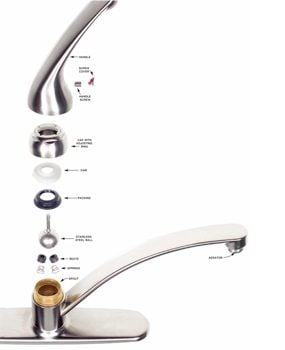
Image Source: images.tmbi.com
Easy Steps: How To Fix A Dripping Kitchen Faucet
A dripping kitchen faucet is more than just an annoyance; it’s a waste of water and money. Can you fix a dripping kitchen faucet yourself? Absolutely! Most common drips can be fixed with a few basic tools and parts, often saving you the cost of calling a plumber. This guide will walk you through the process of leaky faucet repair, from identifying the source of the drip to successfully stopping it. We’ll cover common types of faucets and the specific steps needed for a kitchen sink faucet drip.
Why Does My Faucet Drip?
Before we dive into fixing, let’s look at why your faucet might be dripping. The most common culprits are worn-out parts inside the faucet. Think of it like a seal that has lost its grip. Over time, the rubber or plastic components can degrade, crack, or become stiff. This prevents them from forming a watertight seal when the faucet is turned off, leading to that persistent drip.
Common Causes of Faucet Drips:
- Worn Washers: This is the most frequent reason for a drip, especially in older compression faucets. Washers are small rubber rings that sit against a valve seat. When they wear out, water seeps past.
- Damaged O-rings: O-rings are also rubber seals that surround the stem of the faucet handle. If they are worn or damaged, water can leak around the handle and sometimes drip from the spout.
- Corroded Valve Seat: The valve seat is a metal component where the washer presses. If it becomes rough or corroded, it won’t create a good seal, even with a new washer.
- Faulty Cartridge: In modern faucets (like cartridge or ball faucets), a single cartridge controls water flow and temperature. If this internal component is damaged or worn, it will cause leaks.
- Loose Parts: Sometimes, the drip is simply due to a part not being tightened properly.
Tools You’ll Need for Faucet Repair
Gathering your tools before you start makes the fix dripping tap process much smoother. You don’t need a professional toolkit; most of these are common household items.
Essential Tools:
- Adjustable Wrench: For loosening and tightening nuts.
- Screwdriver Set: Both Phillips and flathead screwdrivers are usually needed.
- Pliers: Needle-nose pliers are handy for gripping small parts.
- Basin Wrench (Optional but Recommended): Useful for hard-to-reach nuts under the sink.
- Allen Wrench Set: Some faucet handles require these.
- Rags or Towels: To catch drips and clean up.
- Bucket: To place under the faucet to catch any residual water.
- Plumber’s Grease: Helps lubricate new parts and ensure a good seal.
- Penetrating Oil (like WD-40): For loosening stubborn parts.
Step-by-Step Guide to Stop Faucet Leak
The exact steps for leaky faucet repair depend on the type of faucet you have. We’ll cover the most common types: compression, cartridge, ball, and ceramic disk faucets.
Step 1: Identify Your Faucet Type
Before you begin, take a moment to identify faucet leak and its type. This will help you know which parts you might need to replace.
- Compression Faucet: These typically have two separate handles (one for hot, one for cold) that you turn multiple times to fully open or close the water flow. They are often found in older homes.
- Cartridge Faucet: These have a single handle that moves up and down for volume and side-to-side for temperature. They use a removable cartridge to control water.
- Ball Faucet: Also usually a single handle, these have a rotating ball mechanism inside. They often have a dome-shaped cap under the handle.
- Ceramic Disk Faucet: These are modern and durable, with a single handle. They contain two ceramic disks that slide against each other to control water flow. They are less prone to drips than other types.
Step 2: Turn Off the Water Supply
This is the most crucial step! You must turn off the water supply before attempting any repairs.
- Locate Shut-Off Valves: Look under your kitchen sink. You should see two valves connected to the pipes that go up to your faucet – one for hot water and one for cold.
- Turn Clockwise: Turn the handles of both valves clockwise until they are completely shut off.
- Test: Turn on the faucet to confirm that no water is flowing. Let any remaining water drain out.
Step 3: Disassemble the Faucet Handle
Now, let’s get to the parts causing the drip. The goal is to access the internal components.
For Compression Faucets:
- Remove Decorative Cap: Look for a small decorative cap on top of the handle. Gently pry this off with a flathead screwdriver or a utility knife.
- Unscrew Handle Screw: You’ll find a screw underneath the cap. Remove it with the appropriate screwdriver.
- Pull Off Handle: Gently pull the handle straight up and off the faucet stem. It might be stiff; you might need to wiggle it slightly.
For Cartridge Faucets:
- Locate Set Screw: Look for a small set screw, often on the side or back of the faucet handle. It’s usually an Allen screw.
- Loosen Set Screw: Use the correct size Allen wrench to loosen this screw. You don’t need to remove it completely, just loosen it enough to free the handle.
- Remove Handle: Pull the handle straight up and off.
For Ball Faucets:
- Loosen Handle Screw: There’s usually a screw on the side of the handle, often under a decorative cover that you can pry off. Loosen this screw.
- Remove Handle: Lift the handle off.
- Remove Cap and Collar: You’ll see a dome-shaped cap. Unscrew this by hand or with pliers. Beneath that, there’s a collar. Loosen and remove this as well.
For Ceramic Disk Faucets:
- Find Decorative Cap: There’s usually a cap at the front or top of the handle. Pry it off.
- Remove Handle Screw: Unscrew the screw found beneath the cap.
- Lift Off Handle: Remove the handle.
Step 4: Access and Replace Worn Parts
This is where we actually perform the faucet washer replacement or repair faucet cartridge.
For Compression Faucets (Faucet Washer Replacement):
- Unscrew Packing Nut: Use your adjustable wrench to loosen and remove the packing nut that is visible after removing the handle.
- Remove Stem: Once the packing nut is off, you can pull or unscrew the faucet stem.
- Locate Washer: At the bottom of the stem, you’ll see a small rubber washer, usually held in place by a screw.
- Remove Old Washer: Unscrew the screw holding the old washer. Remove the old, likely flattened or cracked, washer.
- Install New Washer: Place a new, identical washer onto the stem. Re-secure it with the screw. Make sure the new washer is the same size and shape as the old one.
- Check Valve Seat: While the stem is out, look down into the faucet body where the stem was. You’ll see the valve seat. If it feels rough or looks corroded, you may need to use a valve seat wrench to remove and replace it. This is a less common repair but necessary if the new washer still leaks.
- Reassemble: Put the stem back in, tighten the packing nut, reattach the handle, and replace the handle screw and cap.
For Cartridge Faucets (Repair Faucet Cartridge):
- Remove Retaining Clip/Nut: After removing the handle, you’ll likely see a retaining clip or a brass nut holding the cartridge in place. Remove the clip with pliers or unscrew the nut.
- Pull Out Cartridge: Grip the top of the cartridge with pliers and pull it straight up. It might be stuck, so you might need to gently twist it or use a cartridge puller tool (available at hardware stores).
- Inspect Cartridge: Examine the old cartridge for any cracks or damage. Note its orientation.
- Insert New Cartridge: Carefully insert the new cartridge into the faucet body, making sure it’s aligned correctly. Ensure the stem of the new cartridge fits into the corresponding slot in the faucet body.
- Reassemble: Reinstall the retaining clip or nut, then reattach the handle, tightening the set screw.
For Ball Faucets (Repair Ball Faucet Components):
- Remove Cam and Packing: After removing the cap and collar, you’ll see a plastic or metal cam and packing. Lift these out.
- Remove Ball: The metal or plastic ball will be visible underneath. Lift it out.
- Inspect Ball and Seats/Springs: Look for any damage on the ball. More importantly, you’ll see rubber seats and springs at the bottom of the faucet body. These are the most common culprits. Remove the old seats and springs.
- Install New Seats and Springs: Place new springs into the faucet body, then place the new rubber seats on top of the springs.
- Replace Ball: Put the ball back in, aligning its slot with the pin in the faucet body.
- Reassemble: Place the new cam and packing over the ball, then screw on the cap and collar. Finally, reattach the handle and tighten its screw.
For Ceramic Disk Faucets (Replace Ceramic Cartridge):
- Remove Escutcheon Cap: You might need to unscrew or pry off a decorative cap or escutcheon that covers the cartridge.
- Remove Mounting Screws: Look for screws holding the cartridge in place. Unscrew these.
- Lift Out Cartridge: Carefully lift the ceramic disk cartridge straight out.
- Inspect Seals: Check the rubber seals around the bottom of the cartridge for wear.
- Install New Cartridge: Insert the new cartridge, ensuring it’s properly seated and aligned.
- Reassemble: Replace the mounting screws and any decorative caps. Reattach the handle.
Step 5: Reassemble the Faucet
Once you’ve replaced the necessary parts, carefully reassemble the faucet in reverse order of disassembly.
- Tighten Parts: Ensure all nuts and screws are snug, but avoid over-tightening, which can strip threads or crack parts.
- Lubricate: Apply a small amount of plumber’s grease to any O-rings or threads you removed to make reassembly easier and create a better seal.
Step 6: Turn Water Supply Back On
- Slowly Open Valves: Go back under the sink and slowly turn both the hot and cold water shut-off valves counter-clockwise.
- Check for Leaks: Turn the faucet on and off several times. Check all connections under the sink and around the faucet for any drips or leaks.
Step 7: Test for Drips
With the water on and the faucet off, observe the spout. If the drip has stopped, congratulations, you’ve successfully completed your leaky faucet repair!
Troubleshooting Common Issues
Even with careful work, you might encounter a few hiccups.
- Drip Persists: If the faucet still drips after replacing parts, the valve seat might be damaged (especially in compression faucets), or you might have the wrong replacement part. Double-check you used the correct faucet parts and that the valve seat is smooth.
- Leaking Around Handle: This usually indicates worn O-rings on the faucet stem or cartridge.
- Difficulty Removing Parts: If a nut or screw is stuck, apply a bit of penetrating oil and let it sit for a few minutes. Gentle wiggling and the right tools are key.
Preventative Kitchen Faucet Maintenance
Regular kitchen faucet maintenance can prevent many drips and extend the life of your faucet.
- Clean Regularly: Wipe down your faucet with a soft cloth to prevent mineral buildup.
- Address Small Leaks Promptly: Don’t ignore small drips or leaks around the handle; they often indicate a part is starting to wear out.
- Know Your Faucet Parts: Keep a note of your faucet’s brand and model. This makes finding replacement parts much easier. If you’re unsure, take the old part to the hardware store for a match.
When to Call a Professional
While most drips are DIY-friendly, there are times when it’s best to call for help.
- Uncertainty: If you’re not comfortable with any step or can’t identify faucet leak source, don’t hesitate to call a professional.
- Corroded or Damaged Faucet Body: If the faucet itself is heavily corroded or damaged, it might be time for a replacement.
- Stubborn Leaks: If you’ve tried replacing parts and the drip continues, a professional might have specialized tools or knowledge to solve the problem.
- Lack of Time or Tools: If you lack the time or specific tools, a plumber near me can efficiently handle the repair.
Common Faucet Types and Their Drip Sources
| Faucet Type | Primary Drip Cause(s) | Key Parts to Check/Replace |
|---|---|---|
| Compression | Worn Washer, Corroded Valve Seat | Rubber Washer, Valve Seat |
| Cartridge | Worn or Cracked Cartridge, Damaged O-rings | Cartridge, O-rings |
| Ball | Worn Seats and Springs, Damaged Ball | Rubber Seats, Springs, Ball Assembly |
| Ceramic Disk | Cracked Ceramic Cartridge, Worn Seals | Ceramic Cartridge, Seals |
Frequently Asked Questions (FAQ)
Q: How much does it cost to fix a dripping kitchen faucet?
A: If you do it yourself, the cost is typically only the price of the replacement parts, which usually range from $5 to $20. Calling a plumber can cost anywhere from $100 to $300 or more, depending on your location and the complexity of the repair.
Q: Can I use plumber’s tape to stop a faucet drip?
A: Plumber’s tape (PTFE tape) is primarily used on threaded pipe connections to prevent leaks, not on internal faucet components like washers or cartridges. It won’t help stop a drip caused by worn internal parts.
Q: My faucet handle is leaking, not the spout. What should I do?
A: A leak around the faucet handle is often caused by a worn O-ring or packing nut. For compression faucets, try tightening the packing nut slightly. If that doesn’t work, or for other faucet types, you’ll likely need to replace the O-rings associated with the handle stem or cartridge.
Q: How often should I replace faucet washers?
A: There’s no set schedule. Faucet washers wear out based on usage and water quality. You’ll know it’s time when you start experiencing drips or leaks from the spout.
Q: Where can I buy faucet parts?
A: You can find faucet parts at most hardware stores, home improvement centers, and online retailers. Bringing the old part with you or knowing your faucet’s brand and model number will help ensure you get the correct replacement.
Q: What is a valve seat?
A: A valve seat is a metal component inside a faucet, typically found in compression faucets, where the rubber washer presses against to stop water flow. If it becomes corroded or rough, it can prevent a proper seal, causing drips. It can often be replaced using a specific valve seat wrench.
By following these steps, you can confidently tackle most kitchen sink faucet drip problems and keep your kitchen functioning smoothly. Remember, a little bit of effort can save water and money!