
Can you build kitchen cabinets yourself? Yes, absolutely! With the right planning, tools, and patience, you can build beautiful and functional kitchen cabinets that will be a source of pride in your home. This guide will walk you through the entire process of building DIY kitchen cabinets, from initial design to the final installation. Whether you’re undertaking a full kitchen remodel or just looking to upgrade your storage, building your own cabinets is a rewarding woodworking project.
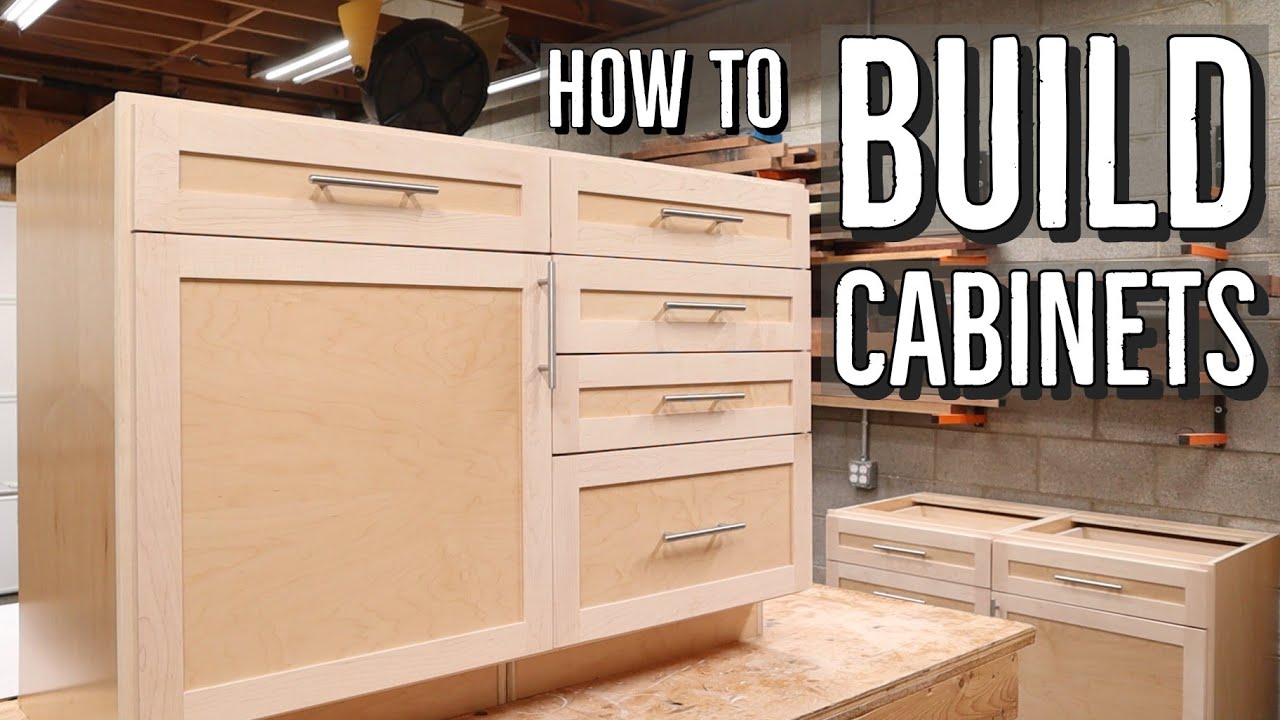
Image Source: i.ytimg.com
1. Cabinet Design: Laying the Groundwork for Success
Before you pick up a saw, you need a solid cabinet design. This is the blueprint for your entire project. It determines the size, style, and layout of your cabinets, ensuring they fit your kitchen and meet your needs.
1.1 Measuring Your Space
Accurate measurements are crucial. Measure the length and height of all walls where cabinets will be placed. Note the location of windows, doors, and any permanent fixtures like plumbing or electrical outlets. Measure the distance from the floor to the ceiling.
- Wall Lengths: Measure from corner to corner for each wall segment.
- Appliance Locations: Measure the width and height of your refrigerator, dishwasher, oven, and any other built-in appliances.
- Window and Door Openings: Measure the width and height of each opening, and the distance from the floor to the bottom of windows.
- Obstructions: Mark the location and dimensions of anything that might interfere with cabinet placement.
1.2 Planning Your Layout
Consider how you use your kitchen. A good layout makes cooking and cleaning easier. Think about:
- Work Zones: Designate areas for prepping food, cooking, and cleaning.
- Appliance Placement: Ensure easy access to your oven, refrigerator, and dishwasher.
- Storage Needs: How much space do you need for dishes, cookware, pantry items, and small appliances?
- Traffic Flow: Make sure there’s enough room to move around comfortably.
Common Cabinet Types to Consider:
- Base Cabinets: These sit on the floor and support countertops. Standard depth is 24 inches.
- Wall (or Upper) Cabinets: These hang on the wall above base cabinets. Standard depth is 12 inches.
- Tall (or Pantry) Cabinets: These extend from floor to ceiling and are great for storing food or appliances.
1.3 Choosing Cabinet Styles
Your cabinet design should also consider the aesthetic you’re aiming for.
- Face-Frame Cabinets: These have a visible wooden frame around the front of the cabinet box. This is a traditional American style, often seen in DIY projects due to its simpler construction.
- Frameless (European-style) Cabinets: These lack a face frame, giving them a more modern look and slightly more interior space. Cabinet joinery is more critical here.
1.4 Creating Detailed Plans
Sketch out your cabinet layout. You can use graph paper or specialized software. For each cabinet, specify:
- Overall Dimensions: Width, height, and depth.
- Door Style: Raised panel, flat panel, shaker, etc.
- Drawer Placement: How many drawers and their sizes.
- Shelf Placement: Adjustable or fixed shelves.
- Material: What type of wood or plywood will you use?
2. Cabinet Construction: Bringing Your Design to Life
This is where the woodworking truly begins. We’ll focus on building the cabinet boxes, which form the foundation of your kitchen cabinets. For most DIYers, plywood cabinets are a practical and cost-effective choice for the cabinet boxes.
2.1 Selecting Materials
For cabinet boxes, plywood is an excellent choice.
- Plywood:
- Cabinet-grade plywood: Look for birch, maple, or oak veneer plywood. These have smooth, sanded surfaces and few voids.
- Thickness: 1/2-inch or 3/4-inch is common for cabinet sides, tops, bottoms, and backs. 1/4-inch plywood is often used for cabinet backs.
- Hardwood: For face frames and doors, hardwoods like maple, oak, cherry, or poplar are popular choices.
- Fasteners: Wood glue, screws (1-1/4 inch and 2-inch), and brad nails.
2.2 Cutting Your Plywood
Accurate cuts are paramount. You can have plywood cut at the lumberyard, or use a table saw with a good quality blade for clean, straight cuts.
- Cabinet Box Components:
- Sides: Typically 34-1/2 inches tall (for standard base cabinets) and 23-1/4 inches deep (to accommodate a 24-inch countertop).
- Bottom/Top: Width will vary based on cabinet size, depth matches sides.
- Back: Usually 1/4-inch plywood, cut to fit the back opening.
- Shelves: Cut to fit inside the cabinet box.
2.3 Assembling the Cabinet Box
Cabinet construction relies on strong joints. Pocket holes are a popular and relatively easy method for joining cabinet parts for DIYers.
Steps for Assembling a Plywood Cabinet Box (Face-Frame Style):
- Drill Pocket Holes: On the edges of the cabinet sides that will attach to the top and bottom pieces, drill pocket holes using a pocket hole jig. Also, drill pocket holes on the edges of the bottom piece where it will attach to the sides.
- Apply Glue: Apply wood glue to the edges where the pieces will join.
- Join Sides and Bottom: Attach the bottom piece to the two side pieces using screws through the pocket holes. Ensure the corners are square.
- Attach the Top: Fit the top piece into place and secure it with screws through the pocket holes in the sides.
- Install Shelves: If you’re using fixed shelves, install them now. For adjustable shelves, drill shelf pin holes later.
- Attach the Back: Apply glue to the back edges of the cabinet box. Position the 1/4-inch plywood back and secure it with screws or brad nails every 6-8 inches. This adds rigidity and squareness to the cabinet.
2.4 Building Face Frames
Face frames provide a surface for attaching doors and drawers, and they add strength and a finished look to your cabinets.
- Select Wood: Choose your hardwood (e.g., 1×2 or 1×3 boards).
- Cut Pieces:
- Stiles: The vertical pieces that run the full height of the cabinet.
- Rails: The horizontal pieces that fit between the stiles at the top and bottom.
- Join Face Frame Pieces:
- Pocket Holes: The most common method. Drill pocket holes on the ends of the rails.
- Glue and Screw: Apply glue to the ends of the rails and attach them to the stiles using screws through the pocket holes. Ensure the face frame is square.
- Attach Face Frame to Cabinet Box: Apply glue to the front edges of the plywood cabinet box. Position the face frame, ensuring it is flush with the sides and bottom, and the top rail is flush with the top of the cabinet box. Secure with brad nails or screws from the inside of the cabinet box.
2.5 Constructing Drawers
Drawers are a key component of cabinet construction.
- Drawer Box Sides: Cut 1/2-inch or 3/4-inch plywood for the drawer sides, front, and back. The bottom is typically 1/4-inch plywood.
- Drawer Joinery:
- Dadoes and Rabbets: The most professional method, offering strong joints. You’ll need a router with a dado stack or multiple passes.
- Pocket Holes: A simpler alternative for DIYers. Drill pocket holes on the ends of the drawer front and back pieces to attach them to the sides.
- Assemble Drawer Boxes: Glue and screw the drawer sides, front, and back together.
- Install Drawer Bottom: Slide the 1/4-inch plywood bottom into the grooves (if using dadoes) or attach it to the underside of the assembled drawer box using glue and brad nails.
- Drawer Slides: Attach drawer slides to the sides of the drawer box and to the inside of the cabinet box according to the manufacturer’s instructions.
2.6 Making Cabinet Doors
Doors are the most visible part of your cabinets and significantly impact the overall cabinet design.
- Style: Shaker style (flat center panel, solid wood frame) is popular and relatively easy to build.
- Materials: Hardwood for the frame (stiles and rails) and plywood or a solid wood panel for the center.
- Frame Construction:
- Stiles and Rails: Cut hardwood to size.
- Joinery: Use mortise and tenon joints for the strongest, most professional look. Alternatively, dadoes and rabbets, or pocket holes can be used.
- Center Panel: Cut a panel to fit into the groove or rabbet created in the frame. This panel can be solid wood or a thinner plywood.
- Assembly: Glue and assemble the frame around the center panel. Clamp and allow to dry.
3. Cabinet Hardware and Installation: The Finishing Touches
Once your cabinet boxes and doors are built, it’s time for cabinet hardware and cabinet installation.
3.1 Installing Cabinet Hardware
This includes hinges for doors and slides for drawers.
- Hinges:
- Concealed Hinges (European Hinges): Most modern cabinets use these. They require a “cup” hole drilled into the door and a mounting plate attached to the cabinet frame.
- Surface-Mount Hinges: Simpler to install but less visually appealing.
- Drawer Slides: Ensure you select the correct type and length of slides for your drawers. Different types offer varying weight capacities and smoothness.
3.2 Preparing for Installation
- Cabinet Preparation: Lightly sand all surfaces. Wipe down with a tack cloth to remove dust.
- Wall Preparation: Ensure your walls are sound. Locate wall studs using a stud finder. Cabinets must be securely anchored to studs.
3.3 Mounting the Cabinets
Cabinet installation requires precision and often a helper.
- Layout Lines: Use a level and chalk line to draw a horizontal line on the wall where the top of your base cabinets will sit (or the bottom of your wall cabinets).
- Install Base Cabinets First:
- Place the first base cabinet in its desired location.
- Use a level to ensure it’s plumb and level. Shim if necessary.
- Screw through the back of the cabinet into wall studs using 2-1/2 inch or 3-inch screws.
- Place the next cabinet next to it. Clamp the two cabinets together, ensuring their front faces are flush.
- Drill pilot holes and screw the cabinets to each other through their adjoining face frames or sides.
- Continue installing cabinets, leveling and securing each one to the wall and to its neighbors.
- Install Wall Cabinets:
- Have a helper hold the wall cabinet in place while you level it.
- Screw through the back of the cabinet into wall studs, again using long screws.
- Install adjacent wall cabinets, clamping and screwing them together for a seamless look.
3.4 Attaching Doors and Drawers
- Doors: Attach the hinges to the doors first, then mount the doors to the cabinet frames. Adjust hinges for proper alignment.
- Drawers: Slide the assembled drawers into their installed slides.
4. Cabinet Finishing: Protection and Beauty
Cabinet finishing is the final step that protects your work and enhances its appearance.
4.1 Sanding
Thorough sanding is crucial for a smooth finish.
- Stages: Start with a coarser grit sandpaper (e.g., 120-grit) and progress to finer grits (e.g., 180-grit, 220-grit).
- Technique: Sand with the grain of the wood. For plywood, be careful not to sand through the veneer.
4.2 Applying Finish
You have several options for finishing your cabinets:
- Stain: Enhances the natural beauty of the wood. Apply stain evenly with a brush or rag. Wipe off excess stain.
- Paint: Provides a uniform color. Use a good quality primer before applying paint. Multiple thin coats are better than one thick coat.
- Clear Coat (Polyurethane, Lacquer, Varnish): Seals and protects the wood. Apply multiple thin coats, sanding lightly between coats with very fine sandpaper (e.g., 320-grit) for a smooth finish.
Application Tips:
- Cleanliness: Work in a well-ventilated, dust-free area.
- Tools: Use high-quality brushes, rollers, or spray equipment.
- Drying Time: Allow adequate drying time between coats as per the product instructions.
Frequently Asked Questions (FAQ)
How much does it cost to build kitchen cabinets compared to buying them?
Building your own DIY kitchen cabinets can significantly reduce costs, especially on materials like plywood cabinets. You can save 30-50% or even more, depending on the materials you choose and if you do all the labor yourself. However, factor in the cost of tools if you don’t already have them.
What is the best wood for kitchen cabinets?
For cabinet boxes, plywood cabinets are highly recommended for their stability and resistance to warping. For face frames and doors, hardwoods like maple, oak, cherry, and poplar are excellent choices due to their durability and beauty.
How do I ensure my cabinets are square?
Using a good quality measuring tape and a carpenter’s square is essential. When assembling cabinet boxes, always check that the diagonals measure the same. This confirms the box is square. Pocket holes and glue also contribute to strong, square joints.
Can I build kitchen cabinets without a lot of woodworking experience?
Yes, particularly if you opt for simpler designs like shaker-style doors and face-frame construction with pocket holes. Starting with a smaller project or a single cabinet can help you gain confidence before tackling a full kitchen.
What are the most important tools for building kitchen cabinets?
Essential tools include a reliable measuring tape, a level, a circular saw or table saw, a drill/driver, a pocket hole jig, clamps, sandpaper, and a sander. A router is highly beneficial for cabinet joinery and door making.
How thick should plywood be for cabinet boxes?
3/4-inch thick plywood is generally recommended for cabinet sides, tops, and bottoms for maximum strength and durability. 1/2-inch can be used for shelves, and 1/4-inch is standard for cabinet backs.
This comprehensive guide provides a solid foundation for building your own kitchen cabinets, a key aspect of any kitchen remodel. With careful planning and execution, you can create custom cabinetry that perfectly suits your style and needs.