
Replacing your kitchen sink can seem like a big job, but with the right tools and a clear plan, you can absolutely do it yourself! This guide walks you through installing a new kitchen sink, whether it’s an undermount sink installation or a classic drop-in sink installation. We’ll cover everything from the initial steps of removing old sink components to the final sealing kitchen sink to prevent leaks.
A new kitchen sink can refresh your kitchen’s look and improve its function. The process involves disconnecting the old plumbing, removing the old sink, preparing the countertop, fitting the new sink, and then reconnecting all the plumbing.
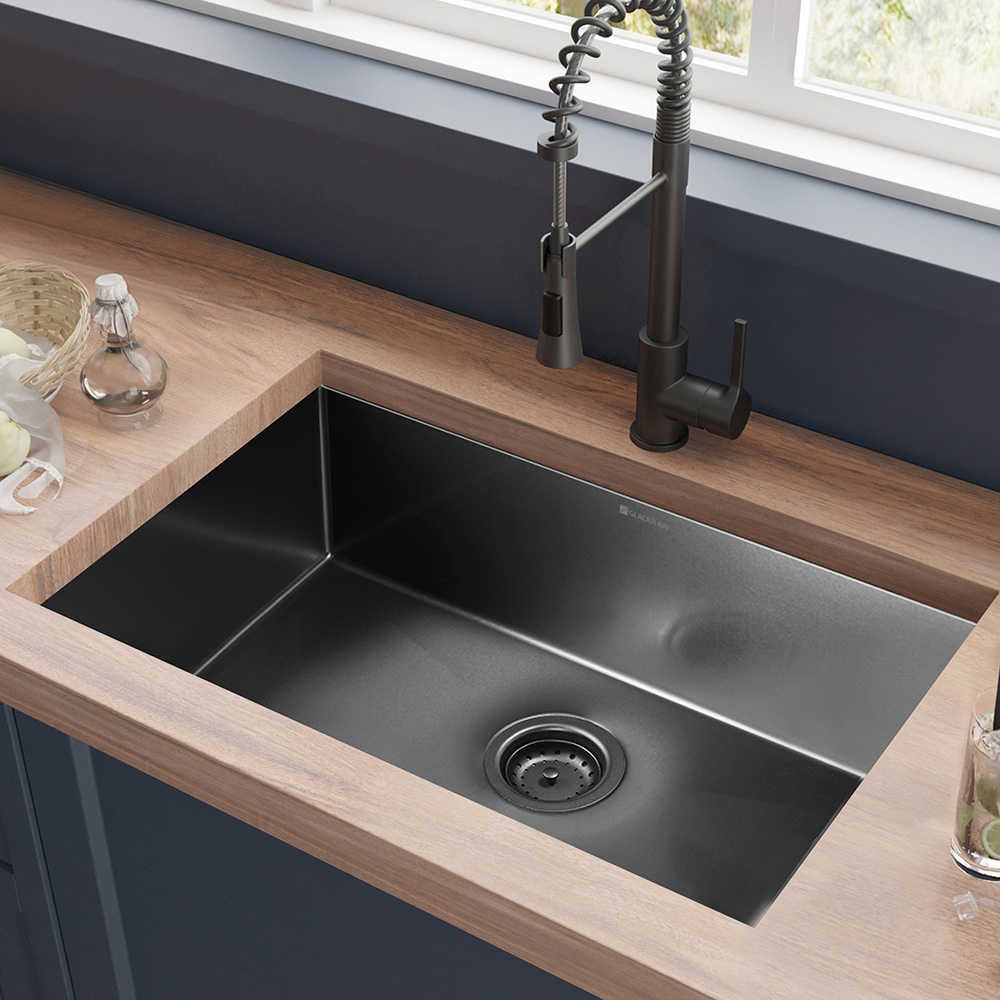
Image Source: contentgrid.homedepot-static.com
Getting Ready for Your Sink Installation
Before you start, gather all your tools and materials. Having everything on hand makes the job much smoother.
Essential Tools You’ll Need
- Adjustable Wrench: For tightening and loosening nuts on the plumbing.
- Pipe Wrench: Useful for stubborn pipe connections.
- Basin Wrench: This is a special tool designed to reach nuts in tight spaces under the sink, making it essential for kitchen sink plumbing and sink drain assembly work.
- Screwdriver Set: Both Phillips and flathead will likely be needed.
- Putty Knife or Scraper: To remove old caulk and sealant.
- Caulking Gun: For applying silicone sealant.
- Safety Glasses: Protect your eyes from debris and falling objects.
- Work Gloves: To protect your hands.
- Bucket or Towels: To catch any residual water.
- Utility Knife: For cutting caulk and old sealant.
- Pliers: Various types can be helpful.
- Measuring Tape: To ensure proper fit.
- Level: To make sure the sink is installed straight.
- Drill and Drill Bits: If you need to make new holes for a faucet or adapt existing ones.
- Silicone Sealant: Waterproof and suitable for kitchens.
- Plumber’s Putty: For sealing the drain assembly.
- New Sink: Of course!
- New Faucet: If you’re replacing it at the same time.
- New Sink Drain Assembly: It’s often best to replace this with a new sink.
- New Water Supply Lines: Good practice to replace these too.
Choosing Your New Sink and Faucet
There are two main types of sink installations:
- Drop-in Sink (Top-mount): These sinks rest on top of the countertop, with a lip that overhangs the edge. They are generally easier to install.
- Undermount Sink: These are installed beneath the countertop, creating a seamless look and making it easy to wipe debris directly into the sink. They typically require a more robust countertop material like granite or solid surface.
When selecting a new faucet, ensure it’s compatible with the number of holes in your new sink. Some sinks have one hole for a single-handle faucet, while others have three or four holes for widespread faucets.
Step 1: Removing the Old Sink
This is the part where we get rid of the old. Take your time and work carefully.
Shutting Off the Water Supply
This is a critical first step.
- Locate the shut-off valves for your sink. These are usually under the sink, on the hot and cold water supply lines.
- Turn both valves clockwise until they are fully closed.
- Turn on the faucet to drain any remaining water from the lines and to confirm the water is off. Leave the faucet open.
Disconnecting the Faucet and Water Lines
- Using your adjustable wrench, disconnect the hot and cold water supply lines from the shut-off valves. Have a bucket or towels ready to catch any drips.
- Next, disconnect the supply lines from the faucet tailpieces under the sink.
- If you are replacing the faucet with the sink, you’ll also need to disconnect the faucet from the sink itself. This usually involves reaching up with a basin wrench to loosen the mounting nuts.
Detaching the Sink Drain and Garbage Disposal (If Applicable)
This is a key part of the kitchen sink plumbing and sink drain assembly.
- Garbage Disposal: If you have a garbage disposal, disconnect the electrical power cord first. Then, disconnect the drain pipe (usually a PVC pipe) from the disposal’s outlet. You might need to loosen a slip nut. Finally, detach the disposal from the sink mounting ring. These can be heavy, so support them.
- Sink Drain: Locate the large nut holding the sink drain assembly to the bottom of the sink. Use your basin wrench or pipe wrench to loosen and remove this nut. You may need to hold the strainer basket from spinning inside the sink.
- Disconnect any overflow pipe if your sink has one.
Loosening and Removing the Old Sink
How you detach the sink depends on how it was installed.
- Drop-in Sink:
- Carefully run a utility knife around the edge where the sink meets the countertop to break the seal of old caulk or sealant.
- Look for mounting clips underneath the sink rim. These are usually screwed or clipped into place. Use your screwdriver or pliers to loosen and remove them.
- Gently try to lift the sink from the countertop. If it’s still stuck, double-check for any missed clips or sealant.
- Undermount Sink:
- Undermount sinks are held in place with adhesive and clips. You’ll need to access these from underneath.
- Remove any mounting clips.
- Apply some gentle force upwards on the sink to see if it starts to budge. You may need to carefully use a putty knife or a thin scraper to help break the adhesive seal around the edge. Be careful not to damage the countertop.
Once the sink is free, lift it out of the countertop opening. If you have a garbage disposal attached, you might need assistance as they are heavy.
Step 2: Preparing the Countertop for the New Sink
A clean surface is essential for a good seal and a proper fit.
Cleaning the Countertop Opening
- Use your putty knife or scraper to remove all old caulk, sealant, and putty from the countertop opening.
- Wipe down the area with a damp cloth to remove dust and debris.
- Ensure the countertop surface is completely dry before proceeding.
Checking the Countertop Support
For undermount sinks, ensure your countertop material is strong enough to support the sink without additional bracing. Most granite and quartz countertops are fine, but some laminate or wood countertops might need reinforcement.
Step 3: Installing the New Sink
Now it’s time to fit the new sink. The process varies slightly for drop-in versus undermount sinks.
Installing a Drop-in Sink
This type of sink mounting is generally straightforward.
- Install Faucet and Drain: Before placing the sink into the opening, it’s much easier to install the new faucet and the sink drain assembly while the sink is still accessible.
- Faucet Installation: Follow the manufacturer’s instructions for your specific faucet. Typically, you’ll insert the faucet into the sink holes and secure it from underneath with mounting nuts. Don’t overtighten at this stage.
- Sink Drain Assembly: Apply plumber’s putty around the underside of the strainer basket flange. Insert the flange into the sink drain opening from the top. From underneath, place a rubber gasket, then a fiber gasket, and finally the locknut. Tighten the locknut firmly with your basin wrench, ensuring the drain is straight. Wipe away excess plumber’s putty.
- Apply Sealant: Apply a bead of silicone sealant around the underside edge of the sink’s rim. This creates a watertight seal between the sink and the countertop.
- Position the Sink: Carefully lower the new sink into the countertop opening. Make sure it’s centered and aligned correctly.
- Secure the Sink: If your sink came with mounting clips, attach them now from underneath. Tighten them evenly around the sink to pull it down snugly against the countertop.
- Wipe Away Excess Sealant: From the top, wipe away any excess sealant that squeezed out around the sink rim with a damp cloth. This is part of sealing kitchen sink properly.
Installing an Undermount Sink
This requires a bit more precision for a clean finish.
- Install Faucet and Drain: Similar to the drop-in sink, install the faucet and sink drain assembly onto the sink before mounting it to the countertop. This is much easier when you can freely access the sink.
- Faucet Installation: Secure the faucet to the sink using the provided hardware.
- Sink Drain Assembly: Install the drain assembly as described for the drop-in sink, using plumber’s putty.
- Prepare for Mounting: Some undermount sinks come with special mounting brackets that attach to the underside of the countertop. Others rely solely on adhesive and clips. Follow the manufacturer’s specific instructions.
- Apply Adhesive: Apply a bead of high-quality, waterproof adhesive (often silicone caulk or a specific sink adhesive) around the perimeter of the underside of the countertop opening where the sink will sit.
- Position and Secure the Sink: Carefully lift the sink and press it firmly into place against the adhesive. Ensure it’s perfectly aligned.
- Install Clips and Bracing: From underneath, install any provided mounting clips or brackets. These are tightened to hold the sink securely while the adhesive cures. Some installations may also require additional bracing to support the sink’s weight.
- Curing Time: Allow the adhesive to cure completely according to the manufacturer’s recommendations before putting any weight or water into the sink. This might take 24 hours.
Step 4: Connecting the Plumbing
This is where we bring the kitchen sink plumbing back to life.
Connecting the Faucet Supply Lines
- Attach the new flexible water supply lines to the faucet tailpieces. Hand-tighten them, then give them a quarter-turn with an adjustable wrench. Be careful not to overtighten, as this can damage the fittings.
- Connect the other ends of the supply lines to the corresponding hot and cold shut-off valves under the sink. Again, hand-tighten and then a quarter-turn with a wrench.
Connecting the Sink Drain and P-Trap
This part of the sink drain assembly needs to be watertight.
- Reattach the Tailpiece: If you removed the sink drain tailpiece (the pipe that connects the strainer basket to the P-trap), reattach it to the drain assembly.
- Assemble the P-Trap: The P-trap is the U-shaped pipe that prevents sewer gases from entering your kitchen. Ensure all its seals and washers are in place. Connect the P-trap to the sink tailpiece and then to the drainpipe in the wall. Hand-tighten the slip nuts, then snug them up with pliers or a pipe wrench.
- Garbage Disposal Connection: If you have a garbage disposal, reattach the drain pipe from the disposal to the P-trap or the wall drainpipe. Make sure all connections are snug.
Connecting the Dishwasher Drain (If Applicable)
If your dishwasher drains into the sink, connect its drain hose.
- Many garbage disposals have a specific inlet for the dishwasher drain hose. If not, you may need to adapt the drain pipe.
- Ensure the drain hose has a “high loop” – meaning it goes up as high as possible under the countertop before connecting to the disposal or drainpipe. This prevents dirty sink water from flowing back into the dishwasher.
Step 5: Testing for Leaks
This is a crucial final check before you can enjoy your new sink.
- Turn on Water: Slowly turn the hot and cold water shut-off valves back on.
- Check Faucet Connections: Turn on the faucet and let the water run for a minute or two. Carefully inspect all connections at the shut-off valves and the faucet tailpieces for any drips. Tighten slightly if you see any leaks.
- Fill the Sink: Close the sink drain stopper and fill the sink with a few inches of water.
- Inspect Drain Connections: Once the sink is full, let the water sit for a few minutes. Then, open the drain stopper and let the water run down. While the water is draining, meticulously check every connection in the sink drain assembly and P-trap for leaks. This includes the drain strainer, the tailpiece connection, the P-trap slip nuts, and the garbage disposal connections.
- Run Disposal: If you have a garbage disposal, run it with a little water to check its drain connections as well.
- Check for Leaks from Above: Also, check around the sink rim for any water seeping through from the top. This would indicate an issue with the sealing kitchen sink process.
If you find any leaks, turn off the water supply and tighten the problematic connection. Sometimes, you might need to disassemble and reassemble a connection, ensuring the seals and washers are properly seated.
Frequently Asked Questions (FAQ)
Q: How long does it take to install a kitchen sink?
A: For an experienced DIYer, a simple kitchen sink replacement can take 2-4 hours. If you’re also replacing the faucet and dealing with stubborn old plumbing, it could take longer, perhaps 4-6 hours.
Q: Can I install a kitchen sink myself?
A: Yes, most homeowners can install a kitchen sink with basic plumbing knowledge and the right tools. However, if you are uncomfortable with plumbing or encounter complex issues, it’s best to hire a professional plumber.
Q: What is the difference between a drop-in and an undermount sink installation?
A: A drop-in sink installation involves a sink with a rim that sits on top of the countertop. An undermount sink installation places the sink below the countertop, offering a more seamless look.
Q: How do I seal a kitchen sink properly?
A: Sealing kitchen sink is done using waterproof silicone sealant applied around the rim of the sink where it meets the countertop. For undermount sinks, adhesive is also used to secure it.
Q: What are the key parts of kitchen sink plumbing?
A: Kitchen sink plumbing includes the faucet, water supply lines, the sink drain assembly (strainer, tailpiece, P-trap), and any connections for a garbage disposal or dishwasher.
Q: Is plumber’s putty or silicone better for sealing?
A: Plumber’s putty is ideal for sealing the sink strainer to the sink basin, as it creates a flexible, watertight seal that won’t harden. Silicone sealant is best for the rim of the sink where it meets the countertop, providing a durable, waterproof barrier.
Q: Do I need a special tool for kitchen sink plumbing?
A: A basin wrench is a highly recommended tool for kitchen sink plumbing tasks, as it allows you to reach and tighten nuts in tight spaces under the sink, crucial for the sink drain assembly and faucet mounting.
By following these steps, you can successfully complete your kitchen sink replacement and enjoy a refreshed kitchen space. Remember to work safely and methodically, and don’t hesitate to consult a professional if needed.