
Why Are Stand Mixers So Expensive? 8 Reasons Professionals and Shoppers Need to Know
You’re paying for heavy-duty motors and precision powertrains that can knead dense dough without overheating, plus metal bodies and durable finishes that resist wear and keep machines stable. Tight-tolerance gearing, sealed bearings, and balanced motors cut vibration and extend lifespan. Extra attachments and tested accessories add function and cost, while rigorous testing, warranties, and brand trust raise prices. Compare commercial and home models to match needs—and keep going to see specific features and buying tips.
Stand‑Mixer Motors and Powertrain: Why Power Costs More
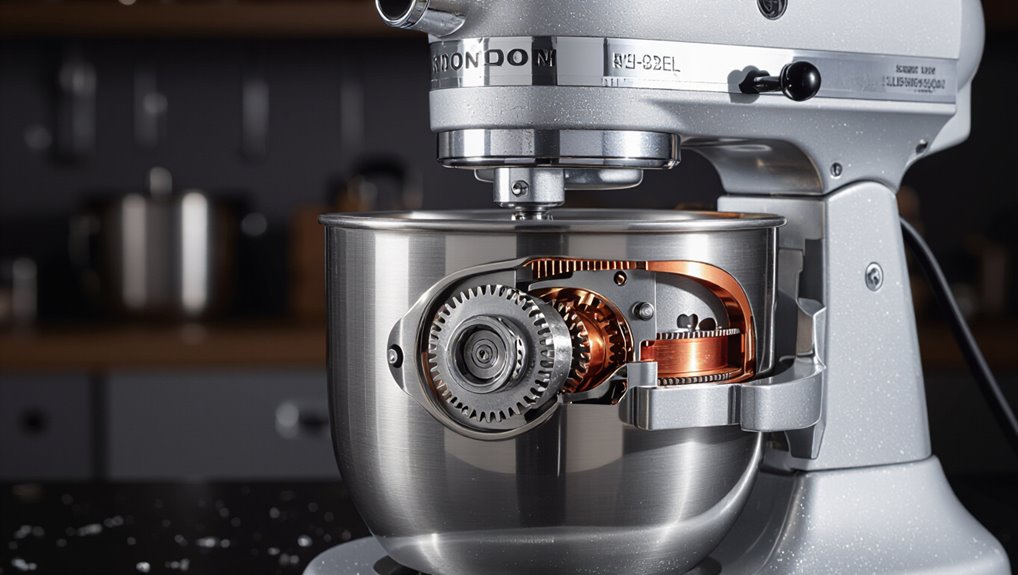
Because heavy dough and long mixing times demand consistent torque, a stand‑mixer’s motor and powertrain are far more robust than you’d find in a handheld mixer.
You’ll pay for larger, better‑cooled motors, precision gearboxes, and reinforced bearings that sustain prolonged loads. Those components reduce wear, maintain speed under strain, and guarantee safety, so manufacturers price machines to cover higher materials, engineering, and testing costs.
Stand‑Mixer Materials: Metal Construction, Finishes, and Durability
You’ll notice most high-end stand mixers use a metal body because that strength keeps the machine stable under heavy loads.
Different finishes—from painted enamel to brushed stainless—affect appearance, scratch resistance, and how easy the mixer is to clean.
That metal construction and quality of finish directly influence long-term durability and how long the mixer will keep performing well.
Metal Body Strength
A solid metal housing gives a stand mixer the strength to handle dense doughs and years of daily use without flexing or wearing out.
You’ll notice reduced vibration, consistent gear alignment, and steadier mixing at high torque.
Metal bodies also dissipate heat better and protect internal components, so your motor and gears stay aligned longer, requiring fewer repairs and extending overall appliance lifespan.
Finish Types Explained
Now that you’ve seen how a solid metal body boosts strength and longevity, look at the surface options manufacturers use to finish that metal.
You’ll pick between painted enamel, powder coat, and polished or brushed metal.
Enamel offers glossy color, powder coat resists chips and scratches, and brushed or polished stainless gives a premium, easy‑clean look while minimizing visible wear.
Long‑Term Durability
Think about how the materials and finish you choose will affect performance over years of regular use.
You’ll want a mostly metal construction—die‑cast aluminum or stainless steel—for rigidity and heat resistance.
Durable finishes resist chips and corrosion, protecting mechanics and resale value.
Thicker gears, sealed bearings, and quality paint reduce maintenance and failures, so you spend less replacing parts or buying a new mixer.
Precision Engineering: Features That Boost Reliability and Lifespan
Because you rely on a stand mixer for consistent results, manufacturers design critical components with tight tolerances and durable materials so the machine stays accurate and runs longer.
You get precision planetary gearing, balanced motors, sealed bearings, and reinforced shafts that reduce wear and vibration.
These engineered elements cut maintenance, prevent drift, and preserve performance, justifying higher upfront cost through extended service life.
Attachments and Accessories: How Added Functions Raise Price
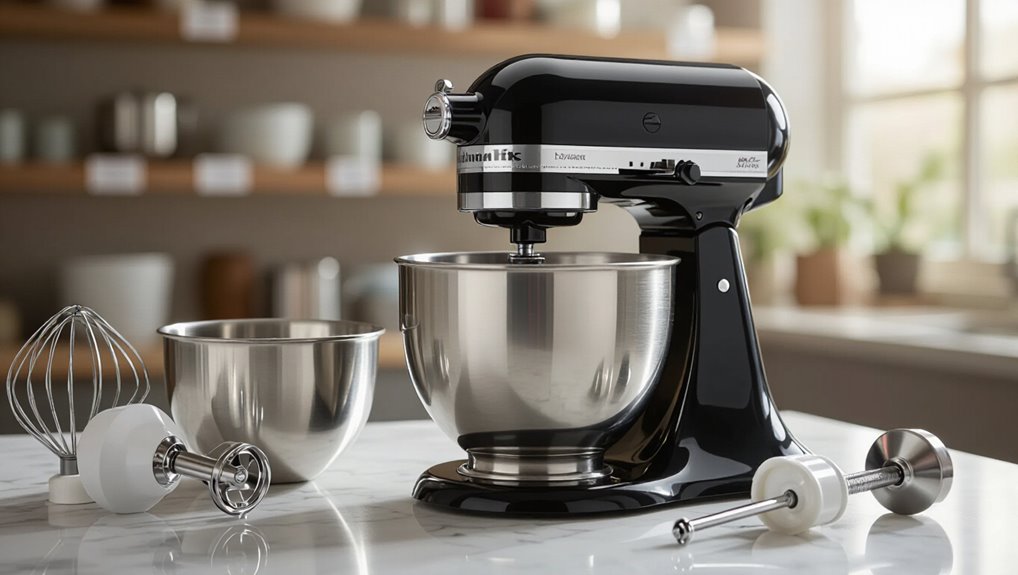
Those precision parts are only part of the story — manufacturers also add a suite of attachments and accessories that broaden what a stand mixer can do, and those extras add to the price.
You pay for stainless steel bowls, dough hooks, paddle variations, pasta makers, meat grinders and specialty blades.
Each accessory requires design, testing and materials, so bundled functionality raises retail cost.
Motor Controls, Gearing, and Noise Reduction for Better Performance
You’ll notice the difference when a mixer uses refined variable speed electronics to keep RPMs steady under load.
Precision gear ratios translate motor torque into consistent, efficient movement for better mixing results.
Thoughtful acoustic dampening then cuts vibration and noise so the machine performs smoothly without screaming.
Variable Speed Electronics
Modern stand mixers hide sophisticated variable-speed electronics that give you smoother control, better torque, and less noise than simpler designs.
You’ll get precise RPM regulation, soft-start ramps to prevent splatter, and adaptive feedback that maintains speed under load.
Integrated sensors and digital controls optimize motor efficiency, cut vibration, and extend component life, so your mixer performs reliably across delicate batters and heavy doughs.
Precision Gear Ratios
Speed control is only part of the story; the way motor power gets translated into bowl movement matters just as much.
You rely on precise gear ratios to convert torque into consistent mixing action across speeds, preventing stalling and ingredient scattering.
Well-engineered gearing gives smoother starts, accurate speed steps, and longer transmission life, so your results stay uniform and the machine stays reliable.
Acoustic Dampening Design
While high torque and precise gears keep ingredients moving, quieter operation comes from intentional acoustic dampening throughout the motor and transmission.
Manufacturers use tuned mounts, vibration-isolating materials, and sound‑absorbing housings so the mixer runs smoothly without rattles, letting you work without distraction and reducing mechanical wear over time.
You’ll notice softer startup, steadier speeds, and less cabinet vibration, which prolongs components and improves usability.
Testing, Warranties, and Brand Premiums That Affect Price
Because manufacturers put each mixer through rigorous testing and back it with a strong warranty, you’re paying for more than polished looks — you’re paying for reliability.
You get long-term parts testing, supported repairs, and the cachet of trusted brands that raise resale value. Those factors raise costs so you don’t end up replacing machines often.
- A sealed motor run test humming all night
- Technicians swapping gears under load
- A stamped multi-year warranty card
- A showroom gleam that says “trusted”
Commercial vs. Home Stand‑Mixers: What You Pay For and Why
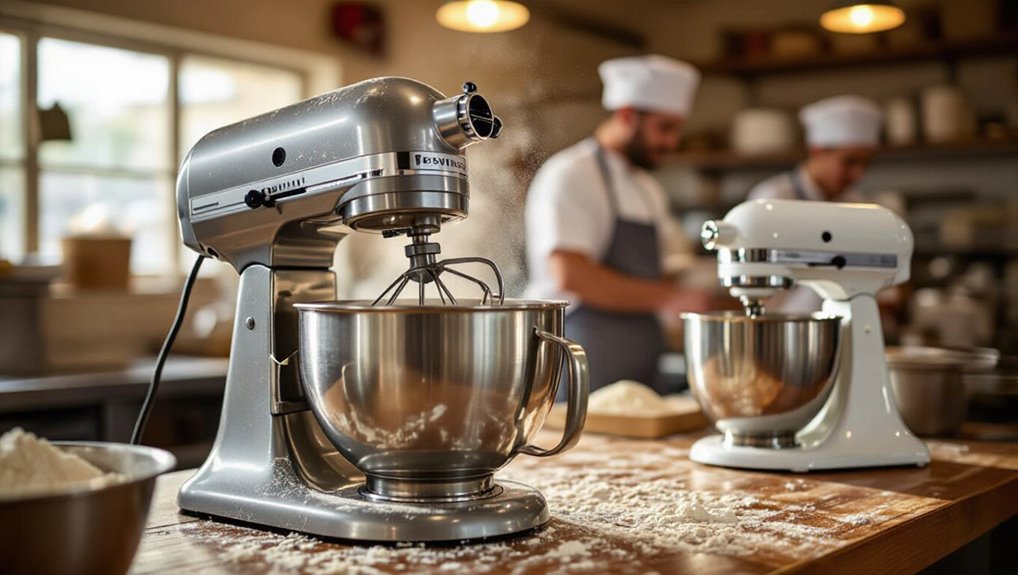
When you compare commercial and home stand‑mixers, you’ll notice the price gap reflects differences in duty cycle, materials, and serviceability: commercial units use heavy‑gauge steel, industrial motors, and sealed bearings to run for hours every day, while home models prioritize compact size, quieter operation, and lower-cost parts designed for intermittent use.
You pay for stronger gear trains, higher wattage, easier repairs, and certified safety features.
Is a Pricey Stand‑Mixer Worth It? A Practical Buying Checklist
Is a high-priced stand‑mixer really worth it for your kitchen?
You should weigh durability, motor power, and attachment versatility against budget and cooking habits.
Consider warranty length and service availability.
Ask whether you’ll use heavy doughs or daily baking.
- Shiny metal bowl spinning dough at low speed
- Heavy-duty motor humming under load
- Rack of versatile attachments
- Compact storage on a crowded counter
Frequently Asked Questions
Can a Stand Mixer Be Repaired or Upgraded Over Time?
Yes — you can repair and upgrade many stand mixers over time. You’ll replace worn gears, brushes, belts, and attachments, and sometimes swap motors or electronic parts, extending lifespan and improving performance with proper parts and skilled service.
How Much Energy Does a Stand Mixer Consume per Use?
A typical stand mixer uses about 0.05–0.2 kWh per use, depending on speed and duration; you’ll usually consume under 0.2 kWh for most recipes, so energy costs stay very low per batch.
Are There Safety Recalls or Common Failure Modes to Watch For?
Yes—manufacturers issue recalls for wiring, overheating motors, and faulty tilt-head locks; you should watch for burning smells, smoke, strange noises, excessive vibration, and loose attachments, and register your mixer to get recall alerts promptly.
Do Stand Mixers Affect Kitchen Resale Value or Aesthetics?
Yes — a stylish stand mixer can boost kitchen aesthetics and perceived value; you’ll attract buyers who appreciate quality appliances, though it won’t dramatically raise resale price, it can make your kitchen look more upgraded and modern.
Can Third-Party Attachments Harm Warranty or Performance?
Yes — third-party attachments can void your warranty and risk performance issues if they’re poorly fitted or overload the motor. You should check the manufacturer’s policy and use tested, compatible attachments to avoid damage and lost coverage.
Conclusion
You’ll pay more for a stand mixer because it’s built to last, perform consistently, and do more than a handheld — powerful motors, metal parts, precision gearing, noise control, and tested attachments all add cost. Consider how often you’ll use it, what tasks you need, and whether a longer warranty or brand support matters. Choose a model that balances features, durability, and budget so you get value, not just a flashy name.


