
What Is the Function of a Mixing Bowl? Purpose, Uses, and Best Materials
A mixing bowl lets you combine, whisk, fold, chill, proof, and store ingredients while controlling texture and temperature. Choose a wide, shallow bowl for quick evaporation and easy folding, a tall one for whipping without splatter, and a rounded bottom for thorough whisking. Pick stainless steel, glass, or ceramic for cold work and precise temperature control; use ceramic or glass to hold heat for proofing. Keep the right size and material and you’ll get cleaner, more consistent results—keep going to learn how to match bowls to tasks.
What Mixing Bowls Do : And How Shape Changes Results
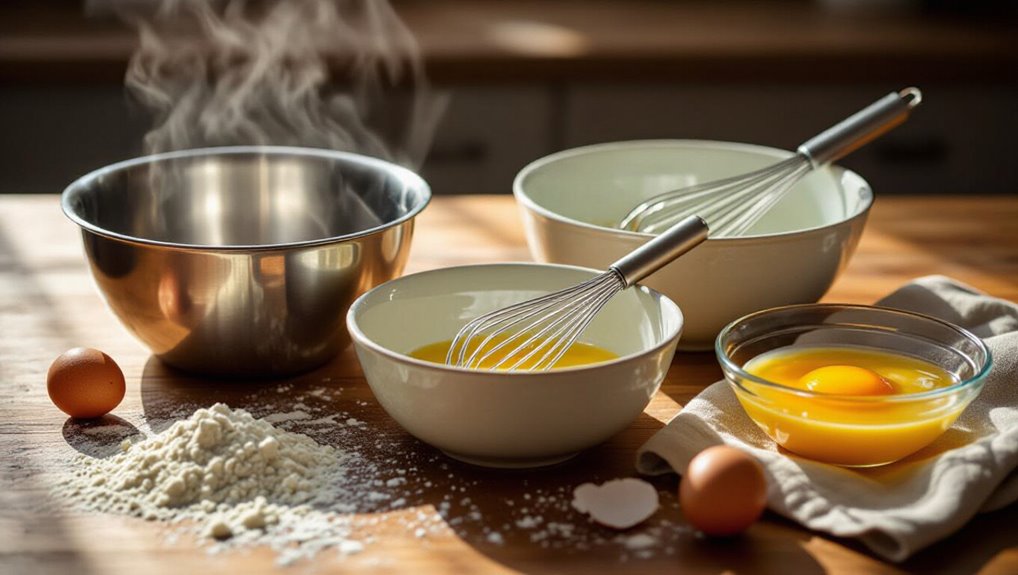
Because the bowl’s shape guides how ingredients move and combine, choosing the right one changes your results.
You’ll pick wide, shallow bowls for rapid evaporation and easy folding, tall narrow ones for whipping and containing splatter, and rounded bottoms for thorough whisking.
Shape affects aeration, heat transfer, and ease of scraping, so match form to technique for cleaner, more consistent outcomes.
How Mixing-Bowl Size Affects Mixing, Whisking, Proofing, And Storage
Size matters: pick a bowl that leaves enough room for ingredients to move without being so large that you lose control.
Choose a bowl roomy enough for movement but not so big you lose control—balance space and manageability.
For mixing and whisking, choose a bowl with space for vigorous motion to prevent spills and guarantee even incorporation.
For proofing, a larger bowl allows dough expansion and cover placement.
For storage, use appropriately sized bowls to minimize air and maximize fridge efficiency.
Best Materials For Cold Tasks (Salads, Whipped Cream)
For cold tasks like salads and whipped cream, you’ll want a bowl with a nonreactive surface to keep flavors pure and avoid discoloration.
Choose materials that hold chill well—like stainless steel or glass—so ingredients stay crisp and whipping stays stable.
The bowl’s texture and finish also matter, since a smooth, polished interior lets ingredients glide and aerate evenly for a better final texture.
Nonreactive Surface Benefits
When you’re tossing salads or whipping cream, choose a nonreactive bowl—like stainless steel, glass, or ceramic—so acidic ingredients won’t pick up metallic flavors or discolor.
You’ll preserve true flavors, prevent chemical reactions, and avoid staining from beets or citrus. Nonreactive surfaces also resist odors and are easy to clean, keeping ingredients fresh and presentation flawless.
Temperature Retention Ability
Although metal and glass each hold chill differently, choosing the right bowl makes a noticeable difference when you’re prepping cold dishes.
Use stainless steel or chilled glass for salads and whipped cream—they stay cooler longer, slowing wilt and deflation.
Ceramic retains cold well too but warms faster than metal.
Pre-chill bowls in the fridge or freezer to maximize temperature retention during assembly.
Texture And Finish Impact
Temperature control helps, but the bowl’s texture and finish also shape how cold ingredients behave. You’ll prefer smooth, nonporous surfaces for whipped cream to prevent sticking, while lightly textured bowls can hold dressings briefly without sliding. Choose matte or polished metal for fast chill; glass gives stability but absorbs cold slower.
| Surface | Benefit |
|---|---|
| Polished metal | Rapid chilling |
| Matte metal | Grip for salads |
| Glass | Stable temperature |
| Ceramic | Gentle cooling |
Best Materials For Warm Tasks (Proofing, Warming, Marinating)
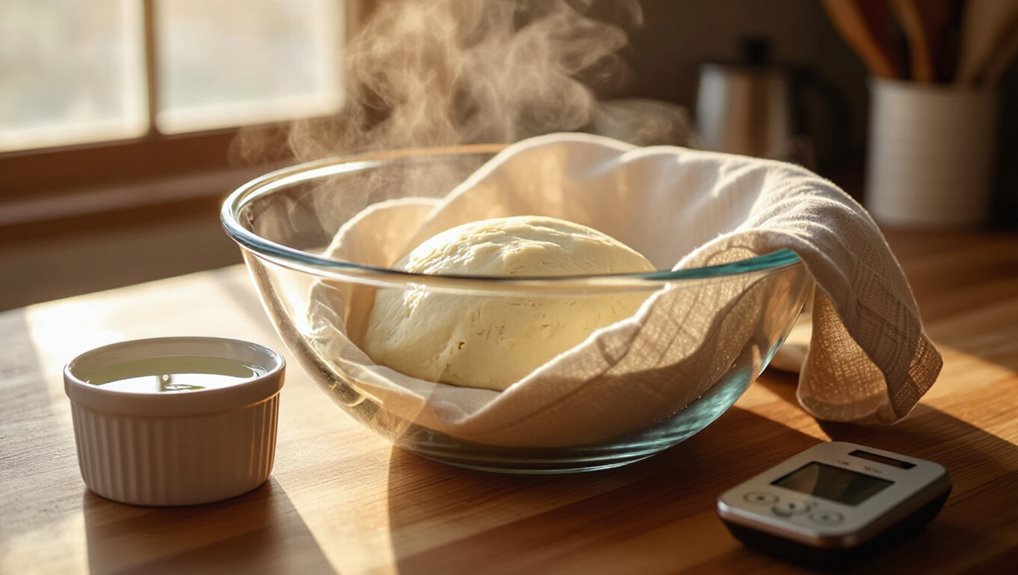
For warm tasks like proofing, gentle warming, or marinating, pick bowls that hold heat evenly and won’t react with food—glass, ceramic, and stainless steel are your best bets.
Glass and ceramic trap warmth for steady proofing and won’t leach flavors.
Stainless steel heats quickly and cools fast, ideal for marinating and transferring to heat.
Avoid reactive aluminum for acidic marinades.
Best Mixing Bowls For Whipping, Folding, Marinating, And Kneading
When you’re whipping egg whites, folding batter, marinating proteins, or kneading dough, choose bowls that give you stability, the right surface, and easy cleanup.
For whipping, use smooth, nonporous metal or glass.
For whipping, choose smooth, nonporous metal or glass bowls for stability, easy cleanup, and peak whites.
For folding, pick wide, shallow bowls.
For marinating, opt for nonreactive materials with tight-fitting lids.
For kneading, select heavy, roomy bowls that resist tipping and handle dough weight.
Caring For Stainless, Glass, Ceramic, Plastic, And Silicone Bowls
Although each material needs slightly different care, you can keep stainless, glass, ceramic, plastic, and silicone bowls looking and performing their best with a few simple habits: rinse promptly, avoid abrasive scrubbers on delicate finishes, dry thoroughly to prevent stains or rust, and store lids separately to stop trapped moisture.
- Wash stainless warm, dry fast.
- Avoid thermal shock for glass.
- Use nonabrasive sponges on ceramic.
- Sanitize plastic and silicone; air dry.
Quick Buying Guide: Pick A Mixing Bowl By Budget, Durability, And Use Case
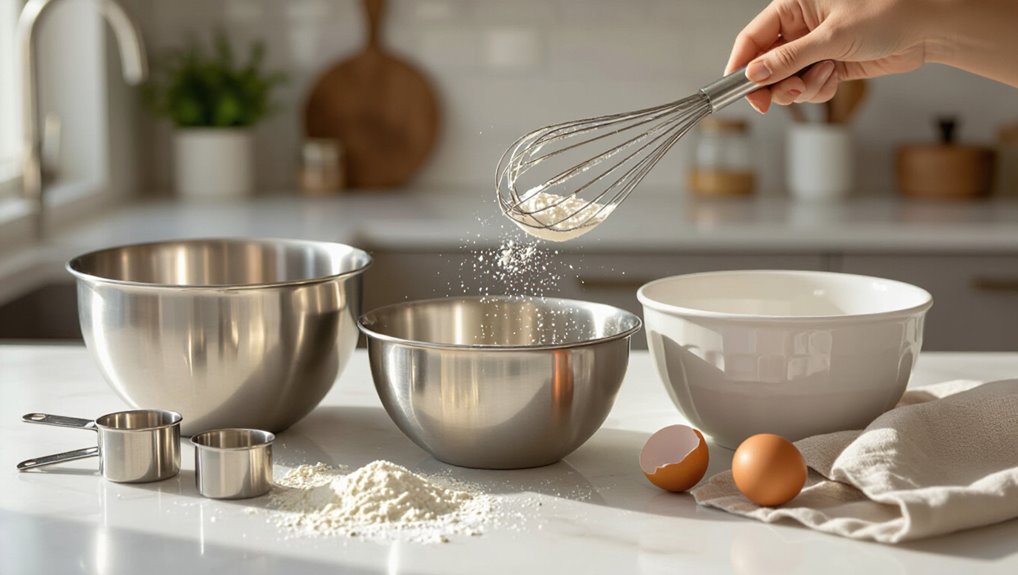
Because your cooking habits and budget shape the best choice, pick a mixing bowl by weighing cost, durability, and planned use:
choose stainless for durability and heat, glass for visibility and baking, ceramic for presentation, plastic for lightness and budget, and silicone for flexibility and storage.
Match sizes to recipes, prioritize nonreactive surfaces for acidic foods, and pick dishwasher-safe options for convenience.
Frequently Asked Questions
Can Mixing Bowls Be Used for Serving Food Directly?
Yes, you can use mixing bowls for serving food directly; just pick a clean, nonreactive, and presentable material like glass, stainless steel, or ceramic, and avoid scratched or porous surfaces that trap bacteria or flavors.
Are There Mixing Bowls Safe for Induction Stovetops?
Yes — you can use induction-safe mixing bowls if they’re made from magnetic stainless steel or have a ferrous base; check manufacturer specs, and don’t heat nonstick or plastic-lined bowls directly on an induction cooktop.
Do Mixing Bowls Retain Odors or Flavors Over Time?
Yes — they’ll sometimes retain odors or flavors, especially porous materials like wood or plastic; you can avoid that by choosing glass, stainless steel, or ceramic and rinsing promptly, deodorizing with baking soda or vinegar occasionally.
Can I Microwave a Metal-Rimmed Glass Mixing Bowl?
No, you shouldn’t microwave a metal-rimmed glass mixing bowl because the metal can spark, damage the microwave, and heat unevenly; remove metal trim or use fully microwave-safe glass or ceramic instead to avoid hazards and appliance harm.
Are Nesting Mixing Bowl Sets Dishwasher-Safe Long-Term?
Generally, yes — many nesting mixing bowl sets are dishwasher-safe, but you’ll want to check manufacturer instructions. Over time heat, detergent, and stacking can fade finishes, warp plastics, or loosen silicone seals, so handwashing’s safer.
Conclusion
Mixing bowls are one of the most useful tools you’ll own—pick the right shape, size, and material and you’ll mix, whisk, proof, marinate, and store with less fuss. Opt for stainless for durability, glass or ceramic for proofing and serving, and plastic or silicone for lightweight, cold tasks. Match bowl size to the job, care for materials properly, and balance budget with planned use to get the best, longest-lasting results.

