
Image Source: contentgrid.homedepot-static.com
How To Uninstall Kitchen Faucet Properly
Wondering how to uninstall a kitchen faucet? It’s a common DIY task that, with the right tools and a little patience, you can tackle yourself. This guide will walk you through the process step-by-step, from shutting off the water to removing the old fixture and preparing for a new one. Knowing how to remove kitchen faucet components is essential for any plumbing upgrade or repair, like fixing a leaky faucet repair.
Gathering Your Tools and Supplies
Before you begin the process to remove kitchen faucet, ensure you have all the necessary tools and supplies handy. Working with plumbing often involves unexpected snags, so being prepared can save you time and frustration. Having everything ready will make the job smoother, whether you’re just swapping out an old faucet or preparing for a full faucet installation.
Here’s a list of what you’ll likely need:
- Adjustable Wrenches: You’ll need a few different sizes to loosen and tighten various nuts and fittings.
- Basin Wrench: This specialized tool is a lifesaver for reaching tight spots under the sink, especially for faucet nuts.
- Plumber’s Putty or Silicone Sealant: This will be used to create a watertight seal when installing a new faucet.
- Bucket or Towels: To catch any residual water when disconnecting the supply lines.
- Safety Glasses: Protect your eyes from debris and dripping water.
- Work Gloves: To protect your hands.
- Flashlight or Headlamp: The area under the sink is often dark.
- Penetrating Oil (Optional): For stubborn or corroded nuts.
- Scraper or Putty Knife: To remove old plumber’s putty or sealant.
- Rags: For wiping up water and cleaning.
Step 1: Shutting Off the Water Supply
This is the absolute first and most critical step. You cannot proceed with removing the faucet until the water supply is completely shut off. This prevents flooding and potential water damage to your kitchen.
Locating the Shut-Off Valves
Most kitchen sinks have dedicated shut-off valves located directly beneath the sink. These are usually small, oval-shaped handles.
- Hot Water Valve: Typically found on the left side.
- Cold Water Valve: Typically found on the right side.
Turn both handles clockwise until they are snug. Do not overtighten, as this can damage the valves.
Testing the Shut-Off
To confirm the water is off, turn on your kitchen faucet. Both the hot and cold water should stop flowing completely after a few seconds. Let the water run for a moment to drain any remaining pressure in the lines.
What if I Can’t Find Shut-Off Valves?
If you cannot locate individual shut-off valves under your sink, or if they appear to be faulty and won’t close completely, you will need to shut off water valve for the entire house. This is usually found in your basement, garage, or near your water meter. Turn the main valve completely off to stop the flow of water to all fixtures.
Step 2: Disconnecting the Water Supply Lines
Once the water is off, you can safely disconnect the flexible hoses that connect your shut-off valves to the faucet. This is part of the under sink plumbing you’ll be working with.
Detaching Supply Lines from Valves
- Place a bucket or some towels directly under the shut-off valves and supply line connections. This will catch any residual water that may still be in the lines.
- Using an adjustable wrench, carefully loosen the nuts connecting the supply lines to the shut-off valves. Turn the nuts counter-clockwise.
- Once loose, gently pull the supply lines away from the valves.
Detaching Supply Lines from Faucet
The other ends of the supply lines connect to the bottom of your faucet.
- You may need to position yourself to get a good angle for this. A basin wrench can be very helpful here if the space is tight.
- Locate where the supply lines connect to the faucet body.
- Use an adjustable wrench to loosen the nuts attaching the supply lines to the faucet. Again, turn counter-clockwise.
- Once disconnected, gently pull the supply lines away from the faucet.
Step 3: Removing the Faucet’s Mounting Hardware
This is often the most challenging part of how to uninstall a kitchen faucet, as the nuts and bolts holding the faucet in place are usually in a very confined space under the sink.
Locating the Mounting Nuts
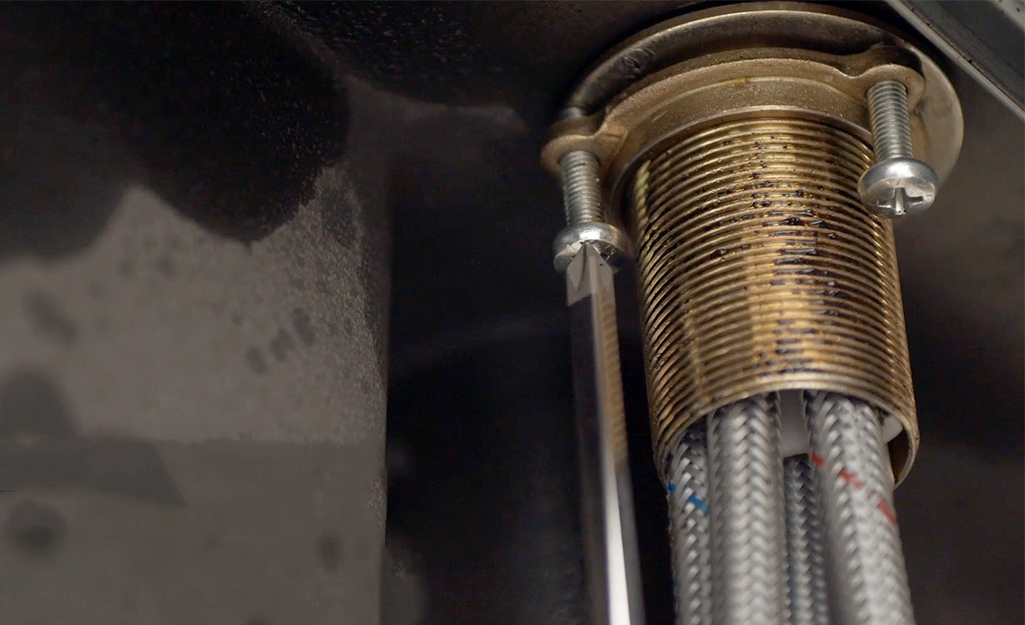
Look up under the sink. The faucet base will have mounting hardware securing it to the sink or countertop. This can vary depending on the type of faucet, but it typically involves nuts that thread onto bolts extending from the faucet body.
Using the Basin Wrench
The basin wrench is designed specifically for this task. Its long handle and pivoting jaw allow you to reach and grip these nuts in tight spaces.
- Position the basin wrench so its jaw can grip the mounting nut.
- Turn the wrench counter-clockwise to loosen the nut. This may require some effort, especially if the nuts are old or corroded.
- If a nut is particularly stubborn, apply a penetrating oil and let it sit for a few minutes before trying again.
- Repeat this process for all mounting nuts securing the faucet. Most faucets have at least two.
Removing Other Mounting Components
Some faucets might have different types of mounting hardware, such as screws or clips. Inspect the area around the faucet base under the sink to identify and remove anything that is securing it.
Step 4: Lifting the Old Faucet Away
Once all the water lines are disconnected and the mounting hardware is removed, the faucet should be loose.
- From above the sink, grasp the faucet firmly.
- Gently try to wiggle it. If it moves freely, you can lift it straight up and out of the sink holes.
- If it’s still stuck, check again under the sink for any missed nuts or components. Sometimes, old plumber’s putty can create a strong bond.
Dealing with Stubborn Faucets
If the faucet is truly stuck, you may need to use a scraper or putty knife to gently break the seal created by the old plumber’s putty or silicone sealant. Be careful not to damage your sink or countertop during this process.
Step 5: Cleaning the Sink Surface
After you successfully remove kitchen faucet, you’ll notice the area where it sat. There will likely be old plumber’s putty, sealant, and general grime. This is a good time to clean the surface thoroughly.
- Use a scraper or putty knife to carefully remove any residue.
- Wipe the area down with a damp cloth and a mild cleaning solution.
- Ensure the surface is completely dry before proceeding with any new installation. A clean surface is crucial for creating a proper seal for your new faucet.
Replacing Your Kitchen Faucet: A Brief Overview
Knowing how to uninstall a kitchen faucet is only half the battle; the next step is often installing a new one. The process of faucet installation is largely the reverse of removal.
- Preparation: Clean the sink holes and ensure you have all the parts for your new faucet.
- Sealing: Apply plumber’s putty or silicone sealant to the base of the new faucet as per the manufacturer’s instructions.
- Placement: Insert the new faucet into the sink holes.
- Securing: From under the sink, attach the new mounting hardware and tighten it securely.
- Connecting: Connect the new water supply lines to the faucet and the shut-off valves.
- Testing: Turn the water supply back on gradually and check for leaks at all connections. Turn the faucet on and off to ensure proper operation.
Common Issues and Troubleshooting
When you attempt to remove kitchen faucet, you might encounter a few common problems.
- Corroded Nuts: If nuts are rusted and won’t budge, penetrating oil is your best friend. Let it soak for a while. In extreme cases, you might need to carefully cut the nuts off with a mini hacksaw or oscillating tool, but this is a last resort and requires extra caution.
- Stuck Supply Lines: Sometimes the connection point of the supply line to the faucet can seize up. Again, penetrating oil can help. If the line itself is old and brittle, you might need to replace the supply line along with the faucet.
- Tight Spaces: The lack of space under the sink is the most frequent complaint. A basin wrench is essential, but sometimes a flexible socket extension or even carefully maneuvering a standard wrench can work.
Table: Tools and Their Uses
| Tool | Primary Use | Notes |
|---|---|---|
| Adjustable Wrenches | Loosening/tightening nuts on supply lines & valves | Have at least two sizes available. |
| Basin Wrench | Reaching and loosening faucet mounting nuts | Its unique design is crucial for tight spaces. |
| Bucket/Towels | Catching water | Place them strategically under all connections before disconnecting. |
| Penetrating Oil | Loosening corroded or stuck nuts | Apply and let it sit for best results. |
| Scraper/Putty Knife | Removing old sealant and putty | Be gentle to avoid scratching surfaces. |
| Safety Glasses | Eye protection | Protect against dripping water and debris. |
Frequently Asked Questions (FAQ)
Q1: How long does it typically take to uninstall a kitchen faucet?
A1: For an experienced DIYer, it might take anywhere from 30 minutes to an hour. For a beginner, it could take longer, perhaps 1-2 hours, especially if you encounter stubborn parts.
Q2: Do I need to shut off the main water supply for the house?
A2: Only if you cannot find or operate the individual shut-off valves under your sink. Always try the local valves first.
Q3: What if my faucet is a single-hole type vs. a three-hole type? Does the removal process differ?
A3: The core process of disconnecting water lines and mounting hardware remains the same. The difference is mainly in the number of connections and mounting points you need to address under the sink. A single-hole faucet typically has one mounting nut and one set of supply lines. A three-hole faucet will have multiple mounting nuts and separate supply lines for hot and cold water, and possibly a sprayer hose.
Q4: I have a garbage disposal. Does that affect how I uninstall my kitchen faucet?
A4: In most cases, the garbage disposal’s plumbing is separate from the faucet’s water supply. However, the disposal unit can sometimes make access to the faucet’s mounting hardware more challenging. Ensure your disposal is turned off at the switch and breaker for safety, though it usually doesn’t need to be disconnected unless it’s directly interfering with your work.
Q5: My old faucet left a lot of stubborn residue. What’s the best way to clean it?
A5: After scraping off the bulk of the material with a putty knife or scraper, a good all-purpose cleaner or a specialized cleaner for residue removal can be effective. For very tough spots, a plastic scouring pad can be used gently. Always check the material of your sink or countertop to ensure the cleaner won’t damage it.
Q6: Can I replace my kitchen faucet myself, or should I call a plumber?
A6: Uninstalling and installing a kitchen faucet is a very common DIY project. If you are comfortable with basic tools and following instructions, you can likely do it yourself. If you’re hesitant or run into significant problems, a plumber is always a good option. This knowledge is also helpful for anyone looking to perform a leaky faucet repair.
By following these steps, you can confidently remove your old kitchen faucet and prepare for a smooth faucet installation of a new one. Remember to work methodically and safely.