
Can you take out kitchen cabinets yourself? Absolutely! With the right tools and a bit of patience, DIY cabinet removal is a manageable project for most homeowners embarking on a kitchen remodel or renovation. This guide will walk you through the process, from preparation to the final cabinet dismantling, making your kitchen demolition a smoother experience.
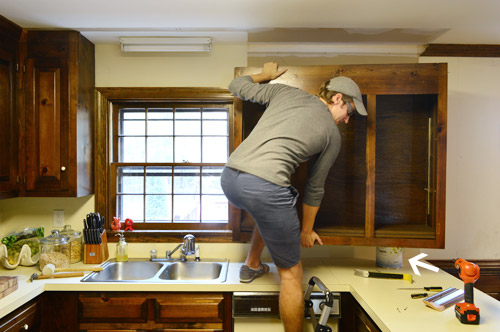
Image Source: images.younghouselove.com
Getting Ready for Cabinet Removal
Before you even think about unscrewing a hinge, proper preparation is key to a safe and efficient cabinet removal. This phase is as crucial as the actual dismantling. It ensures you have everything you need and prevents potential problems down the line.
Gathering Your Tools and Supplies
Having the right tools on hand will make the job much easier. Think of it like packing for a trip – you wouldn’t leave without essentials.
- Screwdrivers: A Phillips head and a flathead screwdriver are your primary tools. A power drill with various bits can speed things up significantly.
- Pry Bar: A medium-sized pry bar is essential for gently loosening stubborn cabinets.
- Utility Knife: For scoring caulk or paint lines.
- Socket Wrench Set: Some cabinets are secured with nuts and bolts.
- Safety Gear: Always wear safety glasses and work gloves. A dust mask is also a good idea, especially if the cabinets are old.
- Drop Cloths or Tarps: To protect your floors from debris.
- Reciprocating Saw (Optional but Recommended): For stubborn screws or when cabinets are glued in place, a reciprocating saw with a wood-cutting blade can be a lifesaver.
- Buckets or Toolboxes: To keep screws and small parts organized. Labeling them will be a lifesaver later if you plan on reinstalling or moving the cabinets.
- Painter’s Tape: For labeling cabinet sections if you’re keeping them for later use or just want to be extra organized.
Disconnecting Utilities: A Crucial Safety Step
This is non-negotiable. Working with electricity and plumbing can be dangerous.
- Electricity:
- Identify Circuits: Locate your home’s electrical panel.
- Shut Off Power: Turn off the circuit breakers supplying power to the outlets and lights within your kitchen, especially those near the cabinets. If you’re unsure which breaker controls what, you can use a non-contact voltage tester to confirm the power is off at the fixture.
- Test: Always test outlets and light fixtures with a voltage tester to be absolutely sure the power is off before proceeding.
- Plumbing:
- Locate Shut-Off Valve: For sinks and dishwashers located within or behind cabinets, find the main water shut-off valve for your kitchen or the entire house.
- Turn Off Water: Close the valve tightly.
- Drain Lines: Open the faucet closest to the work area to drain any remaining water in the pipes. Have a bucket ready to catch drips.
Preparing the Work Area
A clean and organized workspace makes the job much safer and more efficient.
- Clear the Kitchen: Remove all food items, dishes, small appliances, and anything else from the countertops and inside the cabinets.
- Protect Your Floors: Lay down drop cloths or tarps to catch dust, paint chips, and dropped tools. This will save you a lot of cleanup later.
- Secure Pets and Children: Keep them away from the work area.
Step-by-Step Cabinet Dismantling
Now, let’s get down to business. We’ll start with the cabinet doors and then move on to the frames themselves.
Removing Cabinet Doors and Drawer Fronts
This is often the easiest part of cabinet removal.
- Open the Cabinet Door: Access the hinges.
- Locate Screws: Most cabinet doors are attached with screws to the cabinet frames. You’ll typically find two screws per hinge.
- Support the Door: Have someone help you, or prop the door up so it doesn’t fall when the screws are removed.
- Unscrew: Use your screwdriver (or drill) to remove the screws.
- Remove Door: Gently pull the cabinet door away from the frame.
- Organize Hardware: Keep the screws and hinges together. You can place them in a labeled baggie. This is important if you plan on reinstalling them or selling them.
- Drawers: Drawer fronts are usually attached with screws from the inside of the drawer box. Remove these screws to detach the front.
Table: Cabinet Door Removal Summary
| Step | Action | Tools Needed |
|---|---|---|
| Access Hinges | Open the cabinet door | None |
| Locate Screws | Find screws attaching hinges to the frame | Screwdriver, Drill (optional) |
| Support Door | Prevent door from falling | Helper, Props (optional) |
| Unscrew Hinges | Remove screws from hinges | Screwdriver, Drill (optional) |
| Remove Door | Gently pull door away | None |
| Organize Hardware | Bag and label screws/hinges | Baggies, Labels |
| Drawer Fronts | Unscrew from inside the drawer box | Screwdriver, Drill (optional) |
Detaching Wall Cabinets
Wall cabinets are typically attached to studs in the wall.
- Check for Support: Before you start, gently push up on the bottom of the cabinet. If it feels loose, you’re on the right track. If it feels very secure, double-check for hidden screws or adhesive.
- Locate Mounting Screws: Look inside the cabinet, along the top and bottom edges of the cabinet frame where it meets the wall. There might also be screws along the back of the cabinet, often covered by a thin strip of wood or cardboard. Sometimes, screws are driven through the cabinet’s support cleats into the studs.
- Use a Pry Bar (Carefully): If the cabinets are painted or caulked to the wall, use a utility knife to score the caulk line around the edges. Then, carefully insert your pry bar between the cabinet frame and the wall, using a small piece of wood or cardboard as a buffer to protect the wall. Gently pry the cabinet away from the wall, working your way along the length of the cabinet.
- Unscrew: While supporting the cabinet (again, a helper is ideal here), use your screwdriver or drill to remove the mounting screws.
- Lower the Cabinet: Once all screws are out and the cabinet is slightly pulled away from the wall, carefully lower it to the floor. Be prepared for the weight.
Removing Base Cabinets
Base cabinets are usually secured to the wall and sometimes to the floor.
- Remove Doors and Drawers: As described in the previous section, remove all cabinet doors and drawers first. This makes them lighter and easier to work with.
- Check for Countertop Interference: If you have a countertop still attached, you might need to remove it first, or at least get it out of the way. Countertops are often secured with screws or adhesive from underneath.
- Locate Mounting Screws: Look inside the cabinet, along the top edge of the cabinet frame, where it meets the backsplash or wall. Screws are often driven through a support cleat attached to the top rear of the cabinet into wall studs. Also, check the back of the cabinet frame and along the bottom where it meets the floor.
- Pry Carefully: Similar to wall cabinets, use your utility knife to score any caulk or paint. Then, use your pry bar with a buffer to gently loosen the cabinet from the wall.
- Unscrew: Remove all visible mounting screws. You might need to reach into the cabinet to access screws at the back or top.
- Check for Floor Fasteners: Some base cabinets are also secured to the floor. You might find screws driven through the bottom cabinet frame into the subfloor.
- Leverage and Lift: Once all screws are removed, you may need to gently lever the cabinet up and away from the wall to free it from any remaining adhesives or anchors. Lift it carefully.
Dealing with Stubborn Fasteners and Adhesives
Sometimes, cabinets are more stubborn than expected.
- Glued Joints: If cabinet frames seem glued in place, a reciprocating saw with a long wood-cutting blade can be used to cut through the adhesive or any hidden fasteners. Be very careful not to cut too deep and damage the wall or floor.
- Hidden Screws: Walk around the entire cabinet, inside and out. Look for any visible screws, especially in corners or along edges. Sometimes screws are hidden behind decorative trim or filler pieces.
- Plaster and Drywall: When prying, go slowly. Old plaster can be brittle. If you’re concerned about damaging the drywall, use a wider piece of wood or a specialized drywall saver on your pry bar.
What to Do With Old Cabinets?
Once your cabinets are out, you’ll need to decide what to do with them.
- Sell Them: If your cabinets are in good condition, consider selling them. Many people looking for a budget kitchen remodel are happy to buy used cabinets. Online marketplaces like Craigslist, Facebook Marketplace, or Habitat for Humanity ReStores are good options.
- Donate Them: If selling isn’t feasible, donate them to a local charity or building material reuse center.
- Recycle Them: If they are beyond repair or resale, check with your local waste management or recycling center for options. Wood can often be recycled.
- Keep Them for a Project: If you’re planning on a future DIY project or a separate workshop, you might want to keep some of the cabinets.
Reinstalling Cabinets (A Brief Overview)
If your goal is cabinet installation after a renovation, the process is essentially the reverse of removal, but with added precision.
- Layout and Marking: Carefully measure and mark the exact positions of your cabinets on the wall, ensuring they are level and plumb.
- Secure to Studs: Use appropriate screws to attach the cabinet frames securely to wall studs.
- Leveling and Squaring: Ensure each cabinet is perfectly level and plumb, and that adjacent cabinets are square to each other. Shims can be used to make adjustments.
- Attach Doors and Drawers: Reattach the cabinet doors and drawer fronts, ensuring they align correctly.
- Adjust Hinges: Most cabinet hinges have adjustment screws that allow you to fine-tune the alignment of the doors.
Troubleshooting Common Issues During Removal
Even with careful planning, you might encounter a few snags.
Cabinet is Stuck Firmly to the Wall
- Check for missed screws: Thoroughly inspect all visible and hidden areas.
- Score all edges: Make sure you’ve cut through all paint or caulk.
- Gentle persuasion: Use your pry bar with a wider buffer to distribute force over a larger area. Work slowly around the perimeter.
- Reciprocating saw: As a last resort, a fine-tooth wood blade on a reciprocating saw can cut through hidden fasteners or adhesives. Be extremely cautious not to damage the wall.
Damaging the Drywall or Plaster
- Use a buffer: Always place a piece of wood, cardboard, or a drywall saver between your pry bar and the wall.
- Pry in stages: Don’t try to pull the entire cabinet away at once. Pry a little, reposition the buffer, and pry again.
- Score carefully: Ensure your utility knife cuts only the caulk or paint, not the drywall paper.
The Cabinet is Heavier Than Expected
- Get a helper: This is the best solution. A second person can make a huge difference in safely maneuvering heavy cabinets.
- Remove contents: Ensure all items from inside the cabinets and drawers are removed before attempting to detach them from the wall.
- Use a furniture dolly: Once a cabinet is free, a furniture dolly can help move it safely.
Frequently Asked Questions (FAQ)
Q1: Do I need to turn off the electricity and water before removing cabinets?
A1: Yes, absolutely. It is critical for your safety to shut off the electricity to all outlets and lights connected to the cabinets and to turn off the water supply to any sinks or dishwashers before you begin cabinet removal.
Q2: How do I know if my cabinets are attached to studs?
A2: Cabinets are almost always secured to wall studs for stability. You’ll typically find mounting screws driven from the cabinet frame directly into the studs.
Q3: What if the cabinet doors won’t come off easily?
A3: Check for any decorative trim or faceplates that might be covering the hinge screws. Ensure you’re using the correct type of screwdriver bit. If screws are stripped, you may need a screw extractor.
Q4: Can I remove kitchen cabinets by myself?
A4: Yes, with the right tools and techniques, DIY cabinet removal is possible for most individuals. However, having a helper is highly recommended, especially for larger or heavier cabinets, to ensure safety and ease of movement.
Q5: Should I remove the countertop before the base cabinets?
A5: Generally, yes. Countertops are often installed on top of base cabinets and can be secured from underneath. Removing the countertop first provides better access to the cabinet mounting screws and prevents damage.
By following these detailed steps, your DIY cabinet removal project can be accomplished efficiently and safely, paving the way for your exciting kitchen renovation!