
Want to build your own kitchen table? Yes, you can build a sturdy and beautiful kitchen table yourself with basic tools and materials. This guide will walk you through the entire process, from choosing your design to the final coat of finish, helping you create a functional centerpiece for your dining space. This project is a fantastic way to dive into DIY dining table construction and brings immense satisfaction when you can say, “I built this!”
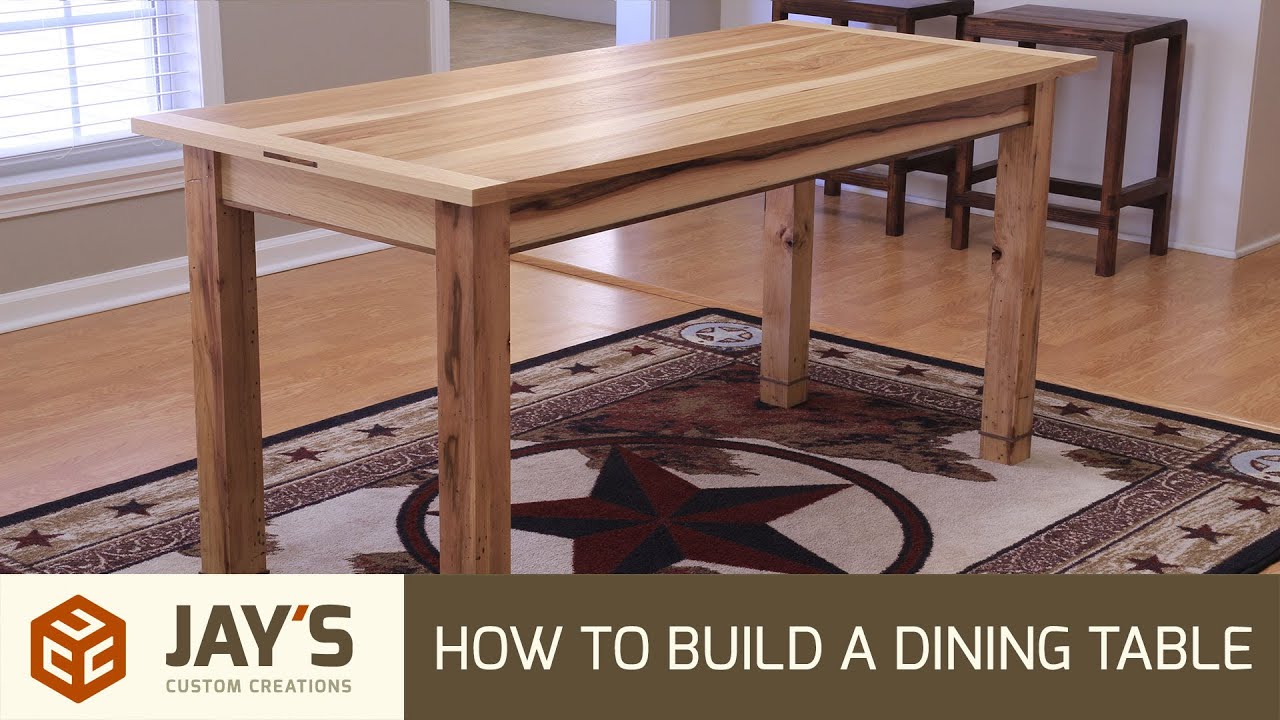
Image Source: i.ytimg.com
Planning Your DIY Dining Table
Before you pick up a saw, careful planning is key. What size table do you need? How many people will typically sit at it? What style are you going for – modern, rustic, or something in between? These questions will guide your material choices and the overall dimensions.
Determining Dimensions
- Seating Capacity: Measure your dining space. A good rule of thumb is to allow 24-30 inches of width for each person.
- Table Shape: Rectangular tables are most common and efficient for most spaces. Round or square tables can also work well, especially in smaller areas.
- Height: Standard dining table height is 28-30 inches from the floor to the top of the tabletop.
Style Considerations
- Rustic Kitchen Table Build: This often involves using reclaimed wood or wood with prominent grain patterns and knots. A slightly rougher finish can enhance the rustic charm.
- Modern: Clean lines, minimalist designs, and perhaps a mix of wood and metal are hallmarks of modern kitchen tables.
- Farmhouse: Similar to rustic but often with thicker legs and a more substantial feel.
Material Selection
The wood you choose significantly impacts the final look, durability, and cost.
Wood Options
| Wood Type | Pros | Cons | Best For |
|---|---|---|---|
| Pine | Inexpensive, lightweight, easy to work with | Prone to dents and scratches, can be knotty | Budget projects, rustic styles |
| Oak | Hard, durable, beautiful grain, holds finish well | More expensive, can be heavy, harder to cut | Sturdy, long-lasting tables |
| Maple | Hard, smooth grain, very durable, good for painting | Can be more expensive, can be tough to stain evenly | Modern tables, painted finishes, smooth surfaces |
| Poplar | Affordable, easy to work with, takes paint well | Softer than oak/maple, can dent easily | Painted tables, beginner projects |
| Reclaimed Wood | Unique character, eco-friendly, rustic appeal | Can be inconsistent, may require extra cleaning/prep | Rustic kitchen table build, statement pieces |
Hardware and Supplies
- Wood screws
- Wood glue
- Wood filler (optional, for filling gaps or knots)
- Sandpaper (various grits: 80, 120, 180, 220)
- Wood finish (stain, polyurethane, oil, wax)
- Brushes or rags for applying finish
Essential Tools
- Measuring Tape: For accurate measurements.
- Pencil: For marking cuts.
- Safety Glasses: Always protect your eyes.
- Hearing Protection: Especially when using power tools.
- Circular Saw or Miter Saw: For making straight cuts. A miter saw offers more precise angles.
- Drill/Driver: For pre-drilling holes and driving screws.
- Clamps: Essential for holding pieces together while glue dries.
- Orbital Sander: For smoothing surfaces.
- Sanding Block: For sanding in tight areas.
- Wood Chisel (optional): For cleaning up joinery.
- Workbench or Sawhorses: A stable surface to work on.
Crafting Your Kitchen Table: Step-by-Step
This guide focuses on building a simple, sturdy, rectangular wooden dining table with four legs. Many woodworking table plans follow similar foundational steps.
Step 1: Cutting Your Wood Pieces
Accuracy in cutting is paramount for a well-assembled table. Measure twice, cut once!
Materials Needed:
* Chosen lumber for tabletop, apron, and legs
* Measuring tape
* Pencil
* Circular saw or miter saw
* Safety glasses
* Hearing protection
Process:
- Tabletop Boards: If you’re using individual boards for the tabletop (common for a DIY dining table), cut them to your desired length. Ensure the ends are square.
- Legs: Cut four identical legs to your chosen height, subtracting the thickness of your tabletop and the height of your apron.
- Apron Pieces: The apron connects the legs and supports the tabletop. You’ll need two long pieces (for the sides) and two shorter pieces (for the ends). Cut these to the desired length, considering the width of your legs and how you’ll join them.
Tip: For a professional-looking finish, consider using a dado blade on a table saw to create grooves for attaching the tabletop or for joinery in the apron.
Step 2: Assembling the Tabletop
This is where your table starts to take shape.
Materials Needed:
* Tabletop boards
* Wood glue
* Clamps (pipe clamps, bar clamps)
* Orbital sander
* Sandpaper (80-grit for initial flattening)
* Biscuits or dowels (optional, for alignment)
* Drill with pilot bit and countersink bit
Process:
- Prepare Boards: Lay out your tabletop boards. If you’re using biscuits or dowels for alignment, cut the corresponding slots or drill holes in the edges of the boards.
- Apply Glue: Apply a generous bead of wood glue to the edges of the boards that will join.
- Join Boards: Fit the boards together, ensuring alignment. If using biscuits, insert them into the slots.
- Clamp Tightly: Use your clamps to draw the boards together. Place clamps evenly along the length of the tabletop, alternating above and below the boards to keep them flat. Ensure the tabletop remains flat; you might need cauls (scrap wood pieces) to distribute clamping pressure.
- Clean Up Squeeze-Out: Wipe away any excess glue that squeezes out with a damp cloth immediately. Dried glue is very hard to remove and can affect the finish.
- Let it Cure: Allow the glue to cure completely according to the manufacturer’s instructions (usually 24 hours).
Alternative for Simplicity: You can also use a large plywood sheet or MDF for the tabletop, especially for a painted finish. This simplifies the assembly process considerably.
Step 3: Building the Apron and Attaching Legs
The apron forms the frame that supports the tabletop and attaches to the legs. This is a crucial part of kitchen table construction for stability.
Materials Needed:
* Apron pieces
* Legs
* Wood glue
* Wood screws (appropriate length for your wood thickness)
* Drill/driver with pilot bit and countersink bit
* Clamps
* Measuring tape
Process:
-
Assemble the Apron Frame:
- Lay out your four apron pieces in a rectangular shape.
- Apply wood glue to the ends of the apron pieces where they will join.
- Pre-drill pilot holes and countersink them to prevent the wood from splitting.
- Secure the apron pieces together with wood screws. Ensure the corners are square using a carpenter’s square. You can also use pocket hole joinery for a cleaner look.
-
Attach Legs to the Apron:
- Place one leg flush against the inside corner of the apron frame. Ensure the top of the leg is flush with the top of the apron.
- Apply wood glue to the surfaces where the leg meets the apron.
- Pre-drill pilot holes through the apron and into the leg. Use long screws to ensure a strong connection.
- Important: For added strength, especially with heavier tabletops, consider using corner braces or specialized leg mounting plates.
- Repeat for all four legs.
Tip: Ensure all legs are the exact same length before attaching them. Any slight variation will result in a wobbly table.
Step 4: Sanding and Preparing for Finish
Proper sanding is vital for a smooth, professional finish on your DIY dining table.
Materials Needed:
* Orbital sander
* Sanding blocks
* Sandpaper in various grits (80, 120, 180, 220)
* Tack cloth or damp cloth
Process:
- Start with Coarse Grit: Begin with 80-grit sandpaper to remove any rough spots, dried glue, or unevenness, especially on the tabletop.
- Progress Through Grits: Move to 120-grit, then 180-grit, and finally 220-grit sandpaper. With each grit, sand in the direction of the wood grain. This progressive sanding removes the scratches left by the previous grit.
- Smooth Edges and Corners: Use a sanding block to ensure all edges and corners are smooth and slightly rounded over (unless a sharp edge is desired for your style).
- Clean Thoroughly: After each grit, use a vacuum or brush to remove dust. Before applying any finish, wipe down the entire table with a tack cloth or a slightly damp cloth to remove all fine dust particles. Dust is the enemy of a smooth finish.
Step 5: Applying the Finish
The finish protects your table and enhances its beauty. This is where your homemade table ideas truly come to life.
Materials Needed:
* Wood stain (optional)
* Wood finish (polyurethane, varnish, oil, wax)
* High-quality brushes or clean, lint-free rags
* Gloves
* Drop cloth
Process:
-
Staining (Optional):
- If you’re staining, apply the stain evenly with a brush or rag, following the wood grain.
- Allow the stain to penetrate for the time recommended by the manufacturer, then wipe off the excess with a clean rag.
- Let the stain dry completely.
-
Applying the Topcoat:
- Polyurethane/Varnish: This offers excellent durability. Apply thin, even coats with a good quality brush. Avoid over-brushing, which can create bubbles.
- Oil Finish: Tung oil or linseed oil penetrate the wood, offering a more natural look and feel. Apply liberally, let it soak in, then wipe off the excess. Multiple thin coats are better than one thick coat.
- Wax: Often used as a final topcoat over stain or oil for added protection and a soft sheen.
- In between Coats: Lightly sand with 220-grit or higher sandpaper between coats of polyurethane/varnish to ensure good adhesion and a smooth finish. Clean off dust with a tack cloth.
-
Drying and Curing: Allow each coat to dry completely according to the product’s instructions. Curing takes longer than drying; the table will continue to harden over several days or weeks, so avoid heavy use during this period.
Frequently Asked Questions (FAQ)
-
Q: How do I prevent my wooden dining table from wobbling?
- A: Ensure all your leg cuts are identical. Use strong joinery for the apron and legs. If wobbling occurs after assembly, you can try inserting shims under the shorter legs or leveling feet. Proper clamping during glue-ups also helps maintain squareness.
-
Q: What is the easiest way to assemble a kitchen table?
- A: Using pre-cut lumber and pocket hole joinery can simplify the process. For absolute ease, consider building a table with a solid wood slab or thick plywood top, which eliminates the need to glue up multiple boards.
-
Q: Can I use reclaimed wood for my kitchen table?
- A: Absolutely! Reclaimed wood adds immense character. Ensure it’s properly cleaned, de-nailed, and flattened before use. Be aware that reclaimed wood can be more unpredictable in terms of grain and stability.
-
Q: What kind of finish is best for a kitchen table?
- A: For high durability and moisture resistance, a good quality polyurethane or varnish is recommended. For a more natural feel, an oil-based finish like Tung oil or Danish oil can be a great choice, but it may require more frequent reapplication.
-
Q: How thick should the tabletop be?
- A: For a sturdy table, aim for a tabletop thickness of at least 1 inch (after sanding). Thicker tops (1.5-2 inches) offer more durability and a more substantial look, especially for rustic kitchen table builds.
Advanced Joinery and Design Ideas
While this guide covers a basic build, there are many ways to enhance your DIY dining table:
Joinery Techniques
- Pocket Holes: A fast and strong way to join apron pieces and attach the tabletop. Tools like the Kreg Jig make this very accessible.
- Mortise and Tenon: A traditional and very strong joint for connecting legs to aprons. Requires more skill and specialized tools.
- Dowels: Used for alignment and strength when joining tabletop boards or apron pieces.
Tabletop Variations
- Breadboard Ends: Adding contrasting wood strips to the ends of the tabletop can prevent warping and add visual interest.
- Butterfly Joinery: Using decorative wooden inlays (often in a butterfly or bow-tie shape) to bridge cracks in the wood, especially common with rustic finishes.
- Live Edge: Using a slab of wood with the natural, irregular edge intact for a very organic look.
Leg Styles
- Tapered Legs: Legs that narrow towards the floor for a more elegant look.
- Turned Legs: Created with a lathe for a classic furniture style.
- Metal Legs: A popular choice for modern or industrial styles, often purchased pre-made.
Maintaining Your Homemade Table
Once your kitchen table construction is complete and the finish is cured, proper care will ensure it lasts for years.
- Clean Spills Immediately: Damp cloths are usually sufficient. Avoid abrasive cleaners.
- Use Coasters and Placemats: Protect the surface from heat, moisture, and scratches.
- Dust Regularly: Use a soft, dry cloth.
- Reapply Finish (if needed): Oil finishes may need reapplication every 6-12 months depending on use. Polyurethane finishes are very durable but can be touched up if minor scratches occur.
Building your own table is a rewarding furniture building experience. It’s a fantastic DIY furniture project that allows for immense customization. With careful planning, precise execution, and a bit of patience, you’ll have a beautiful, custom-made kitchen table that you can be proud of for years to come. Enjoy the process of bringing your woodworking table plans to life!