
What are the best kitchen drawer organizers? The best kitchen drawer organizers are those that fit your specific needs and the items you store. They often include drawer dividers, trays, and expandable systems designed to maximize space and keep items tidy.
Kitchen drawers can quickly become chaotic dumping grounds. Utensils, gadgets, spices, and linens – everything seems to mingle and get lost. But with a little planning and the right tools, you can transform those messy drawers into models of efficiency. This guide will walk you through everything you need to know to conquer your kitchen drawers and create functional, organized spaces. We’ll cover the essential steps, from decluttering to selecting the perfect kitchen drawer solutions.
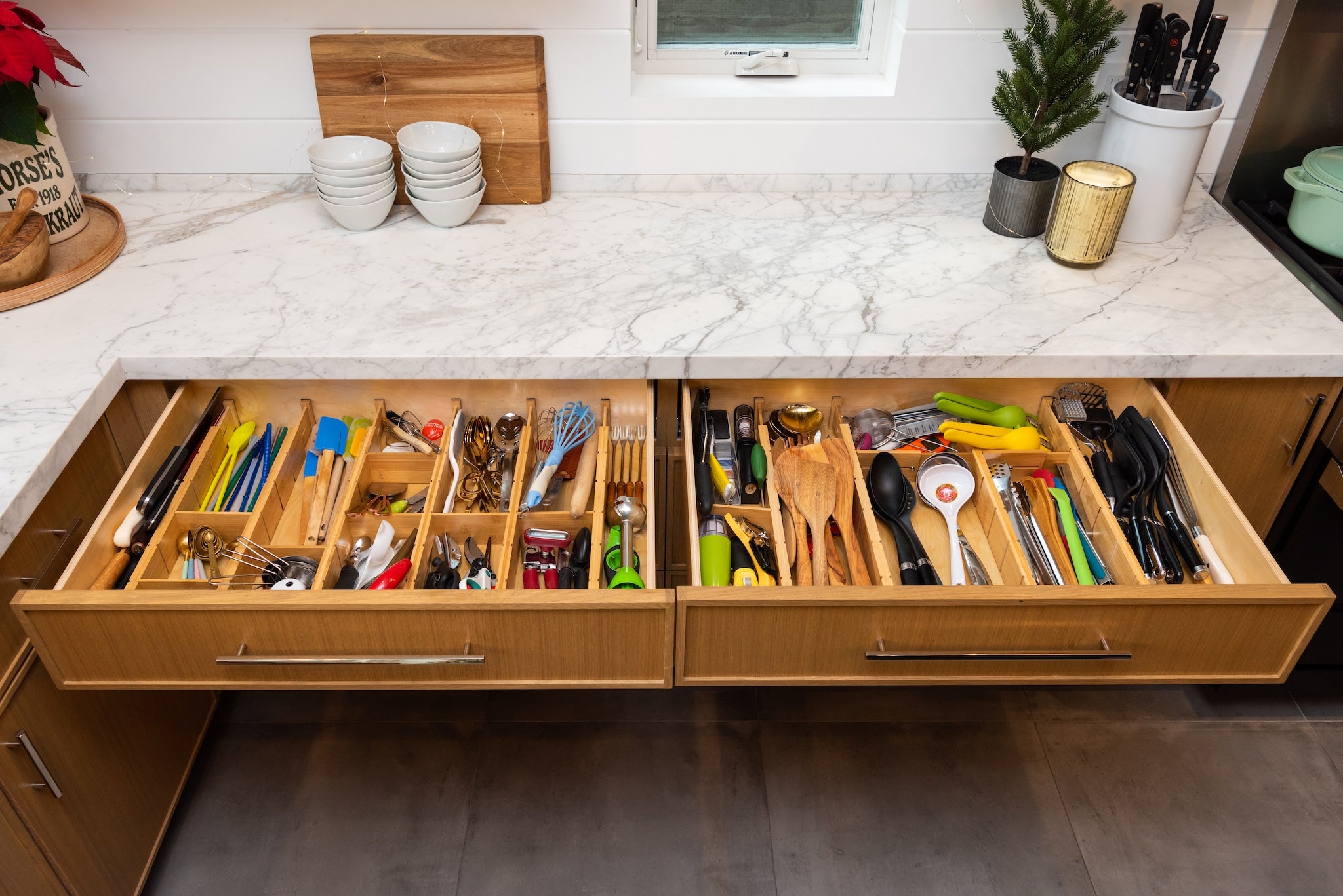
Image Source: www.jasmine-roth.com
The Foundation: Decluttering Your Kitchen Drawers
Before you can organize, you must declutter kitchen drawers. This is the most critical step. Without it, you’ll just be organizing a mess.
Step 1: Empty Everything
- Take it all out: Pull every single item from each drawer you plan to tackle. Yes, everything. This might seem daunting, but it’s essential. You need to see exactly what you’re dealing with.
- Group similar items: As you empty, start grouping like items together on your counter or a large table. Spatulas with spatulas, whisks with whisks, knives with knives, etc. This visual representation of your kitchen tools will surprise you.
Step 2: The Purge
Now comes the tough part: deciding what to keep and what to let go of. Be ruthless!
- The “Keep” Pile: These are items you use regularly, are in good condition, and serve a purpose.
- The “Donate/Give Away” Pile: These are items that are still good but you no longer need or use. Think duplicate gadgets, items you received as gifts and never liked, or tools you bought for a specific project that’s long over.
- The “Trash/Recycle” Pile: This is for broken utensils, items with missing parts, expired spices, and anything that’s no longer functional or hygienic.
Questions to Ask Yourself During the Purge:
- Have I used this in the last year?
- Is it broken or damaged?
- Do I have duplicates? (Do you really need three peelers?)
- Does it serve a purpose I actively use?
- Is it a novelty item that’s just taking up space?
Step 3: Clean the Empty Drawers
With drawers completely empty, give them a good wipe down. Remove any crumbs, sticky residue, or dust. A clean slate makes the organizing process more satisfying.
Mastering Drawer Layouts: The Art of Placement
Once you’ve decluttered, it’s time to think about where everything should go. The goal is to make your most-used items easily accessible.
Zone Your Kitchen
Think about the flow of your kitchen and how you use different tools.
- Prep Zone: Drawers near your primary prep area (cutting boards, counters) should hold knives, peelers, measuring cups, spoons, and whisks.
- Cooking Zone: Drawers near the stove or oven are perfect for cooking utensils like spatulas, ladles, tongs, and slotted spoons.
- Baking Zone: If you bake often, dedicate a drawer or two near your mixing bowls and oven for baking tools like cookie cutters, decorating tips, and rolling pins.
- Utensil Drawer: This is typically for everyday cutlery – forks, knives, spoons.
- Linen Drawer: For dish towels, oven mitts, and pot holders.
- Junk Drawer (If You Must!): Even the most organized kitchens can have one. If you can’t avoid it, make it work for you with specific organizers.
Strategic Placement
- Frequently Used Items: Place these in the front of drawers or in the most accessible zones.
- Less Frequently Used Items: These can go in the back or in less prime real estate.
- Heavy Items: Store heavier items like cast iron utensils or larger gadgets towards the back or bottom of drawers to prevent them from shifting.
The Power of Kitchen Drawer Organizers
This is where the magic happens! Kitchen drawer organizers are your best friends in the quest for tidy drawers. They prevent items from rolling around and maximize every inch of space.
Types of Kitchen Drawer Organizers
Here’s a breakdown of the most common and effective organizers:
1. Drawer Dividers
Drawer dividers are fantastic for creating customized compartments within a drawer. They are perhaps the most versatile of all kitchen drawer solutions.
- Adjustable Dividers: These are typically tension rods or spring-loaded dividers that you can move and reconfigure as your needs change. They are excellent for separating long items like spatulas or keeping stacks of smaller items neat.
- Pros: Highly adaptable, can be resized.
- Cons: May not be as sturdy for very heavy items.
- Fixed Dividers: These are often made of wood, plastic, or metal and are designed to create permanent sections. They can be L-shaped, U-shaped, or straight.
- Pros: Very sturdy, create defined spaces.
- Cons: Less flexible if your needs change.
- Expandable Dividers: Similar to adjustable, but often with interlocking pieces that allow for more complex configurations.
- Pros: Can create many small, specific compartments.
- Cons: Can be more expensive.
Table: Drawer Divider Materials and Their Benefits
| Material | Benefits | Ideal For |
|---|---|---|
| Bamboo/Wood | Natural look, sturdy, sustainable, can add warmth to the kitchen. | Utensils, cooking tools, larger gadgets. |
| Plastic | Lightweight, easy to clean, affordable, come in many shapes and sizes. | Cutlery, small gadgets, spices. |
| Metal | Durable, sturdy, good for heavier items, can have a modern look. | Knives (with slots), heavier tools, spices. |
| Acrylic | Clear, modern look, easy to see contents. | Small gadgets, spice jars, anything you want to display neatly. |
2. Utensil Trays
These are the classic, go-to organizers for your cutlery drawer.
- Standard Trays: Most come with pre-defined slots for forks, knives, and spoons.
- Expandable Trays: These are a game-changer, allowing you to adjust the width to fit your drawer perfectly and often offering extra compartments.
- Pros: Maximize space in cutlery drawers, keep items separate and neat.
- Cons: Can sometimes feel limiting if you have many different types of utensils.
3. Bin and Container Organizers
Small bins, cups, and containers are perfect for corralling smaller items like:
- Spice Jars: Use small, individual bins or tiered racks.
- Gadgets: Keep specialized tools like garlic presses, can openers, or corkscrews together.
- Baking Supplies: Cookie cutters, piping tips, small measuring spoons.
- Tea Bags or Coffee Pods: Keep them organized and visible.
4. Knife Blocks and Organizers
Safety first! Never store knives loose in a drawer.
- In-Drawer Knife Blocks: These lie flat in a drawer and have slots to hold knives safely.
- Magnetic Strips (for inside cabinets or drawers): Less common for drawers, but an option for shallower drawers.
- Pros: Protects knives and your fingers, keeps knives sharp.
- Cons: Requires dedicated drawer space.
5. Tiered Organizers and Risers
These are excellent for maximizing vertical space, especially in deeper drawers.
- Tiered Spice Racks: Allow you to see all your spices at a glance.
- Two-Tiered Utensil Organizers: The top tier holds smaller items, while the bottom tier holds longer utensils.
- Pros: Great for seeing everything, utilizes vertical space.
- Cons: Can make drawers feel more crowded if not used thoughtfully.
6. Custom Drawer Solutions
For those who want a truly bespoke organization system, custom kitchen drawers are the ultimate solution.
- Professional Installation: A professional can design and install inserts and dividers perfectly tailored to your drawer sizes and the specific items you store.
- Pros: Perfect fit, maximizes every inch, highly personalized.
- Cons: Most expensive option.
- DIY Customization: With some basic tools and materials, you can create your own custom dividers from wood or sturdy cardboard to fit specific items precisely.
- Pros: Can be cost-effective, highly personalized.
- Cons: Requires time, effort, and some crafting skill.
The Best Kitchen Drawer Organizers: Key Features to Look For
When shopping for best kitchen drawer organizers, consider these factors:
- Size and Fit: Measure your drawers precisely! Organizers should fit snugly without being forced. Many organizers are expandable or come in various sizes.
- Material: Durability, ease of cleaning, and aesthetics are important.
- Compartment Size and Shape: Do they suit the items you need to store? Are they adjustable?
- Sturdiness: Will they hold up to daily use and the weight of your kitchen tools?
- Ease of Cleaning: Opt for materials that are easy to wipe down or are dishwasher safe if possible.
Kitchen Drawer Hacks for Extra Efficiency
Beyond standard organizers, a few clever kitchen drawer hacks can elevate your organization game.
1. Use Vertical Space with Risers
As mentioned, tiered organizers are fantastic. You can also create your own DIY risers using small boxes or sturdy plastic containers. Place your most-used items on the top tier for easy access.
2. Employ Tension Rods
Small tension rods can be placed horizontally in shallow drawers to keep baking mats, cutting boards, or trays upright and prevent them from toppling over.
3. Labeling is Key
Even with the best organizers, a simple label can save you time and prevent rummaging. Label the drawer itself or individual bins. This is especially helpful for spice drawers or drawers with many small, similar items.
4. Magnetic Strips for Small Items
Attach small magnetic strips to the underside of drawer fronts or to the sides of bins to hold small metal items like measuring spoons, cookie cutters, or even scissors.
5. Rolling Pins and Long Items
Long items like rolling pins or cutting boards can be tricky. Try storing them vertically if your drawer is deep enough, or use a tall bin as a divider.
6. Baking Sheets and Pans
Use vertical dividers or magazine holders to store baking sheets, muffin tins, and cutting boards upright. This makes them much easier to grab without knocking everything else over.
7. The “Junk Drawer” Strategy
If you have a catch-all drawer, use small bins, cups, or even cut-down cardboard boxes to create specific homes for different types of items: pens, batteries, twist ties, tape, etc. This turns chaos into order.
Organizing Specific Kitchen Drawers
Let’s get practical and talk about how to organize some of the most common kitchen drawers.
The Utensil Drawer
- Declutter: Get rid of duplicates, broken utensils, and items you never use.
- Organize: Use an expandable utensil tray or a sturdy divider system.
- Cutlery: Place forks, knives, and spoons in their designated slots.
- Cooking Utensils: Group spatulas, whisks, ladles, tongs, and serving spoons together. Use dividers or individual bins to keep them from tangling.
- Smaller Gadgets: Keep peelers, can openers, garlic presses, and corkscrews in a separate bin or compartment.
The Spice Drawer
- Declutter: Check expiration dates and discard old or stale spices. Consolidate half-empty jars.
- Organize:
- Tiered Risers: Excellent for seeing all labels.
- Drawer Inserts: Many are specifically designed for spice jars, tilting them for better visibility.
- Small Bins: Group similar spices (e.g., baking spices, Italian herbs).
- Labeling: Clearly label each spice jar, even if it’s already printed. Consider uniform jars for a cleaner look.
The Gadget Drawer
- Declutter: Be honest about what you actually use. Do you need three different types of graters?
- Organize:
- Smaller Bins/Cups: Group similar gadgets. Keep all your measuring spoons together, all your small cookie cutters together, etc.
- Dividers: Use dividers to create larger sections for bulkier items like immersion blenders or meat thermometers.
The Knife Drawer
- Safety First: Never store knives loose.
- Organize:
- In-Drawer Knife Block: This is the safest and most effective way to store knives in a drawer. Ensure the slots are appropriately sized for your knives.
The Linen Drawer (Dish Towels, Oven Mitts, Pot Holders)
- Declutter: Discard stained, torn, or worn-out linens.
- Organize:
- Folding Techniques: Fold dish towels neatly. Rolling can also work well.
- Dividers or Bins: Use dividers to keep different types of linens separate (e.g., dish towels, oven mitts, trivets).
- Vertical Storage: Stand folded towels or oven mitts upright in bins.
Beyond Drawers: Complementary Kitchen Organization
While drawers are a major focus, remember that effective kitchen storage ideas often involve a holistic approach.
Organizing Kitchen Cabinets
Just like drawers, cabinets can benefit from decluttering and organization. Use shelves, risers, lazy Susans, and door organizers to maximize space and accessibility.
Pantry Organization
A well-organized pantry makes meal prep and grocery shopping much smoother. Use bins, baskets, turntables, and clear containers to store dry goods, canned goods, and snacks. This ties into the overall goal of a streamlined kitchen.
Maintaining Your Organized Drawers
Organization isn’t a one-time event; it’s an ongoing process.
- The “One In, One Out” Rule: When you buy a new kitchen tool, consider getting rid of an old one.
- Regular Check-Ins: Schedule a quick declutter and tidy-up every few months.
- Put Things Back Immediately: Make it a habit to return items to their designated spots after use.
- Re-evaluate as Needs Change: If your cooking habits change, your organization system might need an update too. Don’t be afraid to adjust your kitchen drawer solutions.
Frequently Asked Questions (FAQ)
Q1: How often should I declutter my kitchen drawers?
It’s a good idea to do a quick declutter of your kitchen drawers at least twice a year. A more thorough decluttering can happen annually or whenever you notice them becoming disorganized.
Q2: Can I use old shoe boxes or small containers for organizing?
Yes, absolutely! Repurposing sturdy boxes, containers, or even cut-down cardboard boxes can be a very cost-effective way to create dividers and compartments. Just make sure they fit your drawer dimensions and are clean.
Q3: What if I have very few kitchen drawers?
If you have limited drawer space, focus on maximizing vertical space within those drawers using tiered organizers and dividers. Additionally, explore creative kitchen storage ideas for your countertops and cabinets to compensate.
Q4: How do I organize my deep drawers?
Deep drawers are perfect for taller items or can be segmented using taller bins and dividers. Tiered organizers are also excellent for deep drawers, allowing you to utilize the full height and prevent items from getting lost at the bottom.
Q5: My kitchen is small, how can I maximize drawer space?
In small kitchens, every inch counts. Focus on using kitchen drawer organizers that expand or are adjustable to fit your specific drawers. Vertical storage solutions like tiered shelves and upright dividers are also key. Consider decluttering even more aggressively.
Organizing your kitchen drawers is an investment of time that pays off significantly in saved time, reduced frustration, and a more enjoyable cooking experience. By following these steps and utilizing the right kitchen drawer organizers, you can achieve a beautifully functional and efficient kitchen.