
Can I install a kitchen sink myself? Yes, with this easy DIY guide, you can confidently install your new kitchen sink. This comprehensive guide will walk you through every step, from countertop preparation to connecting pipes, making the process manageable even for beginners. We’ll cover plumbing basics, drain assembly, faucet installation, and crucial tips for sealing sink properly. If you’re considering a kitchen sink replacement or tackling a new installation, this guide is for you. We’ll also touch on garbage disposal mounting and essential under-sink plumbing connections.
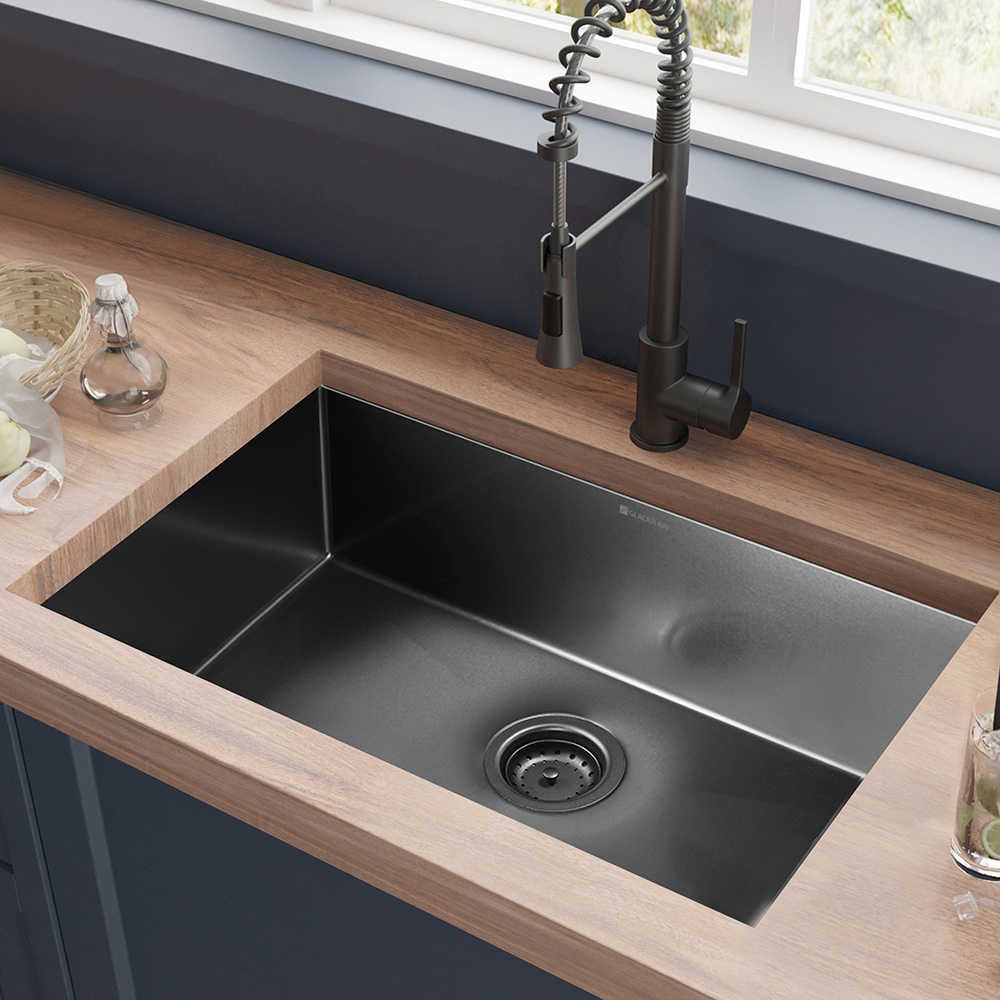
Image Source: contentgrid.homedepot-static.com
Getting Ready for Your New Sink
Before you dive into the installation, proper preparation is key. This ensures a smooth process and a watertight finish.
What You’ll Need: Tools and Materials
Gathering the right tools and materials beforehand saves time and frustration.
Essential Tools:
- Adjustable Wrenches (Two): For tightening and loosening various fittings.
- Pipe Wrench: For gripping pipes, especially drain pipes.
- Plumber’s Putty or Silicone Sealant: For creating a watertight seal around the sink rim and drain.
- Bucket: To catch any residual water from old pipes.
- Screwdrivers (Various Sizes): Both Phillips and flathead.
- Pliers: Standard and possibly needle-nose for small parts.
- Caulking Gun: If using silicone sealant.
- Utility Knife or Caulk Remover: For removing old sealant.
- Measuring Tape: To confirm measurements and fit.
- Safety Glasses: To protect your eyes.
- Gloves: To keep your hands clean and protected.
- Flashlight or Work Light: For better visibility under the sink.
- Rags or Old Towels: For cleaning up spills.
- Hacksaw or Reciprocating Saw: If you need to cut pipes or adjust openings.
- Level: To ensure the sink is installed straight.
- Drill with Hole Saw Bits: If you need to create new holes for faucets or accessories.
Essential Materials:
- New Kitchen Sink: Make sure it’s the correct size and type for your countertop.
- Faucet: Choose one that fits your sink and style.
- Drain Assembly (Strainer and Tailpiece): Often included with the sink, but check.
- P-Trap Kit: The curved pipe that prevents sewer gases from entering your home.
- Water Supply Lines: Flexible hoses that connect the faucet to the shut-off valves.
- Mounting Clips or Brackets: Usually come with the sink to secure it.
- Plumber’s Tape (Teflon Tape): For thread connections.
Deciphering Your Sink Type and Countertop
Different sink types require slightly different installation methods. Knowing what you have is crucial.
- Top-Mount (Drop-In) Sinks: These are the easiest to install. They have a rim that rests on top of the countertop. The sink drops into a pre-cut hole.
- Undermount Sinks: These are mounted from beneath the countertop, offering a seamless look. They require a more precise cut and a stronger mounting system.
- Farmhouse (Apron-Front) Sinks: These have a distinctive front panel that extends below the countertop. They often require cabinet modification.
- Integrated Sinks: These are made from the same material as the countertop, creating a unified surface. Installation is usually done by the countertop fabricator.
Preparing Your Countertop
Proper countertop preparation is vital for a secure and leak-free installation, especially for undermount sinks.
-
For Top-Mount Sinks:
- Measure and Mark: Carefully measure the opening needed for your sink. Check the manufacturer’s template or specifications.
- Cut the Hole: If you’re installing a new countertop or modifying an existing one, use a jigsaw or circular saw to cut the opening precisely. Ensure the edges are smooth.
- Clean the Surface: Wipe down the countertop around the opening to remove dust and debris.
-
For Undermount Sinks:
- Template Accuracy: Undermount sinks require a precise cutout. Use the template provided by the sink manufacturer. Trace it carefully onto the underside of the countertop.
- Professional Cutting: For stone or solid surface countertops, it’s highly recommended to have the cutout done professionally. They have specialized tools for clean, accurate cuts that minimize the risk of chipping or cracking.
- Clean Edges: Ensure the edges of the cutout are smooth and free of any rough spots.
Installing the Faucet and Drain Assembly
It’s often easier to install the faucet and drain assembly onto the sink before placing the sink into the countertop.
Faucet Installation Steps
Attaching the faucet to the sink is a straightforward process.
- Prepare the Faucet Base: Most faucets come with a gasket or require plumber’s putty to seal the base to the sink. Apply plumber’s putty in a rope-like fashion around the underside of the faucet base if no gasket is provided. For some faucets, a rubber gasket is included, which is often sufficient.
- Position the Faucet: Carefully insert the faucet shanks through the pre-drilled holes in the sink.
- Secure the Faucet: From beneath the sink, slide any included rubber gaskets or metal washers onto the faucet shanks. Then, screw on the mounting nuts or brackets. Tighten them firmly with a wrench, but be careful not to overtighten, which could crack the sink. Ensure the faucet is straight before fully tightening.
- Connect Supply Lines: Attach the flexible water supply lines to the faucet shanks. Hand-tighten, then give them a quarter turn with a wrench. Avoid overtightening.
Drain Assembly Installation
The drain assembly connects the sink to your plumbing system and prevents water from escaping.
- Apply Plumber’s Putty: Roll a rope of plumber’s putty and place it around the underside of the drain flange (the shiny metal piece that sits in the sink drain hole).
- Insert the Flange: Press the drain flange firmly into the sink drain hole.
- Attach the Strainer Body: From beneath the sink, place the rubber gasket, then the friction washer, and finally the locknut onto the threaded portion of the drain flange.
- Tighten the Locknut: Use a pipe wrench or drain wrench to tighten the locknut. Hold the flange steady from the top if needed. Ensure the drain opening is centered.
- Connect the Tailpiece: Screw the tailpiece (the straight pipe extending from the drain body) onto the bottom of the drain assembly. Hand-tighten, then use a pipe wrench for a snug fit.
Garbage Disposal Mounting (If Applicable)
If you’re installing a garbage disposal mounting, do this after the drain assembly is in place.
- Prepare the Disposal Mount: Many garbage disposals have a mounting flange that connects to the drain opening. Some disposals use a three-bolt mounting system. Follow the manufacturer’s instructions carefully.
- Install the Mounting Flange: For disposals with a flange, apply plumber’s putty to the underside of the flange, insert it into the sink drain hole, and then attach the backup flange and mounting ring from underneath. Tighten the mounting screws evenly to create a seal.
- Attach the Disposal: Lift the disposal (they can be heavy!) and align it with the mounting ring. Twist it into place according to the manufacturer’s instructions. Secure it with the locking mechanism.
- Connect the Dishwasher Drain (if applicable): If your disposal has a knockout plug for a dishwasher drain, remove it before installing the disposal. Then, connect the dishwasher drain hose to the disposal inlet.
Placing the Sink into the Countertop
This is a critical step that requires careful alignment and securing.
For Top-Mount Sinks
- Apply Sealant: Apply a bead of plumber’s putty or silicone sealant around the underside of the sink rim that will contact the countertop.
- Lower the Sink: Carefully lower the sink into the countertop opening. Ensure it is centered and aligned properly.
- Install Mounting Clips: From underneath the sink, attach the mounting clips or brackets provided with the sink. These usually hook onto the rim and screw into the underside of the countertop. Tighten them evenly to pull the sink down snug against the countertop.
- Remove Excess Sealant: Immediately wipe away any excess plumber’s putty or sealant that squeezed out around the rim with a damp rag.
For Undermount Sinks
- Apply Adhesive/Sealant: Apply a generous bead of high-quality silicone sealant or a specialized countertop adhesive around the perimeter of the underside of the countertop opening.
- Position the Sink: Carefully lift the sink and align it with the opening from below. Press it firmly against the countertop to engage the sealant.
- Secure the Sink: This is where the mounting clips or brackets are crucial. They are attached to the sink and then secured to the underside of the countertop. Follow the manufacturer’s specific instructions for your sink’s mounting system. Some systems use screws, others clips that snap into place. For stone countertops, special adhesive clips might be used.
- Support While Curing: Undermount sinks rely on adhesive and clips to hold them in place while the sealant cures. Use temporary supports (like blocks of wood or adjustable props) to hold the sink firmly against the countertop until the sealant is completely dry, usually 24 hours.
Connecting the Plumbing: The Under-Sink Plumbing
This is where the under-sink plumbing comes together. Take your time to ensure all connections are secure and watertight.
Connecting the Water Supply Lines
- Turn Off Water: Ensure the main water supply to your home is turned off, or at least the hot and cold water shut-off valves under the sink are closed.
- Flush Old Lines: Before connecting new lines, briefly open the old shut-off valves to flush out any sediment.
- Connect to Faucet: If you haven’t already, attach the flexible water supply lines to the threaded shanks of the faucet.
- Connect to Shut-Off Valves: Connect the other end of the hot water supply line to the hot water shut-off valve and the cold water supply line to the cold water shut-off valve. Use plumber’s tape on the valve threads if they are not compression fittings.
- Tighten Connections: Hand-tighten the fittings, then use a wrench to tighten them another quarter to half turn. Avoid overtightening.
Connecting the Drain Pipes
This involves connecting the sink drain to the P-trap and then to the waste pipe.
- Assemble the P-Trap: The P-trap is the U-shaped pipe that holds water to block sewer gases. Connect the trap to the sink tailpiece and then to the wall drain pipe (the pipe coming out of the wall).
- Use Slip-Joint Nuts and Washers: Most drain connections use slip-joint nuts and friction washers. Ensure the tapered side of the washer faces the direction of the pipe thread.
- Connect Tailpiece to P-Trap: Attach the P-trap to the tailpiece extending from the sink drain assembly. Hand-tighten the slip-joint nut.
- Connect P-Trap to Waste Pipe: Connect the other end of the P-trap to the waste pipe extending from the wall. Again, hand-tighten the slip-joint nut with the washer properly seated.
- Align and Tighten: Once everything is loosely connected, align the pipes so they are straight. Then, tighten all the slip-joint nuts by hand until snug. You may need pliers for a final, gentle tighten if leaks persist, but be careful not to overtighten and crack the plastic.
Connecting the Garbage Disposal Drain (If Applicable)
If you have a garbage disposal, you’ll need to connect its drain outlet to the P-trap or the waste pipe.
- Connect Disposal Outlet: Most disposals have a standard drain outlet that connects to a tailpiece or directly to a P-trap.
- Use Appropriate Fittings: Use the correct fittings and washers provided with the disposal or P-trap kit.
- Ensure Proper Slope: Make sure the drain lines have a slight downward slope towards the waste pipe to allow water to flow freely.
Testing for Leaks and Final Touches
The moment of truth! Testing for leaks is crucial before you can enjoy your new sink.
Water Pressure Test
- Turn On Water Slowly: Slowly turn on the cold water shut-off valve, then the hot water shut-off valve.
- Check Faucet: Turn on the faucet and let the water run for a minute. Check all connections to the faucet and supply lines for drips.
- Fill the Sink: Close the drain stopper and fill the sink about halfway.
- Inspect Drain Assembly: While the sink is filling, check the drain assembly, tailpiece, and P-trap connections for any leaks.
- Drain the Sink: Release the stopper and let the water drain. Check all drain connections again for leaks.
- Run Garbage Disposal (If Installed): If you have a garbage disposal, turn it on with a bit of water running. Check its connections and the dishwasher drain hose connection (if applicable).
Sealing the Sink Perimeter
Properly sealing sink edges prevents water from seeping under the sink and damaging your countertop or cabinets.
- For Top-Mount Sinks: After the sink is secured and excess putty is removed, you can apply a bead of silicone sealant around the outer edge where the sink meets the countertop for an extra layer of protection. Smooth it with a wet finger or caulk tool.
- For Undermount Sinks: The sealant applied before positioning the sink is the primary seal. Ensure it’s applied evenly and the sink is pressed firmly against it.
Final Tightening and Cleanup
Once you’ve confirmed there are no leaks, give all connections a final gentle tightening if needed. Clean up any tools and debris.
Frequently Asked Questions (FAQ)
Here are answers to some common questions about installing a kitchen sink.
Q1: How long does it take to install a kitchen sink?
A1: For a simple top-mount sink replacement with existing plumbing, it can take 1-3 hours. For an undermount sink, or if you need to modify plumbing or countertops, it can take significantly longer, potentially a full day.
Q2: Do I need plumber’s putty or silicone sealant?
A2: Plumber’s putty is traditionally used for drain flanges and sink rims. Silicone sealant is often preferred for undermount sinks and for a more durable seal around the rim of any sink, especially in areas prone to moisture. Always check the sink manufacturer’s recommendations.
Q3: My old sink is stuck. How do I remove it?
A3: Carefully cut through the old sealant around the sink rim with a utility knife. Then, try to pry it loose gently. If it’s still stuck, you might need to loosen mounting clips or even cut sections of the sink or countertop (as a last resort) to free it.
Q4: What if my water supply lines don’t fit?
A4: Ensure you have the correct size and type of supply lines. Standard sink connections are usually 3/8-inch compression fittings for the shut-off valves and 1/2-inch IPS for the faucet shanks. Adapters are available if needed.
Q5: Can I reuse my old P-trap?
A5: It’s generally recommended to replace the P-trap and other drain components, especially if they are old or corroded, as part of a sink installation. This ensures a fresh, leak-free connection.
Q6: How tight should I make the plumbing connections?
A6: Hand-tighten first. Then, use a wrench for a quarter to half turn. Overtightening can strip threads or crack plastic fittings. For most plastic drain connections, hand-tight is often sufficient. For metal fittings, a gentle snugging with a wrench is usually enough.
By following these detailed steps, you can successfully complete your kitchen sink installation and enjoy your updated kitchen. Remember to work safely and consult a professional plumber if you encounter any significant issues or feel unsure about any part of the process.