
How much does it cost to remodel a kitchen? The average kitchen remodel cost can range widely, from $15,000 for a minor refresh to over $100,000 for a complete luxury overhaul. Many factors influence the final price, including the size of your kitchen, the quality of materials you choose, and the scope of work involved. This guide will break down the typical kitchen renovation cost and help you create a realistic budget.
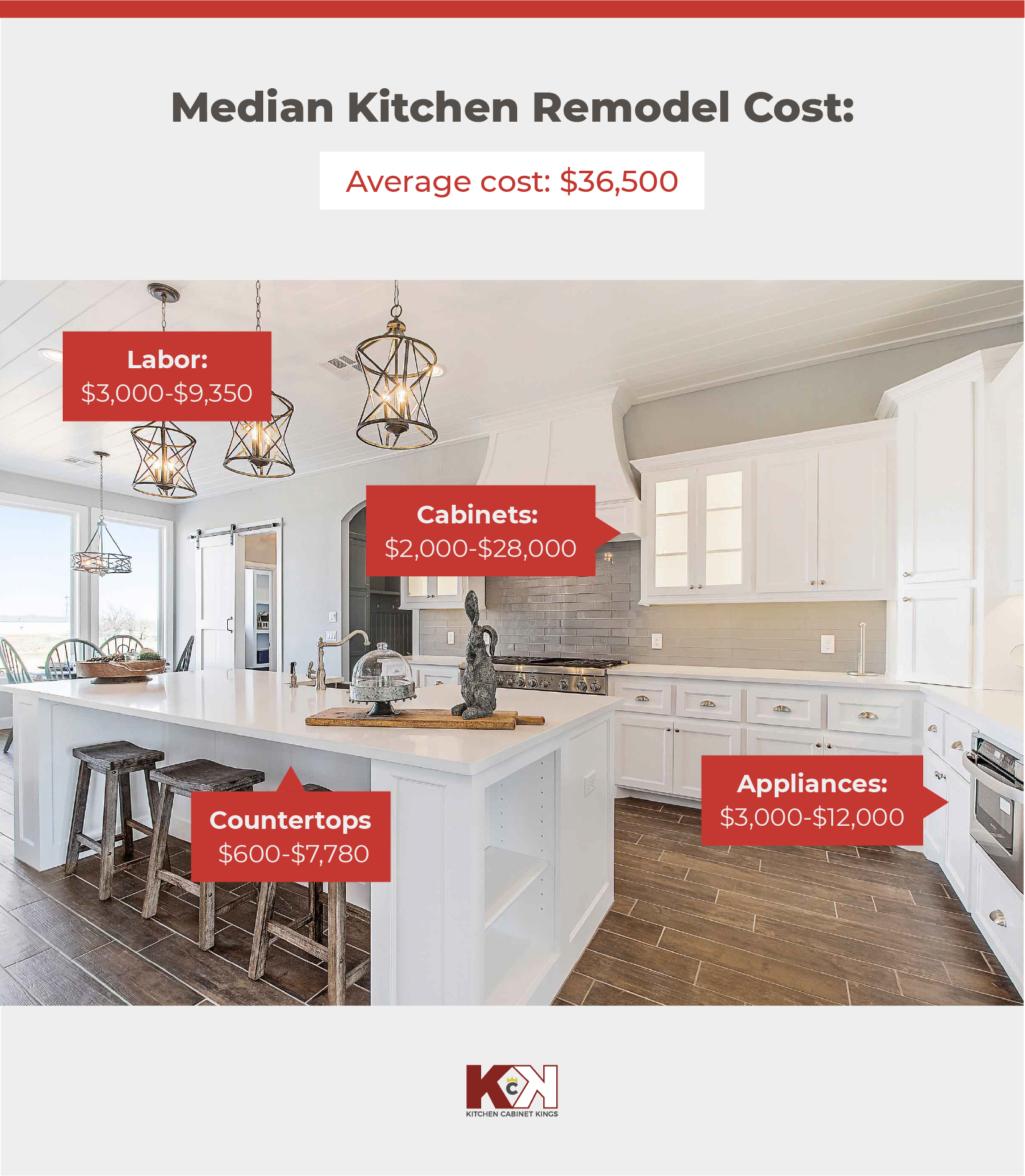
Image Source: cdn.kitchencabinetkings.com
Deciphering Your Kitchen Renovation Cost
Embarking on a kitchen remodel can be an exciting prospect, but it often comes with a significant price tag. Knowing where your money goes is crucial for a successful project. We’ll delve into the various components that make up the kitchen renovation cost, from the foundational elements to the finishing touches.
The National Average Kitchen Remodel Cost
The average kitchen remodel cost across the United States can vary dramatically based on location, the extent of the renovation, and the materials selected. However, to give you a ballpark figure, most sources suggest a mid-range kitchen remodel falls between $25,000 and $50,000. High-end renovations can easily push past $75,000, and sometimes even exceed $100,000.
Factors Influencing Your Kitchen Remodel Cost:
- Scope of Work: Are you just replacing cabinets and countertops, or are you moving walls, plumbing, and electrical?
- Material Quality: From stock cabinets to custom-built ones, and from laminate to quartz countertops, material choices have a huge impact.
- Labor Costs: The skill and experience of your contractors will affect the price.
- Location: Costs for labor and materials are generally higher in major metropolitan areas.
- Unexpected Issues: Older homes can hide plumbing, electrical, or structural problems that add to the overall cost.
Breaking Down the Expenses: A Comprehensive Cost Analysis
To effectively budget for your kitchen remodel, it’s important to understand the individual cost components. This breakdown will help you allocate funds wisely and make informed decisions.
Cost of Kitchen Cabinets: The Heart of Your Kitchen
Cabinets often represent the largest single expense in a kitchen remodel, typically accounting for 30-40% of the total budget. The cost of kitchen cabinets depends heavily on the type, style, and material.
Types of Cabinets and Their Price Ranges:
- Stock Cabinets: These are pre-made in standard sizes and styles. They are the most affordable option, with prices ranging from $75 to $200 per linear foot.
- Pros: Cost-effective, readily available.
- Cons: Limited design options, less customization.
- Semi-Custom Cabinets: These offer more variety in styles, finishes, and sizes than stock cabinets. You can often add custom features. Prices typically range from $150 to $400 per linear foot.
- Pros: Good balance of price and customization.
- Cons: Longer lead times than stock.
- Custom Cabinets: Built to your exact specifications, these offer the most flexibility in design, materials, and finishes. They are also the most expensive, ranging from $400 to $1,000+ per linear foot.
- Pros: Unlimited design possibilities, tailored to your space and needs.
- Cons: Highest cost, longest lead times.
Material Matters:
- Particleboard/MDF with Laminate: The most budget-friendly, but less durable.
- Plywood with Veneer: A good mid-range option, offering better durability than particleboard.
- Solid Wood (Maple, Oak, Cherry): The most durable and aesthetically pleasing, but also the most expensive.
Kitchen Countertop Replacement Cost: Style Meets Function
Countertops are another significant investment, usually making up 10-15% of the total renovation budget. The kitchen countertop replacement cost is driven by the material chosen and the complexity of the installation.
Popular Countertop Materials and Their Price Ranges (Installed):
- Laminate: The most affordable, ranging from $20 to $60 per square foot.
- Pros: Wide variety of colors and patterns, easy to clean.
- Cons: Not very heat or scratch-resistant, can chip.
- Solid Surface (e.g., Corian): Mid-range, typically $40 to $70 per square foot.
- Pros: Seamless look, non-porous, easy to repair.
- Cons: Can scratch and scorch.
- Granite: A very popular choice, ranging from $50 to $100+ per square foot.
- Pros: Durable, heat-resistant, unique patterns.
- Cons: Requires sealing, can chip if not properly maintained.
- Quartz: Increasingly popular, similar pricing to granite, $60 to $120+ per square foot.
- Pros: Non-porous, highly durable, low maintenance, consistent appearance.
- Cons: Can be susceptible to heat damage, more expensive than granite in some cases.
- Marble: Luxurious but more delicate, ranging from $70 to $150+ per square foot.
- Pros: Beautiful veining, classic elegance.
- Cons: Porous, prone to staining and etching, requires regular sealing.
- Butcher Block: Warm and natural, $40 to $90 per square foot.
- Pros: Natural beauty, can be sanded and refinished.
- Cons: Requires regular oiling and sealing, susceptible to scratches and stains.
Kitchen Flooring Cost: The Foundation of Your Space
Flooring accounts for about 5-10% of the budget. The kitchen flooring cost depends on the material, the size of the kitchen, and the complexity of installation, especially if subfloor preparation is needed.
Common Kitchen Flooring Options and Prices (Installed):
- Vinyl/LVT (Luxury Vinyl Tile): Affordable and durable, $2 to $7 per square foot.
- Pros: Water-resistant, easy to clean, wide variety of styles.
- Cons: Can be punctured, not as premium as other options.
- Laminate: Budget-friendly, $3 to $8 per square foot.
- Pros: Mimics wood and tile, easy to install.
- Cons: Not as water-resistant as vinyl, can scratch.
- Tile (Ceramic/Porcelain): Popular for durability and water resistance, $5 to $15 per square foot.
- Pros: Very durable, water-resistant, easy to clean, many styles.
- Cons: Grout can stain, can chip if heavy items are dropped.
- Hardwood: Classic and beautiful, $6 to $15 per square foot.
- Pros: Warm, natural look, can be refinished.
- Cons: Susceptible to water damage, can scratch and dent.
- Natural Stone (e.g., Travertine, Slate): Elegant but more expensive, $10 to $30+ per square foot.
- Pros: Unique beauty, durable.
- Cons: Can be porous, requires sealing, can be expensive to repair.
Kitchen Backsplash Installation Cost: The Finishing Flourish
The backsplash adds a decorative element and protects your walls. The kitchen backsplash installation cost is typically about 2-5% of the total budget.
Backsplash Material Pricing (Installed):
- Ceramic Tile: Most affordable, $5 to $15 per square foot.
- Porcelain Tile: Slightly more durable than ceramic, $7 to $20 per square foot.
- Glass Tile: Available in many colors and finishes, $10 to $30 per square foot.
- Natural Stone (e.g., Travertine, Marble): More expensive, $15 to $40+ per square foot.
- Metal (e.g., Stainless Steel, Tin): Modern look, $10 to $35 per square foot.
The complexity of the tile pattern, the size of the tiles, and the amount of cutting required will also influence the installation cost.
Labor Costs for a Kitchen Remodel: The Backbone of the Project
Labor costs for a kitchen remodel are a significant portion of the overall expense, often comprising 30-50% of the total budget. This covers the work of various professionals, including general contractors, plumbers, electricians, painters, tilers, and cabinet installers.
Factors Affecting Labor Costs:
- Contractor’s Experience and Reputation: Highly sought-after contractors may charge more.
- Scope of Work: More complex projects requiring specialized skills will cost more.
- Location: Labor rates vary greatly by region.
- Project Timeline: Rush jobs can sometimes incur additional fees.
- Permits: Obtaining necessary building permits can add to the labor cost.
Typical Labor Costs Breakdown (Estimates):
- General Contractor Fee: Typically 10-20% of the total project cost.
- Plumbing: $400 – $2,000+ per fixture/task (moving pipes, installing new sink/faucet).
- Electrical: $300 – $1,500+ per task (new outlets, lighting fixtures, rewiring).
- Cabinet Installation: $100 – $300 per cabinet or a percentage of cabinet cost.
- Countertop Installation: Often included in countertop price, but if separate, can be $300-$1,000+.
- Flooring Installation: Varies by material, $2 – $10+ per square foot.
- Backsplash Installation: $10 – $30+ per square foot.
Kitchen Appliance Installation Cost: Powering Your New Space
Appliances are essential, and their cost and installation are key budget items. The kitchen appliance installation cost can range from a few hundred dollars to several thousand, depending on the type of appliance and the complexity of the installation.
Appliance Costs and Installation Estimates:
- Refrigerator: $800 – $3,500+ (Installation usually included or minimal, unless complex hookups).
- Range/Cooktop: $700 – $2,500+ (Gas hookups may add $100-$200).
- Oven (Wall Oven): $600 – $2,000+ (Installation $150 – $500+).
- Dishwasher: $400 – $1,000+ (Installation $100 – $300).
- Microwave (Over-the-Range): $300 – $800+ (Installation $150 – $300, often requires venting).
- Vent Hood/Range Hood: $150 – $1,000+ (Installation $200 – $600+, depending on venting complexity).
Important Note: If you are changing the type of appliance (e.g., from electric to gas range), you will incur additional costs for running new gas lines or electrical circuits.
Kitchen Design and Remodel Expenses: The Planning Phase
Beyond the physical materials and labor, there are kitchen design and remodel expenses that should be factored in.
- Kitchen Designer/Architect: Hiring a professional can cost anywhere from $1,000 to $10,000+, depending on their fees and the scope of their involvement. They can help optimize your layout, select materials, and prevent costly mistakes.
- Permits: Most municipalities require permits for significant renovations. The cost can range from a few hundred to over a thousand dollars, depending on your location and the project’s scale.
- Demolition and Disposal: Removing old cabinets, countertops, flooring, and fixtures. This can cost $500 – $2,000+.
- Plumbing and Electrical Rough-in: If you’re moving walls or appliances, the initial plumbing and electrical work can be substantial.
- Painting and Finishing: Labor and materials for painting walls, ceilings, and trim.
- Lighting: Pendant lights, under-cabinet lighting, recessed lighting – these add to both functionality and ambiance.
- Hardware: Cabinet pulls, knobs, faucet – these small details can add up.
- Contingency Fund: It’s wise to set aside 10-20% of your total budget for unforeseen issues.
Creating Your Kitchen Remodel Budget: A Step-by-Step Approach
A well-planned budget is the key to a stress-free kitchen remodel. Follow these steps to create a realistic financial roadmap.
Step 1: Define Your Project Scope and Goals
- What is the primary purpose of the remodel? Are you looking for a cosmetic update, improved functionality, or a complete overhaul to add value to your home?
- What are your must-haves? (e.g., specific appliance, island, more storage)
- What are your nice-to-haves? (e.g., heated floors, high-end faucet)
- What is your absolute maximum budget? Be realistic.
Step 2: Research and Get Estimates
- Talk to multiple contractors: Get at least three detailed quotes for the same scope of work.
- Research material costs: Visit showrooms, browse online, and compare prices for cabinets, countertops, appliances, flooring, etc.
- Consider a designer: If your budget allows, a designer can provide invaluable expertise.
Step 3: Allocate Your Budget
Here’s a sample budget allocation for a mid-range kitchen remodel:
| Category | Estimated Percentage | Example Cost ($35,000 Budget) |
|---|---|---|
| Cabinets | 30-40% | $10,500 – $14,000 |
| Countertops | 10-15% | $3,500 – $5,250 |
| Appliances | 10-15% | $3,500 – $5,250 |
| Labor (Contractor, Trades) | 30-50% | $10,500 – $17,500 |
| Flooring | 5-10% | $1,750 – $3,500 |
| Backsplash | 2-5% | $700 – $1,750 |
| Sink, Faucet, Hardware | 2-4% | $700 – $1,400 |
| Lighting | 2-4% | $700 – $1,400 |
| Design Fees/Permits | 2-5% | $700 – $1,750 |
| Contingency (10-20%) | 10-20% | $3,500 – $7,000 |
| Total | 100% | $35,000 |
Note: This is a general guideline. Your actual percentages may vary significantly.
Step 4: Prioritize and Make Trade-offs
If your desired remodel exceeds your budget, you’ll need to make choices.
- Can you use less expensive materials for some items? (e.g., laminate countertops instead of quartz, or ceramic tile instead of natural stone).
- Can you phase the remodel? (e.g., complete the core elements now and add decorative finishes later).
- Can you DIY some tasks? (e.g., painting, demolition). Be honest about your skills and time availability.
Maximizing Your Kitchen Remodel Budget
Getting the most bang for your buck is essential. Here are some tips to help you maximize your kitchen remodel budget.
Smart Shopping for Materials
- Buy during sales: Many retailers have seasonal sales on appliances and materials.
- Consider floor models or clearance items: You might find great deals on appliances or tiles.
- Explore different brands: Not every high-end brand is necessary for every item. Look for reliable mid-range options.
- Buy in bulk for smaller items: If you need a lot of hardware or specific tools, buying in bulk can save money.
Choosing the Right Professionals
- Get multiple quotes: As mentioned, this is crucial for competitive pricing.
- Check references and reviews: Ensure your contractor has a good track record.
- Consider a reputable design-build firm: They can handle both design and construction, potentially streamlining the process and costs.
DIY vs. Professional Installation
- DIY Demolition: This can save you a significant amount on labor. However, be mindful of safety and proper disposal.
- Painting: A relatively straightforward DIY task that can save money.
- Tile Installation: While doable for some, complex tiling can be challenging for beginners. Mistakes can be costly to fix.
- Appliance Installation: Unless it’s a simple plug-and-play, it’s often best left to professionals, especially for gas appliances or complex venting.
Phasing Your Remodel
If your dream kitchen is out of reach right now, consider a phased approach:
- Phase 1 (Essentials): Focus on essential structural work, cabinets, countertops, and functional appliances.
- Phase 2 (Upgrades): Add a more elaborate backsplash, upgrade lighting fixtures, or invest in higher-end hardware.
Frequently Asked Questions (FAQ)
Q1: What is the average kitchen remodel cost in the US?
A1: The average kitchen remodel cost typically falls between $25,000 and $50,000 for a mid-range renovation. However, costs can range from $15,000 for minor updates to over $100,000 for luxury remodels.
Q2: How much do kitchen cabinets typically cost?
A2: The cost of kitchen cabinets varies greatly by type. Stock cabinets can cost $75-$200 per linear foot, semi-custom $150-$400 per linear foot, and custom cabinets $400-$1,000+ per linear foot.
Q3: Is a kitchen remodel worth the investment?
A3: Yes, a well-executed kitchen remodel is often cited as one of the best ways to increase your home’s value. It can provide a significant return on investment (ROI) when you decide to sell.
Q4: How long does a kitchen remodel typically take?
A4: A minor kitchen remodel might take 2-4 weeks. A full renovation, especially if structural changes are involved, can take 6-12 weeks or even longer.
Q5: Can I remodel a kitchen on a $10,000 budget?
A5: A $10,000 budget is tight for a full kitchen remodel, but it might be possible for a significant refresh. This could involve painting existing cabinets, replacing countertops with laminate or a less expensive stone, updating hardware, and perhaps new flooring. You would likely need to do much of the work yourself.
Q6: What are the most expensive parts of a kitchen remodel?
A6: Typically, kitchen cabinets, labor costs, and high-end appliances are the most expensive components of a kitchen remodel. Countertops and structural changes can also add significantly to the cost.
Q7: Should I hire a general contractor or manage the project myself?
A7: For most people, hiring a general contractor is highly recommended. They manage the schedule, hire subcontractors, order materials, and ensure the project stays on track and within budget. Managing it yourself requires significant time, expertise, and organizational skills.
Q8: What is the average cost of kitchen flooring?
A8: The kitchen flooring cost can range from $2-$7 per square foot for vinyl or laminate to $5-$15 per square foot for ceramic or porcelain tile, and $6-$15 per square foot for hardwood, installed.
Q9: How much does a kitchen countertop replacement cost?
A9: The kitchen countertop replacement cost varies by material. Laminate can be $20-$60 per square foot installed, granite $50-$100+, and quartz $60-$120+.
Q10: What does a kitchen backsplash installation cost?
A10: The kitchen backsplash installation cost is generally $5-$40+ per square foot, depending on the tile material and complexity of the installation.
A kitchen remodel is a significant undertaking, both in terms of time and money. By thoroughly researching kitchen remodeling prices, breaking down the costs, creating a detailed budget, and making informed decisions, you can achieve your dream kitchen while staying financially responsible. Remember to always include a contingency fund for unexpected expenses.