
What is the standard kitchen countertop height? The standard kitchen countertop height is 36 inches (91.44 cm) from the finished floor to the top of the countertop. This measurement is the most common and widely accepted for kitchens worldwide.
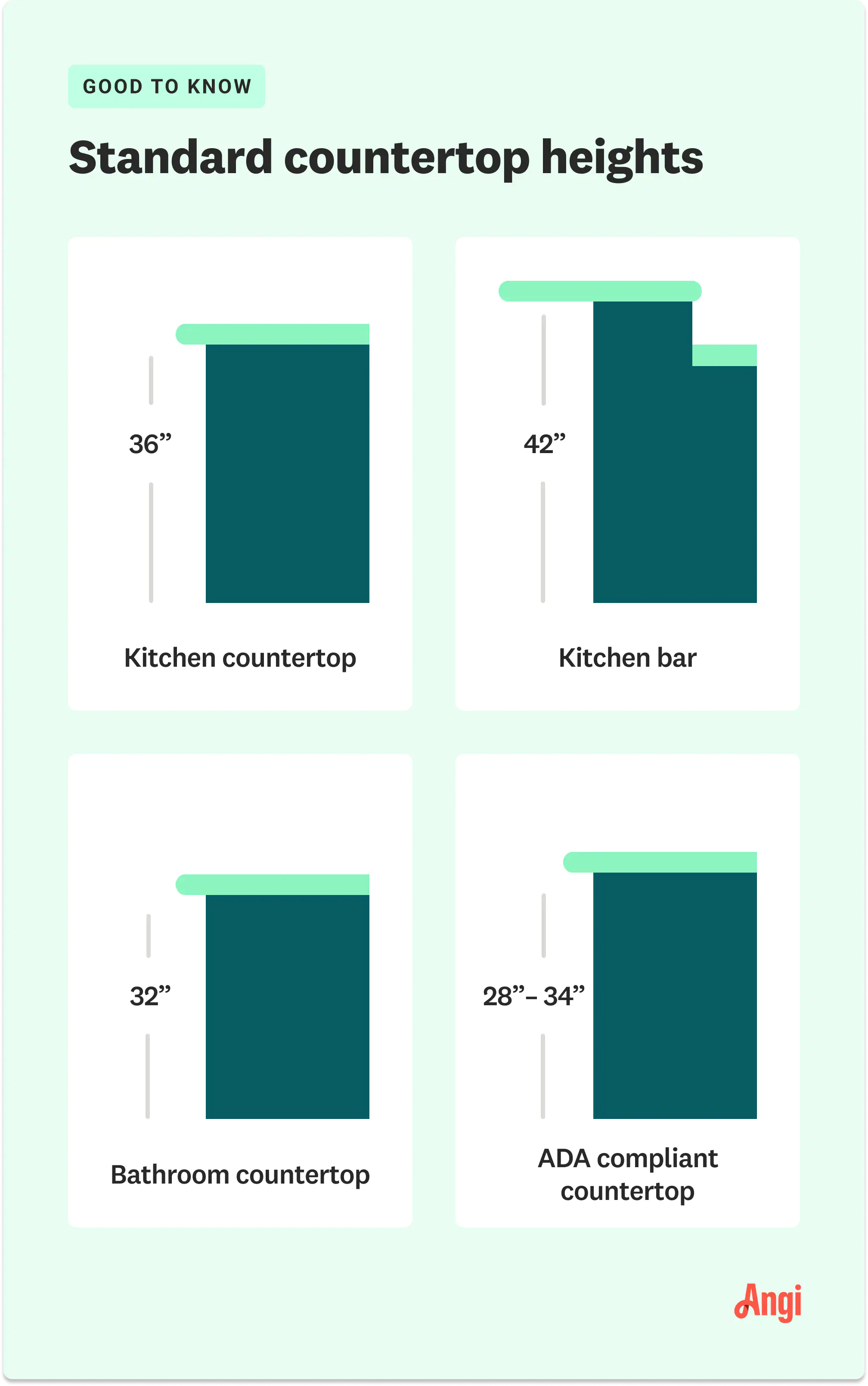
Image Source: media.angi.com
Deciphering the Standard Kitchen Counter Height
The standard kitchen counter height of 36 inches isn’t just an arbitrary number; it’s a carefully considered measurement based on human ergonomics and the typical workflow in a kitchen. This height has evolved over time, influenced by appliance sizes, cabinetry standards, and the general desire for comfortable and efficient food preparation.
The Rationale Behind 36 Inches
This prevalent height allows most adults to stand comfortably while working, whether chopping vegetables, mixing ingredients, or loading the dishwasher. It strikes a balance, preventing excessive bending or reaching, which can lead to back strain and fatigue. The 36-inch mark also aligns with the standard height of most base cabinets, making it easier to find readily available cabinetry and countertops that fit together seamlessly.
Factors Influencing Countertop Height
While 36 inches is the norm, it’s important to recognize that this isn’t a one-size-fits-all solution. Several factors can influence the ideal counter height dimensions for your specific kitchen:
- Height of Users: Taller individuals might find a slightly higher countertop more comfortable, while shorter individuals might benefit from a slightly lower one.
- Type of Tasks: Certain kitchen tasks may be better suited to different heights. For example, tasks requiring vigorous mixing might be more comfortable at a slightly lower height, while rolling out dough might be easier at a slightly higher one.
- Appliance Integration: The height of built-in appliances like ranges and dishwashers needs to be considered to ensure a flush and cohesive look.
- Accessibility Needs: For individuals with mobility issues, adjustable-height countertops or specific lower sections can be incorporated for easier access.
Exploring Countertop Depths
Beyond height, the depth of your countertops plays a crucial role in functionality and usability. The standard countertop depth is typically 25 inches for base cabinets. This allows for ample workspace and accommodates standard cabinet construction.
The Ideal Kitchen Counter Depth
The ideal kitchen counter depth is often considered to be between 24 and 30 inches. This range provides a good balance between having enough space to work and preventing the countertop from feeling overwhelming in smaller kitchens.
- Standard Depth (25 inches): This depth is the most common for base cabinets. It offers enough room for appliances like ranges and sinks to be installed within the cabinet footprint, with a slight overhang for comfortable use and aesthetic appeal.
- Deeper Depths (30 inches or more): Some homeowners opt for deeper countertops, especially in larger kitchens or for specific functional areas. Deeper counters can provide more workspace for meal preparation, allow for the installation of deeper sinks, or accommodate specialized appliances. However, it’s important to consider the overall kitchen layout and traffic flow, as overly deep countertops can sometimes impede movement.
Average Kitchen Counter Depth Considerations
The average kitchen counter depth is largely dictated by the size of the base cabinets they sit upon. Most standard base cabinets are 24 inches deep. When a countertop is installed, it typically extends beyond the cabinet box by 1 to 1.5 inches on the front, creating the 25-inch standard depth. This overhang serves both functional and aesthetic purposes:
- Functional Overhang: It provides a comfortable space for users to lean against while working without bumping into the cabinet face. It also helps protect the cabinet front from spills and splashes.
- Aesthetic Overhang: The overhang contributes to the finished look of the cabinetry, creating a visual separation and a polished appearance.
The Multifaceted World of Kitchen Islands and Bars
Kitchen islands and breakfast bars often have different counter height dimensions to serve specific purposes.
Kitchen Island Height
Kitchen island height can vary significantly depending on its intended use. While many kitchen islands mirror the standard countertop height of 36 inches, some are designed with multiple levels or specific features.
- Standard Work Surface: Islands designed primarily for food preparation often adhere to the 36-inch standard, providing a continuous and convenient workspace.
- Seating Areas: If an island incorporates seating, the countertop height might be raised to accommodate bar stools. This can be a bar height counter (around 40-42 inches) or a counter-height seating area (around 36 inches).
- Multi-Level Islands: Some islands feature split levels, with a lower section for food prep and a higher section for dining or casual entertaining. This offers versatility and caters to different activities.
Breakfast Bar Height
A breakfast bar height is typically designed for casual dining and socializing, often correlating with the height of bar stools.
- Counter Height (36 inches): A breakfast bar at 36 inches provides a comfortable height for most chairs and stools, allowing for relaxed meals and conversation.
- Bar Height (40-42 inches): This is a more traditional bar height, often seen in pubs and restaurants. It creates a more elevated dining experience and requires taller bar stools. The bar height counter is excellent for separating spaces and creating a distinct zone for eating or entertaining.
Achieving Ergonomic Kitchen Counter Height
An ergonomic kitchen counter height focuses on comfort and efficiency for the user. This means tailoring the height to the individuals who will use the kitchen most.
Personalizing Your Workspace
While the 36-inch standard is a good starting point, consider these adjustments for optimal ergonomics:
- For Taller Individuals: If the primary cook is over 6 feet tall, increasing the countertop height by 2-3 inches can reduce strain on the back and shoulders.
- For Shorter Individuals: For those under 5’4″, lowering the countertop height by 2-3 inches can make tasks like chopping and kneading much more comfortable.
- Task-Specific Heights: Consider implementing different countertop heights for specific tasks. For example, a lower section for kneading dough (around 30-32 inches) and a higher section for plating food.
- Adjustable Height Options: In modern renovations, adjustable-height countertops are becoming more popular, offering the ultimate in ergonomic customization.
The Kitchen Work Surface Height Equation
The kitchen work surface height is a critical element of a well-designed kitchen. A good rule of thumb for determining your ideal countertop height is to measure the distance from the floor to your elbow when your arm is bent at a 90-degree angle.
- Elbow Height Minus 6 Inches: For most general tasks like chopping and mixing, the ideal countertop height is often considered to be around 6 inches below your bent elbow height. This allows you to work with a relaxed posture and engage your core muscles for stability.
- Elbow Height Minus 3-4 Inches: For tasks that require more downward force, like kneading dough, a slightly higher surface (3-4 inches below your bent elbow) can be beneficial.
Table of Common Countertop Heights
To help visualize the different heights and their uses, here is a table:
| Countertop Type | Typical Height (Inches) | Typical Height (cm) | Primary Use |
|---|---|---|---|
| Standard Countertop | 36 | 91.44 | General food preparation, cabinet base |
| Raised Breakfast Bar | 36-42 | 91.44-106.68 | Casual dining, seating |
| Standard Bar Height | 40-42 | 101.6-106.68 | Formal bar seating, higher dining |
| Lowered Prep Area | 30-34 | 76.2-86.36 | Kneading dough, tasks requiring more leverage |
| ADA Compliant Counter | 34 (max) | 86.36 | Wheelchair accessibility, seated work |
Beyond the Standard: Customization and Considerations
While the standard kitchen counter height of 36 inches is prevalent, the beauty of kitchen design lies in its adaptability. Customization allows you to create a space that is not only aesthetically pleasing but also perfectly suited to your needs.
Material Matters: How Countertop Thickness Affects Height
It’s important to remember that countertop thickness can subtly affect the overall height. A 3cm (1.2-inch) thick countertop will result in a slightly higher finished surface compared to a 2cm (0.8-inch) thick countertop, assuming the base cabinet height remains the same. Always factor in the material thickness when planning your counter height dimensions.
The Impact of Flooring and Subflooring
Changes in flooring or subflooring can also alter the final kitchen work surface height. Thicker tile or underlayment can add an inch or more to the overall height. Conversely, thinner flooring might slightly reduce it. It’s crucial to measure from the finished floor level to ensure accuracy.
Planning for Appliances
When selecting appliances, especially ranges and dishwashers, ensure their heights are compatible with your chosen countertop height. Many freestanding ranges are designed to fit under a 36-inch countertop, but built-in models or specific appliance lines might have different specifications.
Frequently Asked Questions (FAQ)
Q1: Can I install countertops at a different height than the standard?
A1: Absolutely! While 36 inches is the standard, you can customize your countertop height to suit your needs. Many people opt for different heights for ergonomic reasons or to incorporate seating.
Q2: What is the ideal kitchen counter depth for small kitchens?
A2: For smaller kitchens, sticking to the standard 25-inch depth is generally recommended to avoid making the space feel cramped. However, some compact kitchens might benefit from slightly shallower depths if space is extremely limited, but this can impact workspace.
Q3: How do I determine the best kitchen island height for my family?
A3: Consider how you’ll primarily use your island. If it’s for food prep and standard working, 36 inches is ideal. If you plan to use it for casual dining with bar stools, a bar height counter of 40-42 inches or a counter-height seating area at 36 inches are good options.
Q4: What is considered “counter height” for seating?
A4: “Counter height” for seating generally refers to a surface that is 36 inches high, designed to be used with counter stools. This is distinct from “bar height,” which is typically 40-42 inches.
Q5: How does countertop thickness affect the overall height?
A5: Countertop thickness adds to the final height. A thicker countertop material will result in a higher finished surface compared to a thinner one, assuming the base cabinet height is the same. It’s essential to account for material thickness when planning your counter height dimensions.
Q6: What is the difference between standard countertop depth and average kitchen counter depth?
A6: The standard countertop depth for base cabinets is typically 25 inches, which includes a slight overhang. The average kitchen counter depth usually refers to the depth of the base cabinets themselves, which is commonly 24 inches.
By considering these various aspects, from the fundamental standard kitchen counter height to the nuanced requirements of an ergonomic kitchen counter height, you can create a kitchen that is as functional and comfortable as it is beautiful. The goal is always to tailor your kitchen to your lifestyle and ensure a positive and productive kitchen work surface height for all who use it.