
Image Source: contentgrid.homedepot-static.com
DIY Guide: How To Take Off Kitchen Faucet Easily
Can you take off a kitchen faucet yourself? Yes, you absolutely can! With a few common tools and this step-by-step guide, you can successfully remove your old kitchen faucet and prepare for a new one. This guide will walk you through the entire process of kitchen faucet removal, whether you’re doing a DIY faucet replacement or troubleshooting a leak. We’ll cover everything from how to disconnect water supply lines to unhooking plumbing and preparing for your new sink faucet installation.
Why Remove Your Kitchen Faucet?
There are several reasons why you might need to take off your kitchen faucet. Perhaps your current faucet is leaking, dripping, or has a faulty handle. Maybe you’re simply looking to update the style of your kitchen with a more modern or functional fixture. Whatever the reason, knowing how to remove an old faucet is a valuable DIY skill for anyone looking to tackle kitchen fixture maintenance or a complete kitchen sink plumbing overhaul.
Gathering Your Tools and Materials
Before you begin, it’s crucial to have all the necessary tools on hand. This will make the process smoother and prevent frustrating trips to the hardware store mid-job.
Here’s a list of what you’ll typically need:
- Adjustable Wrench: Essential for loosening and tightening various nuts and fittings.
- Basin Wrench: This specialized tool is designed to reach nuts in tight spaces under the sink, making it invaluable for kitchen faucet removal.
- Pliers (Channel-lock or slip-joint): Useful for gripping and turning pipes or nuts.
- Bucket or Towels: To catch any residual water when you disconnect the supply lines.
- Safety Glasses: Protect your eyes from falling debris or dripping water.
- Work Gloves: For a better grip and to protect your hands.
- Penetrating Oil (like WD-40): If nuts are corroded or stuck, this can help loosen them.
- Flashlight or Headlamp: To illuminate the often-dark space under your sink.
- Rag or Sponge: For drying up any spills.
- Putty Knife or Flathead Screwdriver: To gently pry away old caulk or sealant.
- Utility Knife: For cutting through old sealant if needed.
Step 1: Shut Off the Water Supply – The Most Important Step!
This is the absolute first and most critical step in removing your kitchen faucet. Failure to shut off the water can result in a significant mess and potential water damage.
Locating the Shut-Off Valves
Most sinks have dedicated shut-off valves located directly beneath them. Look for two flexible hoses (usually braided metal or plastic) that run from the wall or floor up to the faucet. Each hose should have a small valve where it connects.
- Hot Water Valve: Typically on the left.
- Cold Water Valve: Typically on the right.
Turn these valves clockwise until they are firmly closed.
What if I Can’t Find Under-Sink Valves?
If you can’t locate individual shut-off valves under your sink, or if they seem to be malfunctioning, you’ll need to shut off the main water supply to your house. This valve is usually located in the basement, garage, utility closet, or near your water meter.
Testing the Shut-Off
After you’ve turned off the valves, go to your kitchen faucet and turn on both the hot and cold water handles. The water should stop flowing completely after a few seconds, as the remaining water in the pipes drains out. If water still comes out, the valves might not be fully closed, or you might need to shut off the main supply.
Step 2: Relieve Water Pressure
Even after shutting off the supply, there will be residual water in the lines.
- Turn on the faucet handles (both hot and cold) that you just shut off.
- Let the water run until it stops completely. This releases any remaining pressure in the lines.
- Leave the faucet handles in the “on” position. This will help drain any last drips when you start disconnecting the pipes.
Step 3: Disconnect the Supply Lines
Now it’s time to detach the flexible water supply lines from the faucet shanks.
Tools You’ll Need
- Adjustable wrench or pliers.
- Bucket or towels.
The Process
- Place your bucket or towels directly beneath the connection points to catch any dripping water.
- Identify where the supply lines connect to the faucet itself. These are usually threaded fittings at the base of the faucet shanks.
- Using your adjustable wrench or pliers, grip the nut connecting the supply line to the faucet shank.
- Hold the faucet shank steady with another wrench or by hand to prevent it from twisting the entire faucet assembly.
- Turn the nut counter-clockwise to loosen it.
- Once loosened, carefully unscrew the supply line by hand. Be prepared for a small amount of water to drip out.
- Repeat this process for both the hot and cold water supply lines.
Tip: If the nuts are very tight or corroded, apply a bit of penetrating oil and let it sit for a few minutes before attempting to loosen them again.
Step 4: Unhook the Sprayer Hose (If Applicable)
If your faucet has a side sprayer or a pull-down/pull-out sprayer, you’ll need to disconnect its hose as well.
Locating the Sprayer Hose Connection
Underneath the sink, trace the sprayer hose back to its connection point. This is typically a metal or plastic nut that connects the hose to the faucet body or a diverter.
Disconnecting the Sprayer Hose
- Again, have your bucket or towels ready for any residual water.
- Use your adjustable wrench or pliers to loosen and unscrew the nut connecting the sprayer hose.
- Some sprayers might have a quick-connect fitting. If so, look for a small tab or button to press to release the hose.
- Once disconnected, you can carefully pull the sprayer hose up through the faucet body.
Step 5: Loosen and Remove Faucet Mounting Nuts
This is where the basin wrench becomes your best friend. The nuts that secure the faucet to the sink or countertop are often in very tight and awkward spots.
Locating the Mounting Nuts
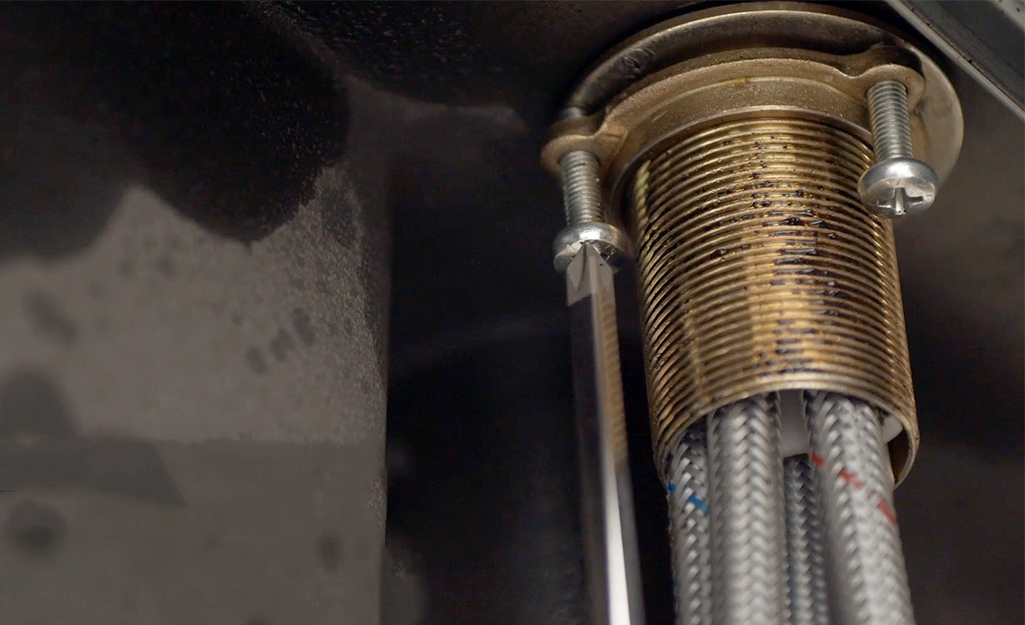
Look up at the underside of your sink. You’ll see the threaded shanks of the faucet extending down. There will be nuts (usually large, often plastic or metal) threaded onto these shanks, holding the faucet tightly in place. Some faucets have a mounting bracket or plate with screws that also need to be removed.
Using the Basin Wrench
- Position the basin wrench so its jaws can grip the mounting nut. The long handle allows you to reach it.
- You may need to adjust the wrench to get a secure grip.
- Turn the nut counter-clockwise to loosen it. This can take some effort, especially if they are old and corroded.
- You might need to work the wrench back and forth to break it free.
- If the nuts are extremely stubborn, a bit of penetrating oil can help. Apply it, let it sit, and try again.
- Once the nuts are loose, you can usually unscrew them the rest of the way by hand.
- If there’s a mounting bracket, remove any screws holding it in place before trying to remove the nuts.
Important Note: Some modern faucets use a different mounting system, often with clips or a single large nut. Familiarize yourself with your specific faucet’s design if possible by checking its manual or looking up the model online.
Step 6: Remove the Old Faucet
With all the connections disconnected and mounting nuts removed, the old faucet should now be free.
Freeing the Faucet
- Gently try to lift the faucet assembly upwards from the top of the sink or countertop.
- If it feels stuck, it’s likely due to old caulk or sealant around the base.
- Use a putty knife or flathead screwdriver to carefully work around the edge of the faucet base, breaking the seal. A utility knife can also be used to cut through stubborn caulk. Be careful not to scratch your sink or countertop surface.
- Once the seal is broken, lift the faucet straight up and out.
Cleaning the Sink Surface
After removing the old faucet, you’ll likely find residue from the old sealant or caulk.
- Use a putty knife or scraper to gently remove as much of this residue as possible.
- Clean the area thoroughly with a degreaser or all-purpose cleaner to prepare it for the new faucet.
Common Challenges During Kitchen Faucet Removal
Even with careful preparation, you might encounter a few common issues when attempting kitchen faucet removal.
Stubborn Nuts and Connections
- Problem: Nuts are corroded and won’t budge.
- Solution: Use penetrating oil (like WD-40). Apply it generously to the threads and let it soak for at least 15-30 minutes, or even overnight for severely corroded parts. Gentle tapping with a wrench can also help loosen seized threads.
Limited Space and Awkward Angles
- Problem: It’s hard to get a tool into the tight space under the sink.
- Solution: The basin wrench is specifically designed for this. Ensure you have a good grip. Sometimes, you might need to reposition yourself or use a different type of wrench (like a socket wrench with an extension) if the basin wrench isn’t working.
Leaking After Shut-Off
- Problem: Water still drips from the supply lines after shutting off the valves.
- Solution: The shut-off valves might be faulty. In this case, you’ll need to shut off the main water supply to the house. Always have a bucket and towels ready, as some residual water is always present.
Damaged Sink or Countertop
- Problem: Applying too much force could damage the sink or countertop.
- Solution: Be patient. Work slowly and deliberately. Use caution when prying away sealant. If you’re unsure about protecting your surfaces, consider laying down drop cloths or old towels.
Table: Common Faucet Removal Problems and Solutions
| Problem | Cause | Solution |
|---|---|---|
| Stubborn Mounting Nuts | Corrosion, overtightening | Penetrating oil, basin wrench, gentle tapping, patience |
| Difficulty Reaching Fittings | Limited space under the sink | Basin wrench, socket wrench with extension, repositioning yourself |
| Residual Water Dripping | Valves not fully closed, faulty valves | Ensure valves are fully closed, shut off main water supply, use buckets |
| Old Sealant Sticking Faucet | Dried caulk or sealant | Putty knife, flathead screwdriver, utility knife to cut sealant |
| Accidental Damage to Surface | Excessive force, lack of care | Patience, gentle prying, protective coverings (drop cloths) |
Preparing for Your New Sink Faucet Installation
Once the old faucet is removed and the sink surface is clean, you’re ready for the next step – installing your new faucet! The process of installing a new sink faucet installation is essentially the reverse of removal, but with some key differences.
Key Differences for Installation
- Sealing: You’ll need to apply plumber’s putty or silicone sealant to create a watertight seal between the new faucet base and the sink surface.
- Tightening: Ensure all connections are snug but not overtightened, which can damage fittings or create leaks.
- Testing: After installation, turn the water supply back on slowly and check all connections for leaks before turning the faucet on fully.
When to Call a Professional
While taking off a kitchen faucet is a manageable DIY project, there are instances where it’s best to call a plumber:
- Unsure About Plumbing: If you’re not comfortable with any part of the process, especially disconnecting water lines.
- Old or Corroded Pipes: If your existing plumbing looks heavily corroded or damaged, it’s safer to let a professional handle it.
- Main Shut-Off Valve Issues: If you can’t locate your main water shut-off or if it appears to be faulty.
- Persistent Leaks: If you’ve followed the steps and are still experiencing leaks after installation.
- Complex Faucet Types: Some very specialized or high-end faucets may require specific tools or knowledge.
Frequently Asked Questions (FAQ)
Q1: How long does it typically take to remove a kitchen faucet?
A1: For an experienced DIYer, it can take 30 minutes to an hour. For a beginner, it might take 1-2 hours, especially if you encounter stubborn parts.
Q2: Do I need special tools for kitchen faucet removal?
A2: While a basin wrench is highly recommended and makes the job much easier, some people can get by with a good adjustable wrench and pliers for simpler installations. However, for typical kitchen faucets, the basin wrench is almost essential for reaching the mounting nuts.
Q3: What if the supply lines are old and brittle?
A3: If your supply lines look old, cracked, or corroded, it’s highly advisable to replace them along with the faucet. You can purchase new flexible supply lines at any hardware store. Make sure to get the correct length and thread size.
Q4: How do I clean up around the faucet base before installing a new one?
A4: Use a putty knife or scraper to gently remove old caulk and sealant. Then, clean the surface thoroughly with a household cleaner and a rag. Ensure the area is completely dry before installing the new faucet.
Q5: Can I replace just the faucet cartridge instead of removing the whole faucet?
A5: Yes, in many cases, if the faucet body is in good condition but you’re experiencing leaks from a specific handle, you can often replace just the internal cartridge. This is a form of faucet repair that doesn’t require full kitchen faucet removal. However, if the entire fixture is old or you want an upgrade, full removal and replacement is the way to go.
Taking off a kitchen faucet might seem daunting, but by following these detailed steps, you can successfully complete this common home improvement task. Remember to prioritize safety by shutting off the water first, gather all your tools, and work patiently. Happy DIYing!