
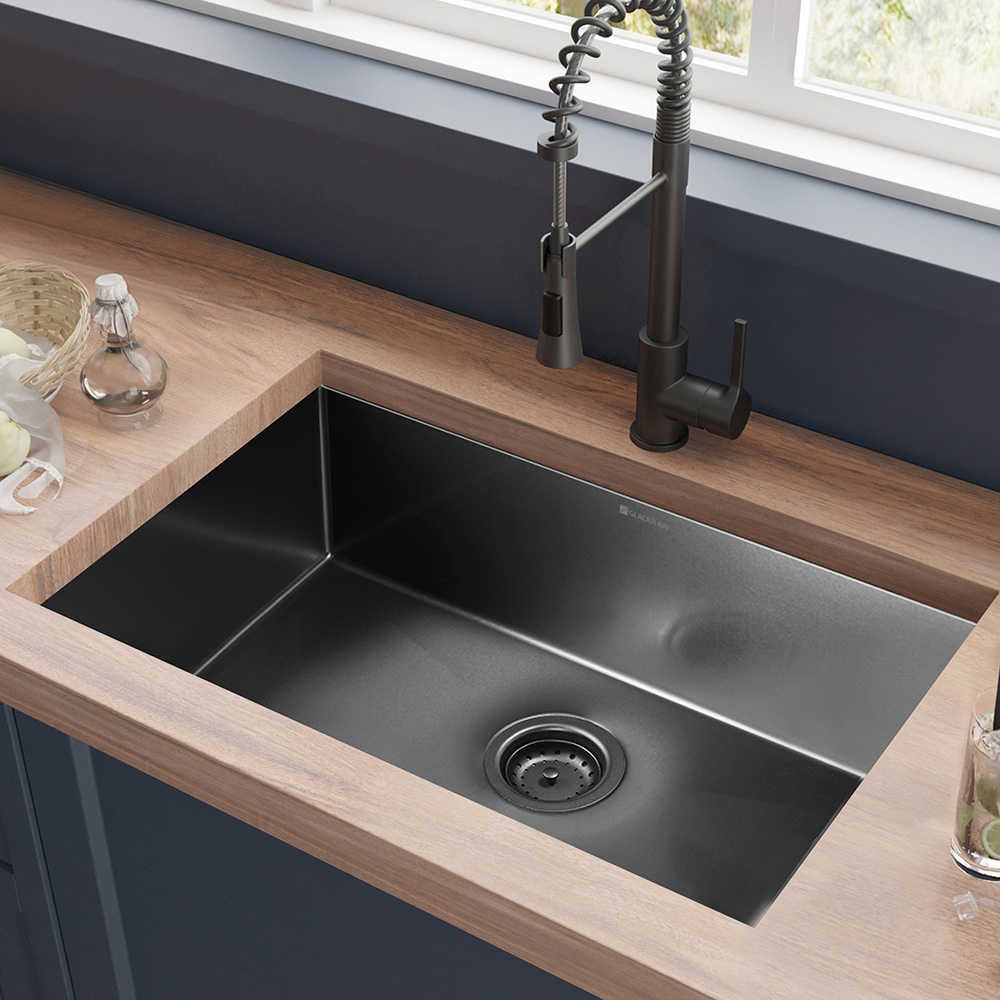
Image Source: contentgrid.homedepot-static.com
How to Replace a Kitchen Sink: Step-by-Step Guide
Can you replace a kitchen sink yourself? Yes, you absolutely can! With the right tools, a little patience, and this detailed guide, you can successfully tackle a DIY kitchen sink replacement. Replacing your kitchen sink is a rewarding project that can update the look and functionality of your kitchen. Whether you’re dealing with a cracked basin, outdated style, or just a desire for a change, a new sink can make a big difference. This guide will walk you through the entire process, from removing your old sink to a clean and leak-free kitchen sink installation of your new one. We’ll cover everything you need to know, including how to handle sink drain assembly and connecting plumbing under the sink.
Gathering Your Tools and Materials
Before you dive into removing your old sink, ensure you have all the necessary tools and materials readily available. This will save you time and frustration later on.
Essential Tools:
- Adjustable Wrenches (2): For loosening and tightening plumbing connections.
- Basin Wrench: A specialized tool designed to reach faucet nuts and supply line connections in tight spaces under the sink.
- Pipe Wrench: Useful for gripping and turning larger pipes.
- Screwdrivers (Phillips and Flathead): For various disassembly and reassembly tasks.
- Putty Knife: To scrape away old plumber’s putty or caulk.
- Utility Knife: For cutting through old caulk or sealant.
- Bucket or Towels: To catch any residual water when disconnecting pipes.
- Safety Glasses: To protect your eyes from debris and water.
- Work Gloves: To protect your hands.
- Flashlight or Work Light: For better visibility under the sink.
- Plumber’s Putty or Silicone Caulk: For sealing the new sink to the countertop.
- Teflon Tape (Pipe Thread Tape): For ensuring watertight seals on threaded pipe connections.
- Drop Cloth or Old Sheets: To protect your kitchen floor from scratches and spills.
- Pliers: For gripping and manipulating small parts.
- Caulking Gun: If using silicone caulk.
Essential Materials:
- New Kitchen Sink: Ensure it’s the correct size and type for your countertop cutout.
- New Faucet and Strainer Assembly (Optional but Recommended): It’s often easier to install a new faucet and drain assembly while the sink is out.
- New Water Supply Lines: It’s good practice to replace old, stiff supply lines with new flexible ones.
- Sink Clips or Mounting Hardware: These usually come with the new sink, but double-check.
- Rags and Cleaning Supplies: For cleaning the countertop and the area around the sink.
Preparing for the Sink Removal
Proper preparation is key to a smooth removal process. Take the time to do these steps carefully.
Shutting Off the Water Supply
This is the most critical first step to prevent flooding.
- Locate the hot and cold water shut-off valves under your sink. These are typically small oval-shaped handles attached to the pipes coming from the wall.
- Turn both handles clockwise until they are completely closed.
- Turn on your kitchen faucet to release any remaining water pressure in the lines. Let the water run until it stops completely.
Disconnecting the Plumbing
Now it’s time to disconnect the water and drain lines.
Disconnecting the Water Supply Lines:
- Place a bucket or towels beneath the water supply line connections to catch any drips.
- Using an adjustable wrench, carefully loosen the nuts connecting the water supply lines to the faucet shanks. Turn the nuts counter-clockwise.
- Once loose, gently pull the supply lines away from the faucet.
Disconnecting the Dishwasher Drain Hose (If Applicable):
- Your dishwasher drain hose might be connected to the garbage disposal or directly to the sink drain pipe.
- If it’s connected to the garbage disposal, you’ll disconnect it there later.
- If it’s connected directly to the drain pipe, loosen the clamp holding it in place and pull the hose off.
Disconnecting the Garbage Disposal (If Applicable):
- Ensure the power to the garbage disposal is turned OFF at the breaker box. This is crucial for safety.
- Locate the drainpipe connection to the garbage disposal.
- Use a pipe wrench or adjustable wrench to loosen the coupling nut connecting the disposal to the drain line.
- If the disposal is mounted to the sink, there will be a mounting ring that needs to be loosened or removed. This often involves turning a large ring counter-clockwise with a special wrench (sometimes provided with the disposal) or a pipe wrench. Support the disposal from below as you loosen it.
- Carefully lower the disposal and set it aside.
Disconnecting the Sink Drain Assembly:
- Place your bucket directly under the P-trap (the U-shaped pipe) to catch any water.
- Loosen the slip nuts on either side of the P-trap by hand or with pliers. These are usually hand-tight, but sometimes require a little persuasion.
- Once the nuts are loose, carefully remove the P-trap.
- You will also need to disconnect the tailpiece – the pipe coming directly down from the sink strainer. Loosen the slip nut connecting it to the P-trap.
- If you have a double sink, you’ll have a similar setup for the other side, including a tailpiece and a connecting pipe (often a T-fitting) that you’ll also need to disconnect.
Removing the Old Sink
With all the plumbing disconnected, it’s time to carefully detach the sink from the countertop. The method for removing the sink will depend on whether it’s a drop-in sink installation or an undermount sink removal.
Removing a Drop-In Sink
This is generally the more straightforward type to remove.
- Break the Seal: Look for the caulk or sealant around the edge of the sink where it meets the countertop.
- Use a utility knife to carefully cut through the caulk. Be mindful not to scratch the countertop.
- Loosen Sink Clips: Most drop-in sinks are held in place by clips screwed into the underside of the countertop. These clips press up against the bottom rim of the sink.
- Using a screwdriver, loosen and remove these clips. You might have several clips around the perimeter of the sink.
- Lift the Sink: Once the caulk is cut and all clips are removed, gently try to lift the sink from the countertop. It might be stuck from old putty or debris. You may need to use your putty knife carefully to pry it loose. Be sure to support the sink as you lift it to avoid damaging it or the countertop.
Removing an Undermount Sink
Undermount sink removal can be trickier as they are mounted from below and often secured with strong adhesive and clips.
- Clear Underneath: Make sure you have ample working space and good lighting under the sink.
- Remove Clips and Brackets: Similar to drop-in sinks, undermount sinks often have clips or brackets attached to the underside of the countertop and the sink rim. These are usually screwed into place. Locate and unscrew all of them.
- Break the Seal: The sink will be sealed to the underside of the countertop with silicone caulk. Carefully insert a utility knife or a specialized caulk removal tool between the sink and the countertop to cut through this sealant. Work your way around the entire perimeter.
- Apply Gentle Force: Once the sealant is cut and all fasteners are removed, you may need to gently push up on the sink from below to break it free from any remaining adhesive. You might need a helper for this.
- Support and Lower: As the sink comes loose, be prepared to support its weight to prevent it from falling. Carefully lower it away from the countertop.
Installing the New Kitchen Sink
Now for the exciting part – installing your shiny new kitchen sink! The process for a drop-in sink installation is slightly different from an undermount sink installation.
Preparing the Countertop and Sink
- Clean the Countertop: Thoroughly clean the countertop opening where the old sink was. Scrape away any remaining putty, caulk, or debris with a putty knife. Ensure the surface is smooth and clean for a good seal.
- Inspect the Sink: Carefully inspect your new sink for any damage.
- Install the Faucet and Strainer Assembly (Recommended First): It’s much easier to install the faucet and the sink drain assembly (strainer) onto the new sink before you place the sink into the countertop opening.
- Faucet Installation: Follow the manufacturer’s instructions for your specific faucet. Typically, this involves placing the faucet through the pre-drilled holes in the sink, securing it from underneath with washers and nuts, and connecting the water supply lines to the faucet shanks.
- Sink Strainer Assembly:
- Apply a generous bead of plumber’s putty or silicone caulk around the underside of the strainer flange.
- Press the strainer flange down into the drain opening of the sink.
- From the underside of the sink, place the rubber gasket, followed by the cardboard or plastic washer, and then the locknut.
- Tighten the locknut securely onto the strainer body. If using a garbage disposal, ensure the disposal flange is oriented correctly.
- Wipe away any excess putty or caulk that squeezed out.
Installing a Drop-In Sink
- Apply Sealant: Apply a continuous bead of plumber’s putty or silicone caulk around the underside edge of the sink rim that will meet the countertop.
- Position the Sink: Carefully lower the new sink into the countertop opening. Ensure it’s centered and aligned correctly.
- Secure with Clips: From underneath, attach the sink clips to the underside of the countertop and the sink rim according to the manufacturer’s instructions. Tighten the clips evenly to pull the sink down snugly against the countertop. Don’t overtighten, which could damage the sink or countertop.
- Wipe Away Excess Sealant: Once the sink is in place and secured, wipe away any excess caulk or putty that squeezed out around the rim.
Installing an Undermount Sink
- Apply Sealant: Apply a generous, continuous bead of silicone caulk around the underside edge of the countertop where the sink will be mounted.
- Position the Sink: Carefully lift and position the new undermount sink into the opening from underneath. Ensure it is centered and aligned correctly with the countertop cutout.
- Secure the Sink: This is where it differs significantly from a drop-in sink. You will typically use clips or mounting brackets that attach to the underside of the countertop and the rim of the sink.
- Some systems use specialized clips that screw into the countertop and then hook into the sink rim.
- Others might use mounting plates that are adhered or screwed into the countertop and then the sink is secured to these plates.
- Refer to your sink’s specific installation instructions for the correct method.
- Allow Caulk to Cure: Once the sink is properly positioned and secured, allow the silicone caulk to cure according to the manufacturer’s recommendations before putting the sink into full use. This usually takes at least 24 hours.
Connecting the Plumbing Sink
This is the final, but crucial, step to ensure your new sink is functional and leak-free. This involves connecting the water lines and the drain assembly.
Connecting the Water Supply Lines
- Ensure the shut-off valves are still closed.
- Apply Teflon tape to the threads of the faucet shanks if they are metal.
- Connect the new flexible water supply lines to the corresponding hot and cold faucet shanks. Hand-tighten first, then use an adjustable wrench to snug them up. Be careful not to overtighten, which can strip the threads or damage the lines.
- Connect the other ends of the supply lines to the hot and cold water shut-off valves. Again, hand-tighten first, then use a wrench to tighten them securely.
Reassembling the Sink Drain Assembly
- Attach the Tailpiece: Connect the tailpiece to the strainer assembly. Slide a washer onto the tailpiece, then insert it into the strainer body. Secure with a locknut.
- Connect the P-Trap: Position the P-trap to connect the tailpiece to the drainpipe coming from the wall. Slide the slip nuts and washers onto the pipes.
- Secure the P-Trap: Hand-tighten the slip nuts onto the P-trap and the drainpipe. Ensure the trap is properly aligned.
- Connect Other Drains (If Double Sink): If you have a double sink, connect the tailpiece from the second strainer to the T-fitting, and then connect the P-trap to the T-fitting.
Reconnecting the Garbage Disposal (If Applicable)
- Ensure the power to the disposal is still OFF at the breaker.
- Lift the garbage disposal back into place and secure it to the mounting ring on the sink or disposal flange.
- Reconnect the drainpipe to the disposal outlet using the appropriate coupling and slip nut.
- If the dishwasher drain hose was connected to the disposal, reconnect it.
Connecting the Dishwasher Drain Hose (If Not Connected to Disposal)
- If your dishwasher drain hose connects directly to the drainpipe, ensure it has a high loop (or is secured to the underside of the countertop) to prevent dirty sink water from flowing back into the dishwasher.
- Secure the hose to the drainpipe with a hose clamp.
Testing for Leaks
This is the moment of truth! Carefully check all your connections for leaks.
- Turn on Water Slowly: Slowly turn on the hot and cold water shut-off valves under the sink.
- Check Faucet Connections: Inspect the connections at the faucet shanks and the shut-off valves for any drips.
- Fill and Drain the Sink: Fill the sink(s) with water and then let it drain.
- Inspect Drain Connections: While the water is draining, carefully inspect all the drainpipe connections – tailpieces, P-trap, and any other fittings. Look and feel for any signs of moisture.
- Run Garbage Disposal (If Applicable): If you reconnected a garbage disposal, run it with cold water for a minute to ensure there are no leaks from its connections.
- Check Dishwasher Hose: If you reconnected the dishwasher hose, run a short cycle on your dishwasher and check that connection as well.
If you find any leaks, turn off the water supply immediately, dry the connection, and retighten the fitting slightly or reapply Teflon tape/plumber’s putty as needed.
Final Touches and Cleanup
- Clean Up: Wipe down the sink, faucet, and surrounding countertop.
- Dispose of Old Sink: Properly dispose of your old sink and any discarded plumbing parts.
- Admire Your Work: You’ve successfully replaced your kitchen sink! Enjoy your updated kitchen.
Frequently Asked Questions (FAQ)
Q1: How long does it typically take to replace a kitchen sink?
A1: For an experienced DIYer, replacing a kitchen sink can take anywhere from 2 to 4 hours. If this is your first time, or if you encounter unexpected issues, it could take longer, perhaps 4 to 8 hours, or even extend over a weekend.
Q2: What is the difference between a drop-in and an undermount sink?
A2: A drop-in sink installation involves a sink with a rim that rests on top of the countertop, essentially dropping into a cutout. An undermount sink removal or installation means the sink is mounted from underneath the countertop, creating a seamless look with no rim visible.
Q3: Can I reuse my old faucet when replacing my sink?
A3: While it’s sometimes possible, it’s generally recommended to replace the faucet, especially if it’s old or showing signs of wear. It’s much easier to install a new faucet onto a new sink before it’s in place. Also, the style and finish of a new sink might make an old faucet look out of place.
Q4: What is plumber’s putty used for?
A4: Plumber’s putty is a pliable, non-hardening compound used to create a watertight seal around plumbing fixtures like sink strainers and faucets where they meet the sink or countertop. It’s important to note that plumber’s putty should not be used on porous surfaces like granite or marble, as it can stain them; silicone caulk is the preferred sealant in those cases.
Q5: How tight should I make the plumbing connections?
A5: Connections should be snug enough to prevent leaks but not so tight that you strip threads or crack components. For most slip nuts on drain pipes, hand-tight plus a quarter turn with pliers is sufficient. For threaded metal connections like supply lines, use a wrench to tighten securely but avoid excessive force.
Q6: What if my new sink doesn’t fit the existing countertop cutout?
A6: This is a common issue. You may need to slightly enlarge the countertop opening or, in some cases, you might need to purchase a new sink that is specifically sized for your existing cutout. Carefully measuring the old sink and the cutout before buying a new one is essential to avoid this problem.
Q7: What is the purpose of the P-trap?
A7: The P-trap is the U-shaped pipe in your plumbing under the sink. Its main purpose is to hold a small amount of water, creating a seal that prevents sewer gases from entering your kitchen.
Q8: How do I know if I need to replace my sink drain assembly?
A8: If your current drain is leaking, corroded, clogged, or if you’re installing a new sink and want a fresh start, it’s a good time to replace the sink drain assembly. It’s also often necessary when installing a garbage disposal.
This comprehensive guide should equip you with the knowledge to confidently undertake your DIY kitchen sink replacement. Remember to always prioritize safety and take your time for a successful outcome.