
Thinking about replacing your kitchen sink? Great idea! Knowing how to measure your current sink accurately is the first and most crucial step to ensure your new sink fits perfectly. What are the essential kitchen sink dimensions to measure? You’ll need to find the overall sink width and length, the sink cutout size, the sink depth measurement, and the faucet hole measurement. Getting these kitchen sink dimensions right from the start will save you time, money, and a lot of headaches during the installation process.
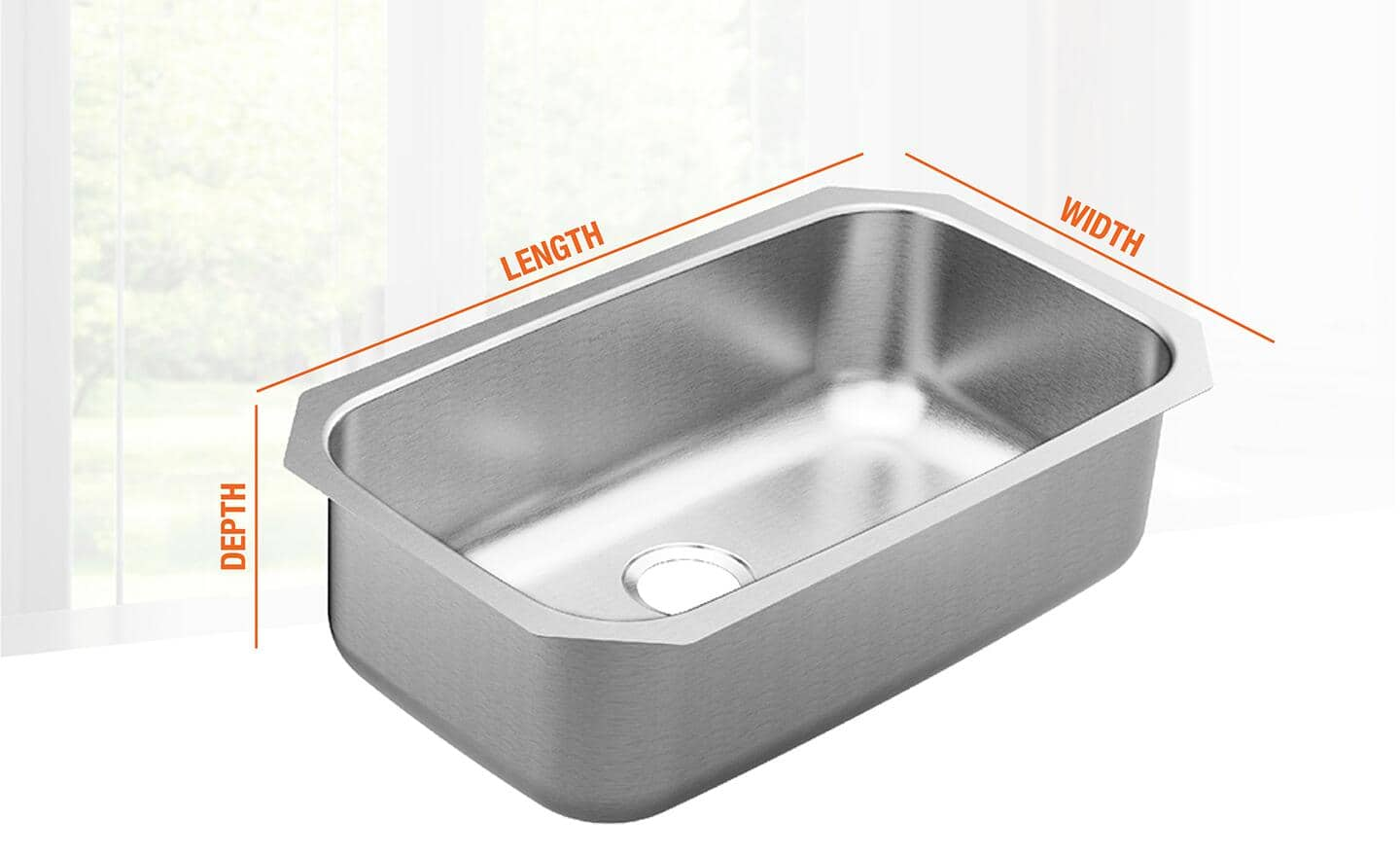
Image Source: dam.thdstatic.com
Deciphering Your Current Sink’s Measurements
Replacing a kitchen sink might seem straightforward, but the details matter. The success of your replacement project hinges on precise measurements. This guide will walk you through each step, ensuring you have all the information needed to select and install a new sink that fits like a glove. We’ll cover everything from the overall sink width and length to the intricate details of sink cutout size and sink depth measurement.
Essential Tools You’ll Need
Before you start measuring, gather these simple tools:
- Tape Measure: A sturdy metal tape measure is best.
- Pencil: For marking any template lines if needed.
- Paper and Pen: To record your measurements clearly.
- Helper (Optional but Recommended): An extra pair of hands can make measuring tricky areas much easier.
Measuring Your Existing Sink: A Step-by-Step Guide
Let’s get down to business. Measuring your current sink involves looking at it from different angles – above, below, and from the side.
1. Measuring the Overall Sink Width and Length
This is your starting point. You need to know the total space the sink occupies on your countertop.
-
For Drop-in (Top-mount) Sinks:
- Measure across the widest part of the sink from one outer edge to the other. This is your sink width.
- Measure from the front outer edge to the back outer edge. This is your sink length.
- Be sure to measure the absolute outer edges, including any rims or flanges that extend onto the countertop.
-
For Undermount Sinks:
- Measure the visible portion of the sink bowl from edge to edge. This gives you an idea of the bowl size.
- The crucial measurement for undermount sinks is the sink cutout size, which we’ll cover next. However, knowing the bowl dimensions is still helpful for comparing sink styles.
2. Determining the Sink Cutout Size
This is arguably the most critical measurement, especially for replacing a drop-in sink. The sink cutout size is the hole in your countertop that the sink fits into. If your new sink’s cutout dimensions don’t match your existing one, you’ll likely need to modify your countertop, which can be a costly and complex job.
- How to Measure the Cutout:
- If the sink rim is easily lifted: Carefully lift the sink rim slightly to expose the edge of the cutout. Measure the length and width of the opening in the countertop.
- If the sink is sealed tightly:
- Measure the length and width of the sink basin itself.
- Then, measure the width of the lip or rim that sits on the countertop. Add twice this lip width to both the sink’s length and width. For example, if your sink basin is 30 inches long and the rim is 1.5 inches wide on each side, your total length needed for the cutout will be 30 + 1.5 + 1.5 = 33 inches.
- Important Note: For undermount sinks, the cutout is made underneath the countertop. You’ll need to access the underside of your countertop. Measure the length and width of the opening here. Many manufacturers provide templates for their sinks, which can be a lifesaver. If you’re doing an undermount sink installation, ensure the cabinet space below is also sufficient.
3. Measuring the Sink Depth
The sink depth measurement is important for ensuring clearance under your sink and for aesthetic reasons.
- How to Measure Depth:
- Place your tape measure from the bottom of the sink basin to the level of the countertop.
- Measure this distance in a few different spots to account for any slight variations.
- Why it matters: Deeper sinks can accommodate larger pots and pans but might require a special drain assembly to avoid drainpipe conflicts. Shallower sinks offer more under-sink clearance for plumbing or storage.
4. Checking Faucet Hole Measurements
Modern sinks often come with pre-drilled holes for faucets. You need to know how many holes you have and their spacing.
- How to Measure Faucet Holes:
- Count the number of holes drilled in the sink deck or backsplash area.
- If you plan to reuse your existing faucet, measure the distance between the centers of the faucet holes. Standard spacings are typically 4 inches (for widespread faucets) or 8 inches (for centerset faucets).
- If you’re getting a new faucet, you’ll need to match the number of holes to the faucet’s requirements or consider a sink with no holes if you plan to mount the faucet on the countertop itself.
5. Measuring Sink Drain Size
The drain is a vital component. While most standard drains are the same size, it’s good to confirm.
- How to Measure Drain Size:
- The most common sink drain opening size is 3.5 inches in diameter.
- You can measure the diameter directly if accessible, or you can measure the circumference and divide by pi (π ≈ 3.14).
- This measurement is crucial for purchasing the correct drain assembly, strainer, and garbage disposal flange.
Beyond Basic Measurements: Considering Other Factors
While precise measurements are key, several other factors influence your sink replacement.
1. Countertop Sink Measurements: Rim and Overhang
For drop-in sinks, the lip or rim that rests on the countertop is important. You need to ensure there’s enough countertop surface to support this rim securely.
- Rim Width: As mentioned earlier, measure the width of the sink’s lip. This tells you how much of your countertop edge the sink will cover.
- Overhang: Check the countertop’s edge. Is it thick enough to support the sink? Are there any obstructions behind the sink (like a backsplash or tile) that might prevent a different style of sink from fitting?
2. The Sink Cutout Size vs. Overall Sink Size: A Crucial Distinction
It’s vital to differentiate between the sink cutout size and the overall sink width and length of the sink itself.
- The sink cutout size is the hole in your countertop.
- The overall sink width and length refers to the entire sink, including its rim or mounting flange.
When choosing a replacement sink:
- For Drop-in Sinks: Your new sink’s overall dimensions (including the rim) should ideally be slightly larger than the existing cutout, ensuring the rim covers the opening. The cutout size of your new sink should match your existing one.
- For Undermount Sinks: The cutout size is paramount. The overall sink dimensions are less critical for fit, as the sink is mounted from below. The key is that the countertop material around the cutout is robust enough for an undermount installation.
3. Farmhouse Sink Measurements: Unique Considerations
Farmhouse sink measurements have specific requirements due to their design. These sinks typically have a large, exposed front (apron).
- Cabinet Base Width: Farmhouse sinks often require a specific cabinet base width. Measure the internal width of your cabinet where the sink will sit. Most standard farmhouse sinks fit into a 36-inch cabinet, but always check the sink manufacturer’s specifications.
- Countertop Depth: The apron front of a farmhouse sink sits in front of the standard countertop edge. Ensure your countertop has sufficient depth to accommodate this.
- Cutout for Apron: For sinks that are partially or fully integrated into the countertop, there will be a specific cutout for the apron. This is a more complex measurement often best handled by a professional or by using the sink manufacturer’s template.
4. Sink Material Impact on Measurements and Installation
The material of your sink can subtly influence how you measure or install it.
- Stainless Steel: Relatively lightweight and easy to work with. Measurements are generally straightforward.
- Cast Iron: Very heavy. Requires a sturdy cabinet base and often extra support. Measurements are standard, but handling is a major consideration.
- Composite Granite/Quartz: Heavier than stainless steel, can be more brittle. Care must be taken when handling and measuring around the edges. The sink cutout size needs to be precise as the material is less forgiving to errors.
- Fireclay: Similar to cast iron in weight and durability.
- Solid Surface (e.g., Corian): Can be a seamless integration with countertops. Undermount sink installation with solid surface countertops often involves a special adhesive bonding process. The sink cutout size must be exact for a flush fit.
5. Fathom the Importance of Sink Depth Measurement for Plumbing
The sink depth measurement plays a role in your plumbing.
- Garbage Disposal: If you plan to install a garbage disposal, a deeper sink bowl offers more clearance for the disposal unit and its connection to the drainpipe.
- Drain Alignment: Ensure the sink’s drain location is compatible with your existing plumbing rough-in. You might need an offset drain or a different sink configuration if the positions don’t align.
Practical Tips for Accurate Measurement
Here are some extra tips to ensure your measurements are spot-on:
- Measure Twice, Cut Once (or Buy Once!): This adage is crucial for sink replacements. Double-check every measurement.
- Take Photos: Snap pictures of your current sink from different angles, including the underside if possible. These can be helpful references.
- Use Manufacturer Templates: If you have the original packaging or can find it online, many sink manufacturers provide paper templates for their products. These are invaluable for tracing the exact sink cutout size.
- Consider Existing Plumbing: Before you finalize your measurements and purchase, look at your existing plumbing. Are there any unusual angles or obstructions that might affect the installation of a new sink or a garbage disposal?
- When in Doubt, Consult a Professional: If you’re dealing with complex countertops (like granite or quartz), or if you’re unsure about any measurements, it’s always best to have a plumber or countertop fabricator take the measurements for you. They have the experience and tools to ensure accuracy, especially for precise sink cutout size requirements.
Frequently Asked Questions (FAQ)
Q1: What if my new sink’s cutout size is slightly different from my old one?
If the new sink’s cutout size is slightly larger than your current one, you might be able to adapt it if the rim of the new sink will cover the difference. However, if the new cutout needs to be smaller, you’ll likely need to have your countertop professionally modified, which can be expensive. It’s best to find a sink with an identical or very similar cutout size.
Q2: Can I replace a drop-in sink with an undermount sink?
Yes, you can, but it requires professional countertop modification. An undermount sink is installed under the countertop, meaning the existing cutout will need to be enlarged and potentially re-shaped by a professional to accommodate the new sink’s dimensions. This is a significant alteration, and not all countertop materials are suitable for undermount installation.
Q3: How do I measure for a sink that will replace my existing garbage disposal unit?
You’ll primarily measure the opening where the garbage disposal is currently connected. This usually means measuring the diameter of the disposal flange that sits in the sink drain opening. You’ll need a new sink with a compatible sink drain size and ensure there’s adequate space below for the disposal unit itself.
Q4: What are common sink dimensions?
Common sink dimensions vary greatly by style and type. For example:
* Standard Kitchen Sinks (Drop-in): Often range from 25-33 inches in width and 18-22 inches in length.
* Double Bowl Sinks: Can be 30-36 inches wide.
* Farmhouse Sinks: Typically start at 30 inches wide and can go up to 36 inches or more.
* Depth: Usually ranges from 6 to 10 inches.
It’s crucial to measure your specific space rather than relying solely on these general figures.
Q5: How important is the sink depth measurement when replacing a sink?
The sink depth measurement is important for several reasons:
* Aesthetics: A deeper sink might look more substantial or modern.
* Functionality: Deeper sinks hold more dishes and accommodate larger pots and pans.
* Clearance: It impacts the space available under the sink for plumbing, garbage disposals, or storage. Ensure the new depth doesn’t create conflicts with your existing cabinetry or plumbing.
By following these detailed steps and paying close attention to each measurement, you’ll be well-equipped to select the perfect replacement sink for your kitchen. Happy measuring!