
Can you make your own cement kitchen countertops? Yes, you absolutely can! Making your own concrete countertops is a rewarding DIY project that can significantly update your kitchen’s look without the high cost of professional installation. This guide will walk you through everything you need to know to create beautiful, durable DIY concrete counters. From selecting materials to achieving the perfect finish, we’ll cover the essentials for your concrete kitchen island or entire countertop surface.
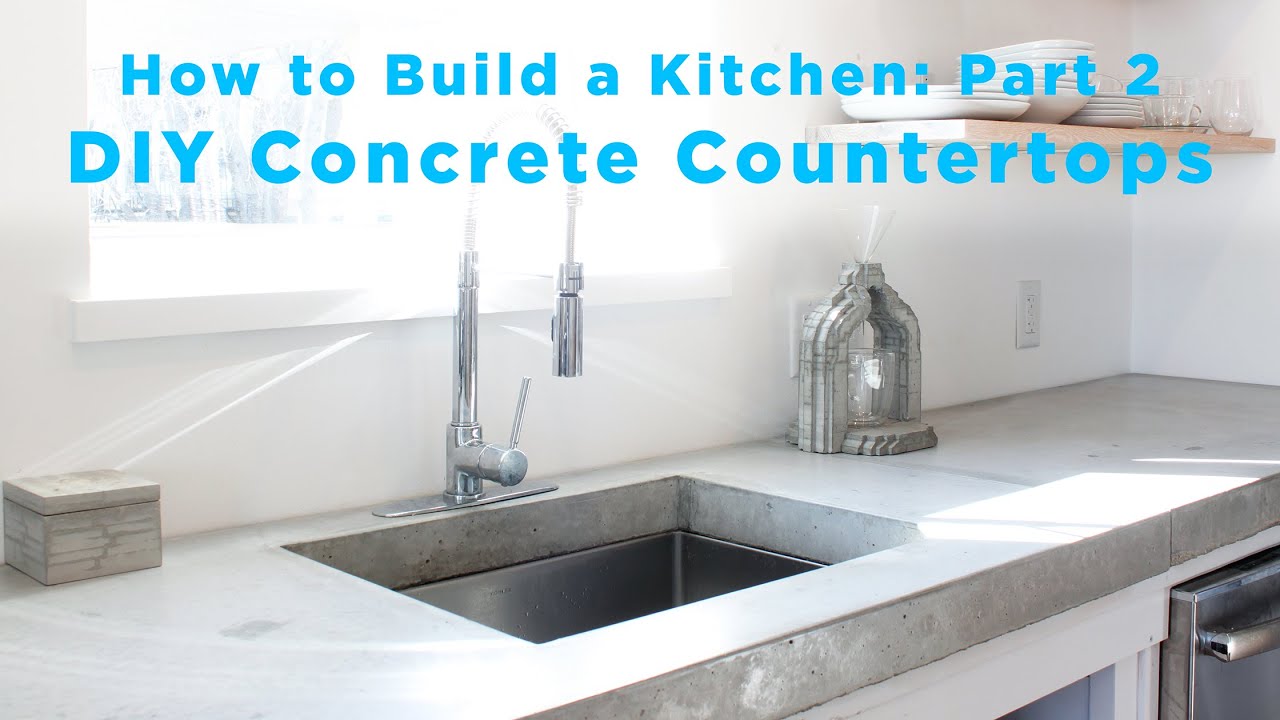
Image Source: i.ytimg.com
Why Choose DIY Concrete Countertops?
Concrete countertops offer a unique blend of modern aesthetics and robust functionality. They are incredibly versatile, allowing for a wide range of colors, textures, and edge profiles. Many homeowners are drawn to the industrial chic or minimalist look that concrete provides. Plus, the satisfaction of creating something so substantial with your own hands is immense.
Advantages of Concrete Countertops:
- Durability: When properly sealed, concrete countertops are highly resistant to heat, scratches, and stains.
- Customization: The possibilities for design are virtually limitless. You can embed objects, create intricate patterns, and choose from a vast array of concrete countertop colors.
- Cost-Effective: Compared to granite, quartz, or marble, DIY concrete countertops can be a much more affordable option, especially if you do the labor yourself.
- Unique Appeal: Each concrete countertop has its own character, with variations in color and texture that make it a true one-of-a-kind piece.
Potential Challenges to Consider:
- Weight: Concrete is heavy. Ensure your existing cabinetry can support the weight of the concrete countertops.
- Porosity: Unsealed concrete can absorb liquids, leading to stains. Proper sealing is crucial.
- Cracking: While reinforcement helps, concrete can sometimes develop hairline cracks. This is often seen as part of its natural charm.
- Labor Intensive: This is not a weekend project for the faint of heart. It requires careful planning, precision, and physical effort.
Planning Your Concrete Countertop Project
Before you start mixing concrete, careful planning is essential. This phase sets the foundation for a successful project.
Design Considerations:
- Edge Profile: Will you have a simple square edge, a rounded bullnose, or something more decorative?
- Thickness: Standard countertops are usually 1.5 to 2 inches thick. Thicker countertops create a more substantial look.
- Color: Do you want a natural gray, a dyed hue, or a more complex marbled effect?
- Finish: Will it be smooth and polished, or will you embrace a more rustic, troweled look?
- Integrated Features: Consider if you want an integrated sink or drainboard. This adds complexity but creates a seamless look.
Measuring Your Space:
Accurate measurements are critical.
- Measure Length and Width: Measure the exact dimensions of each countertop section.
- Note Cutouts: Mark precise locations and dimensions for sink cutouts, cooktop openings, and any other necessary openings. Use cardboard templates for accuracy.
- Consider Overhangs: Decide on the desired overhang for your countertops.
Two Main Methods for Making Concrete Countertops
There are two primary approaches to creating concrete countertops: pour-in-place countertops and casting countertops in molds.
1. Pour-in-Place Countertops
This method involves building forms directly on your existing cabinets and pouring the concrete into those forms.
Pros of Pour-in-Place:
- Less heavy lifting of finished pieces.
- Can be easier to achieve a perfect fit.
Cons of Pour-in-Place:
- Requires protecting surrounding areas from spills and dust.
- Can be more challenging to achieve a perfectly smooth finish due to working in place.
- Demolding and finishing can be awkward in the kitchen.
2. Cast Concrete Countertops (Using Molds)
This involves building concrete countertop molds, pouring the concrete into them (usually upside down), allowing it to cure, and then flipping and installing the finished slabs.
Pros of Casting in Molds:
- Allows for a more controlled environment for curing and finishing.
- Easier to achieve a smooth, consistent finish by working on the “face down” side of the mold.
- Less mess and disruption in the kitchen during the pour.
Cons of Casting in Molds:
- Requires significant space to build molds and cure the concrete.
- The finished slabs are very heavy and require careful handling and installation.
This guide will primarily focus on the casting method, as it often yields a more refined finish for DIYers.
Crafting Your Concrete Countertop Molds
The quality of your concrete countertop molds directly impacts the final product. Well-constructed molds create clean edges and a smooth surface.
Materials for Molds:
- Melamine Board: This is the most common material. It’s smooth, rigid, and coated, which helps prevent the concrete from sticking. Use 3/4-inch thick melamine.
- Silicone Caulk: 100% silicone caulk (not mold-resistant) is used to seal the seams and create rounded edges if desired.
- Screws: Exterior-grade screws are best.
- Mold Release Agent: A commercial mold release or a mixture of mineral oil and paraffin wax.
- Reinforcement: Steel rebar, wire mesh (like hardware cloth), or fiberglass reinforcing fibers.
- Edge Treatments (Optional): Radius edge bits for routers can create decorative edges on the mold sides.
Building the Molds:
- Cut Melamine: Cut melamine pieces to the exact dimensions of your countertop slabs, accounting for thickness. Remember, you’ll be pouring upside down, so the bottom of your mold becomes the top surface of your countertop.
- Assemble the Box: Screw the sides of the mold together. Ensure all corners are perfectly square. Use a router with a round-over bit on the inside edges of the mold if you want a rounded edge on your countertop. If you want a sharp edge, use a melamine edge banding for the interior mold sides.
- Seal Seams: Apply a generous bead of 100% silicone caulk to all interior seams and corners. Smooth the caulk with your finger or a caulking tool. This prevents concrete seepage and creates a smooth, rounded edge where the caulk is applied. Let the caulk cure completely.
- Create Sink/Appliance Openings: Cut out any necessary openings from melamine or foam board and securely attach them to the mold base. Seal the edges of these cutouts with silicone caulk.
- Apply Mold Release: Once the caulk is fully cured, apply a thin, even coat of mold release agent to all interior surfaces of the mold. This is crucial for easy demolding.
Selecting Your Concrete Mix and Reinforcement
The right mix and reinforcement are key to strong, beautiful concrete countertops.
Concrete Mix Options:
- Standard Concrete Mix: Bags of pre-mixed concrete are readily available. However, they can be coarse and may require adding extra Portland cement and fine aggregate for a smoother finish.
- Countertop-Specific Mixes: Many manufacturers offer specialized concrete countertop mixes designed for strength, workability, and a fine aggregate finish. These are often the best choice for DIYers.
- Custom Mix: For the most control, you can mix your own using Portland cement, sand (fine aggregate), and gravel (coarse aggregate) if needed. For countertops, a mix with finer aggregates is preferred.
A typical countertop mix ratio might be:
- 1 part Portland cement
- 2 parts fine sand (play sand or masonry sand)
- 1 part small aggregate (like pea gravel, or omit for a very smooth finish)
You will also need:
- Water
- Colorants (optional)
- Reinforcing fibers (optional, but recommended)
Reinforcement:
Reinforcement adds tensile strength and helps prevent cracking.
- Steel Reinforcing Bar (Rebar): Small diameter rebar (e.g., #3) can be used. It needs to be suspended so it’s in the middle of the concrete slab, not touching the mold surfaces.
- Wire Mesh: Welded wire mesh or hardware cloth can be cut to fit the mold. It should also be suspended within the concrete.
- Fiber Reinforcement: Synthetic or glass fibers can be mixed directly into the concrete, providing distributed reinforcement. This is often the easiest for DIYers.
Table: Reinforcement Options for Concrete Countertops
| Reinforcement Type | Pros | Cons | Best For |
|---|---|---|---|
| Wire Mesh | Good tensile strength, relatively inexpensive | Can be cumbersome to handle, needs suspension | Standard countertop slabs |
| Rebar | High tensile strength | Requires careful placement/suspension, can rust | Larger spans, complex shapes |
| Fiber Reinforcement | Easy to mix in, distributed strength, reduces plastic shrinkage cracking | May not provide as much structural strength as mesh/rebar | All countertop projects, especially DIY |
Mixing and Pouring Your Concrete
This is where the magic happens! Precision and patience are key.
The Concrete Mix:
- Dry Ingredients: In a large mixing tub or wheelbarrow, combine your chosen concrete mix, sand, and any dry additives like pigments. Mix thoroughly.
- Add Water Gradually: Slowly add water while mixing. The goal is a consistency like thick oatmeal or peanut butter – not too wet, not too dry. Over-watering weakens the concrete.
- Add Pigments (Optional): If you’re coloring your concrete, add the pigment at this stage and mix thoroughly until the color is uniform.
- Add Fibers (If Using): If using fiber reinforcement, add them according to the manufacturer’s instructions, usually towards the end of mixing.
The Pour:
- Fill the Mold: Carefully scoop or pour the concrete into the mold. Work the concrete into all corners and edges to eliminate air pockets.
- Vibrate the Mold: Gently tap the sides of the mold with a rubber mallet or use a concrete vibrator (a specialized tool that vibrates the mold, bringing air bubbles to the surface). This is crucial for a dense, smooth finish.
- Add Reinforcement: If using mesh or rebar, place it in the mold after filling it about halfway. Then, add the remaining concrete and ensure the reinforcement is fully embedded. If using fibers, they are already in the mix.
- Screed and Trowel: Use a straight piece of wood (screed) to level the surface of the concrete, scraping off excess. Then, use a magnesium or steel trowel to smooth the surface. Work in one direction.
Curing and Demolding
Proper curing is as important as the pour for strong, durable concrete.
Curing:
- Initial Set: The concrete will begin to set within a few hours.
- Wet Curing: This is the most critical phase. Keep the concrete moist for at least 7 days. You can do this by:
- Covering the mold with plastic sheeting to trap moisture.
- Lightly misting the surface with water multiple times a day.
- Using a wet burlap or cotton cloth to cover the surface.
- Temperature: Maintain a consistent temperature, ideally between 50°F and 80°F (10°C and 27°C).
Demolding:
- Patience is Key: Wait at least 48-72 hours before attempting to demold, longer in cooler conditions. The concrete needs to gain sufficient strength.
- Careful Removal: Gently unscrew the sides of the mold. If you used silicone caulk, you might need to carefully run a utility knife along the edges to break the seal.
- Flipping: This is the most nerve-wracking part. With the help of at least one other person, carefully flip the slab over onto a protected surface (like blankets or foam). If you cast upside down, this is now the top surface.
Finishing Your Concrete Countertops
The finishing touches transform raw concrete into a polished countertop.
Grinding and Polishing:
- Tools: You’ll need a wet polisher or an angle grinder with diamond polishing pads (starting with a coarse grit like 50 or 100, and progressing to finer grits like 400, 800, 1500, or even 3000).
- Process:
- Grind: Start with the coarsest grit to remove any imperfections or the mold release residue.
- Polish: Work through the grits sequentially, rinsing the surface between each grit. The finer the grit, the smoother and more polished the surface will become.
- Achieve Desired Sheen: Stop at the grit level that achieves your desired concrete countertop finish – from a matte look to a high-gloss shine.
Filling Pores (Densifying):
- Why: Even polished concrete has microscopic pores that can stain.
- Products: Use a concrete densifier (like sodium or potassium silicate). It penetrates the concrete and chemically reacts to fill pores, making it harder and less porous.
- Application: Apply the densifier with a sprayer or roller and let it penetrate. You may need multiple coats.
Coloring (Optional):
- Integral Color: Pigments added during the mixing stage provide all-through color.
- Stains: Acid stains react chemically with the concrete to create variegated, translucent effects.
- Dyes: Water-based or solvent-based dyes penetrate the surface and provide more uniform color.
- Sealers with Color: Some sealers contain pigments for a subtle color boost.
Table: Concrete Countertop Colors and Finishes
| Color Method | Pros | Cons | Best For |
|---|---|---|---|
| Integral Pigments | Color throughout, consistent, no flaking | Can be harder to achieve subtle variations, limited palette | Uniform color, modern look |
| Acid Stains | Unique, variegated, translucent, artistic look | Unpredictable results, requires neutralization, can etch | Rustic, Old World, mottled, varied looks |
| Dyes | Wide color range, can be layered for depth | Can fade over time, may require frequent reapplications | Vibrant colors, contemporary styles |
| Polished Finish | Smooth, sleek, modern, easy to clean | Requires specialized equipment (polishers), labor intensive | High-end kitchens, minimalist aesthetics |
| Troweled Finish | Rustic, textured, hides imperfections | Can be harder to clean, less uniform surface | Farmhouse, industrial, casual styles |
| Stamped/Textured | Creates decorative patterns (e.g., faux stone) | Requires specialized tools/molds, can be difficult to clean | Unique decorative effects |
Concrete Countertop Sealing: The Final Protection
Sealing is the most critical step for long-term performance and stain resistance.
Types of Sealers:
- Penetrating Sealers: These soak into the concrete, protecting it from within. They don’t typically alter the appearance of the concrete. They offer good stain resistance but may need reapplication every few years.
- Topical Sealers (Coatings): These form a protective film on the surface. They can offer a high-gloss finish and excellent stain and abrasion resistance. They can be more prone to scratching or wear over time and may need resealing. Examples include acrylics, epoxies, and urethanes.
Application:
- Clean Thoroughly: Ensure the countertop is completely clean, dry, and free of dust.
- Apply Sealer: Follow the manufacturer’s instructions for your chosen sealer. This usually involves applying thin, even coats with a microfiber applicator, roller, or sprayer.
- Multiple Coats: Most sealers require 2-3 thin coats for adequate protection. Allow sufficient drying time between coats.
- Cure Time: Some sealers require a full curing period (up to a week or more) before heavy use or exposure to moisture.
Concrete counter sealing is paramount. A well-sealed countertop will resist staining from coffee, wine, oils, and acids.
Concrete Countertop Installation
This is the final step in bringing your DIY masterpiece to life.
Preparation:
- Cabinet Support: Ensure your cabinets are sturdy and level. If cabinets are not strong enough, consider reinforcing them with plywood or adding extra bracing.
- Clear the Area: Remove all items from your cabinets and the surrounding workspace.
Lifting and Placing:
- Teamwork: Concrete countertops are extremely heavy. You will need several strong helpers to lift and maneuver the slabs.
- Protection: Use moving blankets, dollies, or pipe rollers to safely transport the slabs.
- Placement: Carefully position the slabs onto the cabinets. Use shims if necessary to ensure they are perfectly level.
Securing the Countertops:
- Adhesive: Apply a bead of silicone adhesive or construction adhesive along the top edges of the cabinets.
- Fastening: Some fabricators recommend screwing through the cabinet frame into the underside of the countertop (predrill a pilot hole in the concrete and use appropriate screws). Be cautious not to overtighten.
Seam Treatment (If Applicable):
If your countertop is made of multiple pieces, you’ll need to address the seams.
- Adhesive: Apply a color-matched or clear silicone adhesive in the seam.
- Align: Carefully align the pieces.
- Clamp: Use clamps or weights to hold the pieces together tightly while the adhesive cures.
- Clean Excess: Wipe away any excess adhesive before it dries.
- Grind/Polish Seam: Once cured, you can often grind and polish the seam to make it less visible, especially if using a polished finish.
Maintenance of Your Concrete Countertops
Proper maintenance ensures your countertops look great for years.
Daily Cleaning:
- Mild Soap and Water: Use a pH-neutral soap and a soft cloth or sponge.
- Avoid Abrasives: Do not use abrasive cleaners, steel wool, or scouring pads, as they can scratch the sealer or the concrete itself.
Preventing Stains and Etching:
- Use Coasters: Always place coasters under glasses, especially those with acidic beverages.
- Cutting Boards: Use cutting boards for all chopping and food preparation.
- Hot Pads: Use trivets or hot pads under hot pots and pans.
- Wipe Spills Immediately: Blot up spills promptly, especially acidic ones like lemon juice or vinegar.
Resealing:
- Inspect Regularly: Check the sealer periodically. The water bead test is a good indicator: if water beads up, the sealer is still effective. If it soaks in, it’s time to reseal.
- Frequency: Depending on the type of sealer and usage, resealing may be needed every 1-3 years.
Frequently Asked Questions (FAQs)
Q: Is concrete a good material for kitchen countertops?
A: Yes, concrete can be an excellent material for kitchen countertops due to its durability, customizability, and unique aesthetic appeal, provided it is properly mixed, cured, sealed, and maintained.
Q: How much do DIY concrete countertops cost?
A: The cost can vary significantly based on materials chosen, size of the countertops, and any decorative elements. Generally, DIY concrete countertops can range from $30-$70 per square foot for materials, a fraction of the cost of professionally fabricated concrete or other high-end materials.
Q: Can concrete countertops stain easily?
A: Unsealed concrete is prone to staining. However, when properly sealed with a high-quality sealer, concrete countertops can be very stain-resistant. Promptly wiping up spills also significantly reduces the risk of staining.
Q: How do I clean my concrete countertops?
A: Clean your concrete countertops with a mild, pH-neutral soap and water. Avoid harsh chemicals, abrasive cleaners, or scouring pads that can damage the sealer or the concrete surface.
Q: Can I put hot pans directly on a concrete countertop?
A: While concrete is heat-resistant, it’s best practice to use trivets or hot pads to protect the sealer and prevent thermal shock, which could potentially cause cracking.
Q: What is the best sealer for concrete countertops?
A: The best sealer depends on your desired finish and level of protection. Penetrating sealers offer natural looks and good stain resistance, while topical sealers can provide high gloss and enhanced durability but may require more maintenance. Researching and choosing a reputable brand specifically designed for kitchen countertops is recommended.
Q: Can I achieve different concrete countertop colors?
A: Absolutely! You can achieve a wide range of concrete countertop colors using integral pigments mixed into the concrete, acid stains, or dyes applied after curing.
Q: Is it difficult to install concrete countertops?
A: The installation can be challenging due to the weight of the concrete slabs. It requires careful planning, proper lifting techniques, and often the help of multiple people. Securing the slabs properly is also crucial.
Q: What is the difference between pour-in-place and cast concrete countertops?
A: Pour-in-place countertops are formed and poured directly on the kitchen cabinets, while cast concrete countertops are made by pouring concrete into forms (molds) elsewhere, usually upside down, then flipping and installing the cured slabs. Casting in molds often allows for a more refined finish.
Q: How do I deal with seams in concrete countertops?
A: Seams are typically filled with a color-matched silicone adhesive. Once cured, the seam can be ground and polished for a less visible finish, especially if you’re aiming for a polished concrete countertop.
Embarking on a DIY cement countertop project is a significant undertaking, but the result is a truly unique and durable addition to your kitchen. By following these detailed steps, planning carefully, and paying attention to detail at each stage, you can create beautiful concrete kitchen islands and countertops that you’ll be proud of for years to come.