
Can you install a kitchen sink drain yourself? Yes, with the right tools and guidance, you can definitely install a kitchen sink drain as a DIY project. This guide will walk you through each step, making the process clear and manageable. What is the most crucial part of a sink drain system? The most crucial part is creating a watertight seal to prevent leaks and ensuring the proper flow of water away from your sink and into your home’s plumbing system.
A leaky sink drain can cause significant water damage and mold growth, so getting this right is paramount. Installing a kitchen sink drain assembly involves several key components, including the kitchen sink strainer, the sink tailpiece, the plumbing trap (commonly known as a P-trap), and the drain pipe connection. We’ll cover everything from preparing your workspace to the final leak testing.
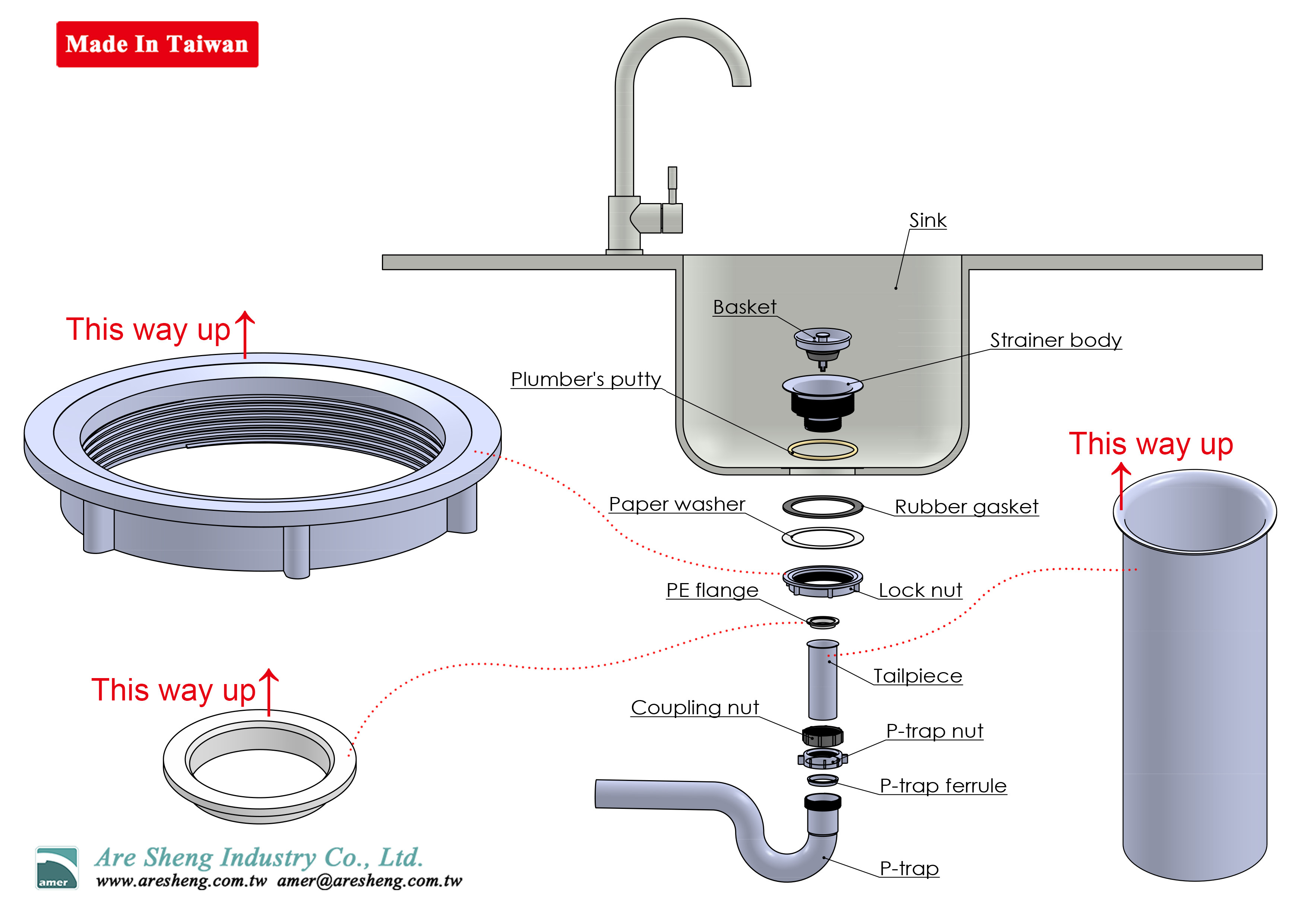
Image Source: www.aresheng.com.tw
Gathering Your Tools and Materials
Before you start, ensure you have all the necessary tools and materials. This will save you time and frustration later.
Essential Tools You’ll Need:
- Adjustable Wrenches (two): For tightening and loosening various nuts and fittings.
- Pipe Wrench: For gripping and turning pipes, especially those that are stuck.
- Bucket or Basin: To catch any residual water in the existing drain pipes.
- Screwdriver Set: For any screws that might be involved in mounting or attaching components.
- Utility Knife or Putty Knife: For scraping away old plumber’s putty or sealant.
- Gloves: To protect your hands from grime and potential irritants.
- Safety Glasses: To protect your eyes from debris or splashes.
- Rags or Towels: For wiping up spills and keeping your workspace clean.
- Measuring Tape: To confirm distances and ensure proper fit.
Materials for the Installation:
- New Kitchen Sink Drain Assembly: This typically includes the kitchen sink strainer, a rubber gasket, a friction ring, a locknut, and a flange. Ensure it’s compatible with your sink’s material and thickness.
- Sink Tailpiece: This is the short pipe that extends from the bottom of the sink strainer. It might come with your new assembly or you may need to purchase it separately.
- Plumbing Trap (P-trap): This U-shaped pipe is essential for blocking sewer gases from entering your home. Ensure it’s the correct size for your existing plumbing.
- Slip-Joint Nuts and Washers: These are usually included with P-trap kits and are used to connect the various pieces of the drain system.
- Plumber’s Putty: A soft, pliable compound used to create a watertight seal between the sink strainer flange and the sink basin. Make sure it’s a type suitable for plumbing.
- PVC Primer and Cement (if connecting to PVC pipes): If your existing drain pipes are PVC, you’ll need these to create a strong, permanent bond. Ensure you have the correct type for your pipe material.
- Thread Sealant Tape (Teflon Tape): For sealing threaded connections to prevent leaks.
Step-by-Step Installation Guide
Let’s break down the process into manageable steps.
Step 1: Removing the Old Drain Assembly
Before you can install the new drain, you need to remove the old one.
- Clear the Area: Remove everything from under the sink to give yourself plenty of working room. Place a bucket or basin directly beneath the existing drain trap to catch any water.
- Disconnect the P-trap: Loosen the slip-joint nuts that connect the P-trap to the sink tailpiece and the wall drain pipe. Use your adjustable wrenches. You might need to turn them counter-clockwise. Be prepared for some water to drain out.
- Remove the Sink Tailpiece: Once the P-trap is disconnected from the tailpiece, you can loosen the slip-joint nut connecting the tailpiece to the sink strainer.
- Loosen the Sink Strainer Locknut: Underneath the sink, find the large locknut that secures the kitchen sink strainer flange to the sink basin. Use an adjustable wrench or pliers to loosen and remove this nut.
- Remove the Old Strainer: From above the sink, carefully pull out the old kitchen sink strainer. You might need to gently pry it if it’s stuck. Scrape away any old plumber’s putty or sealant from the sink opening.
Step 2: Preparing the New Sink Strainer
This is where you’ll create the first crucial seal.
- Assemble the Strainer Components: Lay out all the parts of your new drain assembly. You’ll typically have a flange (the visible part in the sink), a rubber gasket, a friction ring, and a locknut.
- Apply Plumber’s Putty: Take a generous amount of plumber’s putty and roll it into a rope about 1/2 inch thick. You’ll need enough to go all the way around the underside of the strainer flange.
- Seal the Flange: Press the putty rope firmly around the underside edge of the strainer flange. This putty will be squeezed out when you tighten the locknut, forming a watertight seal between the flange and the sink basin.
Step 3: Installing the Kitchen Sink Strainer
Now, you’ll secure the strainer to your sink.
- Insert the Strainer: Carefully place the strainer flange, with the plumber’s putty applied, into the sink drain opening from above the sink. Ensure it sits evenly.
- Add the Gasket and Washer: From underneath the sink, slide the rubber gasket onto the threaded part of the strainer. Then, place the friction ring (if your kit includes one) over the gasket.
- Secure with the Locknut: Thread the locknut onto the strainer body. Hand-tighten it as much as you can.
- Tighten the Locknut: Use an adjustable wrench or pliers to tighten the locknut another half to full turn. This will compress the plumber’s putty and the rubber gasket, creating a tight seal. Be careful not to overtighten, as this could crack the sink or damage the strainer.
- Clean Excess Putty: From inside the sink, use a damp rag to wipe away any excess plumber’s putty that squeezed out around the flange. It’s easier to clean now than when it dries.
Step 4: Connecting the Sink Tailpiece
The tailpiece connects the strainer to the rest of the drain system.
- Attach the Tailpiece: Screw the sink tailpiece onto the bottom of the kitchen sink strainer. Hand-tighten it.
- Tighten the Tailpiece Connection: Use an adjustable wrench to tighten the slip-joint nut connecting the tailpiece to the strainer. Ensure it’s snug, but don’t overtighten.
Step 5: Performing P-trap Installation
The P-trap is vital for preventing sewer gases.
- Assemble the P-trap: Most P-traps come with all the necessary pieces: the U-bend and two straight pipe sections, along with slip-joint nuts and washers.
- Connect to the Tailpiece: Fit the tailpiece end of the P-trap assembly onto the sink tailpiece. Ensure the curved part of the P-trap faces downwards, creating the “trap” for water and gases.
- Connect to the Wall Drain Pipe: Align the other end of the P-trap with the drain pipe connection in the wall. This might be a threaded pipe or a direct connection to another pipe.
- Secure with Slip-Joint Nuts: Place the plastic or metal washers onto the pipe ends, followed by the slip-joint nuts. Hand-tighten these nuts onto both ends of the P-trap to connect it to the tailpiece and the wall drain pipe.
- Adjust for Alignment: You might need to adjust the lengths of the tailpiece or the P-trap components to ensure everything aligns correctly without any undue stress on the pipes. Some tailpieces are extendable or can be cut to size.
- Tighten the Nuts: Use your adjustable wrenches to snug up the slip-joint nuts. Again, don’t overtighten, as this can strip the threads or crack plastic fittings.
Step 6: Connecting to PVC or Metal Drain Pipes
The drain pipe connection to the main drain line needs to be secure.
-
For PVC Pipes:
- Prepare the Pipes: Ensure the ends of both the P-trap and the wall drain pipe are clean and free of burrs. If you needed to cut PVC pipe, use a PVC cutter or hacksaw and deburr the edges.
- Apply PVC Primer: Apply a thin, even coat of PVC primer to the outside of the pipe that will go into the fitting and the inside of the fitting itself. The primer cleans and softens the PVC.
- Apply PVC Cement: Immediately after priming, apply PVC cement to the same surfaces. Work quickly, as the cement dries fast.
- Join the Pipes: Push the pipe into the fitting with a slight twisting motion to ensure even distribution of the cement. Hold the joint firmly for about 30 seconds to prevent the pipe from backing out.
- Allow to Cure: Let the cement cure for the time recommended on the product label before running water through the drain.
-
For Metal Pipes:
- Use Thread Sealant: If connecting to a threaded metal pipe, wrap thread sealant tape (Teflon tape) clockwise around the threads of the pipe before screwing on the fitting.
- Tighten Securely: Use wrenches to tighten the connection firmly.
Step 7: Sealing the Drain and Final Checks
This step ensures everything is ready for testing.
- Check All Connections: Go back and double-check that all slip-joint nuts and other connections are snug.
- Ensure Proper Slope: The drain pipes should have a slight downward slope towards the main drain to allow water to flow freely. The P-trap itself should be properly positioned to hold water.
Step 8: Leak Testing
This is the critical final step to confirm your work.
- Fill the Sink: Close the sink stopper or plug the drain opening. Fill the sink with a few inches of water.
- Inspect for Leaks: Once the sink has some water in it, carefully inspect all the connections you made:
- Around the kitchen sink strainer flange inside and outside the sink.
- Where the tailpiece connects to the strainer.
- Both ends of the P-trap, where they connect to the tailpiece and the wall drain pipe.
- Any other drain pipe connection points.
Look for any drips or moisture.
- Drain the Sink and Re-inspect: Let the water drain from the sink and observe the pipes again as the water flows through. Sometimes leaks are more apparent when water is actively moving through the system.
- Tighten if Necessary: If you find any leaks, turn off the water, dry the area, and gently tighten the offending connection. If it’s a plumber’s putty seal that’s leaking, you may need to disassemble, reapply putty, and reassemble.
- Repeat Testing: Once you’ve tightened anything, refill and drain the sink again to ensure the leaks have stopped.
Troubleshooting Common Issues
Even with careful work, you might encounter a few snags.
Leaking Strainer Seal
- Cause: Insufficient plumber’s putty, uneven tightening, or a faulty gasket.
- Solution: Turn off the water. Dry the area. Loosen the locknut, ensure a good bead of putty is around the flange, and retighten evenly. Check the gasket’s condition.
Leaking Slip-Joint Connections
- Cause: Loose nuts, missing or damaged washers, or crossed threads.
- Solution: Dry the connection. Try tightening the slip-joint nut slightly. If it still leaks, loosen it, check that the washer is seated correctly, and retighten. Ensure you’re not cross-threading. For PVC, ensure the pipe and fitting are clean and properly primed and cemented.
Slow Draining
- Cause: Debris caught in the P-trap or drain line, or a pipe that isn’t sloped correctly.
- Solution: Check the P-trap for blockages by removing and cleaning it. If the issue persists, it might be a more significant clog further down the line, or the slope of your drain pipes needs adjustment, which is a more involved plumbing task.
Frequently Asked Questions (FAQ)
Here are some common questions people have about installing kitchen sink drains.
Q1: How much plumber’s putty should I use?
A1: You need enough plumber’s putty to form a continuous rope about 1/2 inch thick around the underside of the strainer flange. This ensures a complete seal.
Q2: Can I use silicone sealant instead of plumber’s putty?
A2: For the strainer flange to sink connection, plumber’s putty is the traditional and recommended sealant. It creates a pliable, watertight seal that can accommodate minor sink movements. Silicone can work, but it’s less forgiving and can make future removal more difficult. For other threaded connections, Teflon tape or pipe dope is used.
Q3: What is the purpose of the P-trap?
A3: The P-trap is a U-shaped section of pipe that holds a small amount of water. This water acts as a barrier, preventing unpleasant and potentially harmful sewer gases from entering your home through the sink drain.
Q4: Do I need to use PVC primer and cement if my pipes are not PVC?
A4: No, PVC primer and cement are only for PVC pipe connections. If you have metal or other types of drain pipes, you will use different connection methods, such as slip-joint nuts with washers or threaded fittings with thread sealant tape.
Q5: How tight should I make the slip-joint nuts?
A5: You should tighten them until they are snug and the connection feels secure, but do not overtighten, especially with plastic fittings. Overtightening can strip threads or crack the plastic, leading to leaks. A good rule of thumb is hand-tight plus a quarter to half turn with a wrench.
Q6: What if my new tailpiece is too long or too short?
A6: Many tailpieces are adjustable or can be cut to size. If your tailpiece is too long, you can carefully cut it with a hacksaw or PVC cutter to the required length. Ensure the cut end is clean and smooth. If it’s too short, you may need to purchase an extension piece or a different tailpiece.
Q7: How do I know if I have the correct drain pipe connection type for the P-trap?
A7: Most P-trap kits come with universal slip-joint fittings designed to connect to standard sink tailpieces and common types of drain pipes. However, if you have an unusual or very old plumbing system, you might need adapters. Always check compatibility before purchasing.
Q8: What is the purpose of leak testing?
A8: Leak testing is crucial to ensure that all your connections are watertight. A small drip from a drain can cause significant water damage over time. Testing immediately after installation prevents future problems and confirms your DIY work is successful.
Q9: How often should I clean my kitchen sink drain?
A9: Regular cleaning, perhaps monthly, can prevent build-up and potential clogs. You can use a mixture of baking soda and vinegar followed by hot water, or commercial drain cleaners designed for kitchen sinks. Avoid harsh chemical drain cleaners that can damage pipes over time.
By following these detailed steps, you can confidently install your kitchen sink drain assembly. Remember to work patiently, double-check your connections, and always perform thorough leak testing to ensure a successful and leak-free installation.