
Can I build my own kitchen cabinets? Yes, absolutely! This comprehensive guide will walk you through the exciting process of building your own kitchen cabinets, transforming your space with custom cabinetry tailored to your needs and style. We’ll cover everything from initial design to the final touches.
Building your own kitchen cabinets is a rewarding DIY project that can save you significant money compared to buying pre-made or custom options. It also gives you complete control over the materials, dimensions, and overall aesthetic, resulting in truly custom cabinetry that perfectly fits your kitchen. This guide is designed for those with some basic woodworking experience, but we’ll break down each step to make it as accessible as possible.
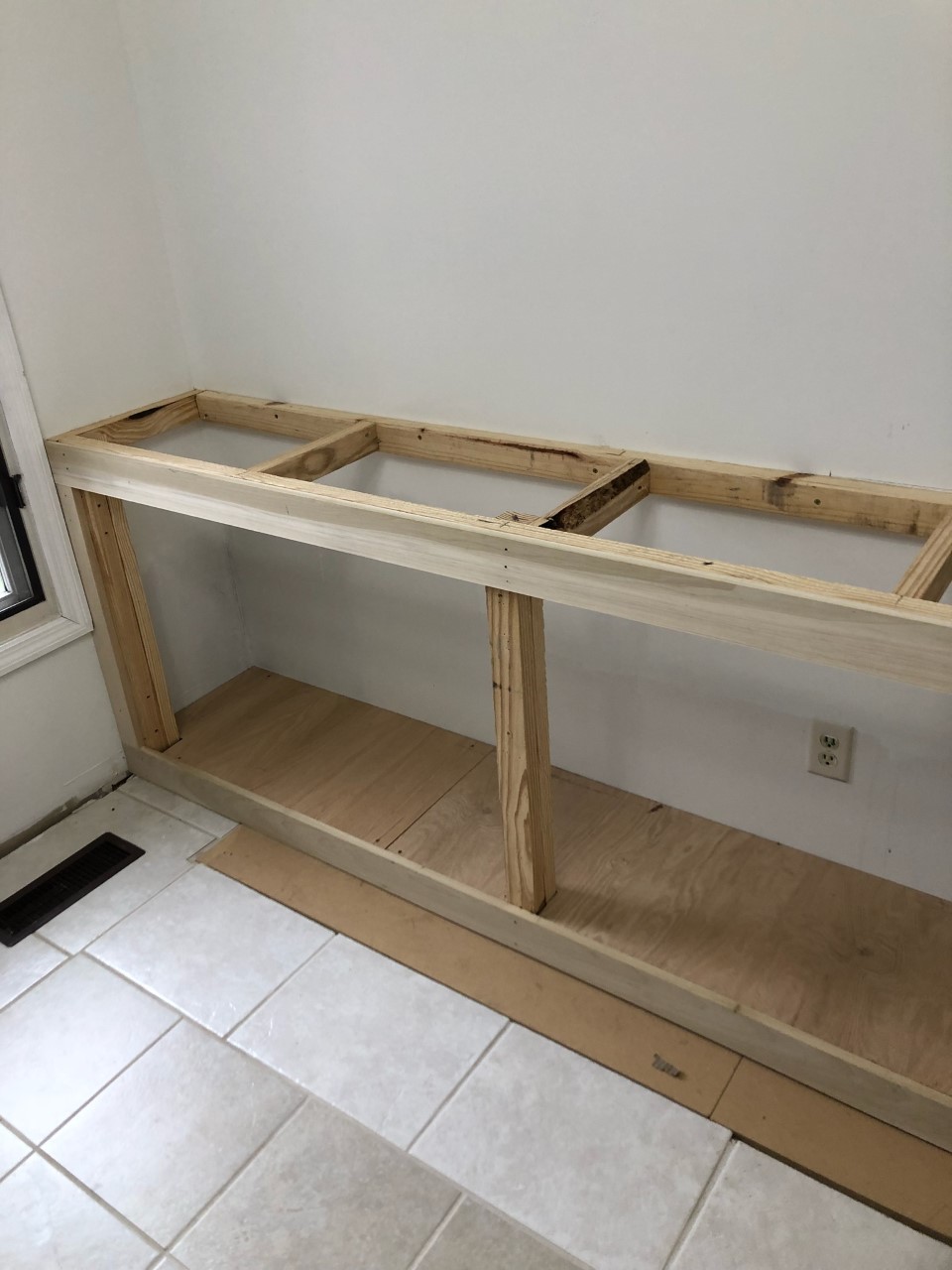
Image Source: designingvibes.com
1. Kitchen Cabinet Design: Planning Your Project
Before you pick up a saw, careful planning is crucial. This stage involves creating a detailed kitchen cabinet design that considers your kitchen’s layout, your storage needs, and your personal style.
1.1 Measuring Your Space
Accurate measurements are the foundation of successful cabinet building. Measure your kitchen space meticulously.
- Wall lengths: Measure the total length of each wall where cabinets will be installed.
- Wall heights: Measure from the floor to the ceiling for standard base and wall cabinets. Note any obstructions like windows, doors, or existing appliances.
- Cabinet placement: Decide where each cabinet will go. Consider sink locations, dishwasher placement, and appliance integration.
- Toe kick height: Standard toe kicks are usually 4 inches high. Decide on your preferred depth.
- Countertop depth: Standard countertop depth is 25 inches for base cabinets.
1.2 Cabinet Types and Layout
Your kitchen cabinet design will dictate the types and layout of your cabinets.
- Base Cabinets: These sit on the floor and support countertops. They typically have doors and/or drawers.
- Wall Cabinets: These mount to the wall above base cabinets. They are shallower and ideal for storing lighter items.
- Tall/Pantry Cabinets: These extend from floor to ceiling and offer extensive storage.
- Specialty Cabinets: Consider corner cabinets (lazy Susans or pull-outs), sink bases, and appliance garages.
1.3 Creating a Plan
A detailed plan is your roadmap. Sketch out your kitchen, marking the placement of each cabinet.
- Use graph paper: This helps maintain scale.
- Dimension each cabinet: Specify the width, height, and depth of every cabinet box.
- Consider door and drawer configurations: Decide on the number of doors and drawers per cabinet.
- Think about interior storage: Plan for adjustable shelving, pull-out drawers, or spice racks.
2. Materials and Tools for Cabinet Construction
Choosing the right materials and having the necessary tools will make the cabinet construction process smoother and the end result more durable.
2.1 Wood Selection
The choice of wood significantly impacts the look, durability, and cost of your DIY kitchen cabinets.
- Plywood: High-quality plywood is excellent for cabinet boxes.
- Birch Plywood: Durable, stable, and takes finishes well. Often a good balance of cost and quality.
- Maple Plywood: Similar to birch but often a bit harder and with a finer grain.
- Cabinet-grade plywood: Look for options with solid cores and smooth, uniform veneers. Avoid void-free or furniture-grade plywood as it’s often overkill and more expensive.
- Solid Wood: Used for cabinet doors, drawer fronts, and face frames.
- Hardwoods (Maple, Oak, Cherry, Walnut): Offer excellent durability, beauty, and resistance to wear. Maple is a popular choice for its smooth finish and neutral color.
- Softwoods (Pine): More affordable but prone to dents and scratches. Can be used for less visible parts or if a rustic look is desired.
2.2 Essential Tools
Having the right tools will ensure accuracy and efficiency.
- Measuring and Marking Tools:
- Tape measure
- Carpenter’s square
- Combination square
- Pencil
- Marking knife
- Cutting Tools:
- Table saw: Essential for accurate rips and crosscuts.
- Circular saw (with a guide): Can be used for larger sheet goods if a table saw isn’t available.
- Miter saw: For precise crosscuts and angled cuts.
- Jigsaw: For curved cuts or cutting out sink openings.
- Assembly Tools:
- Drill/driver: For pre-drilling and driving screws.
- Pocket hole jig: For strong, hidden joinery.
- Clamps (various types): Bar clamps, pipe clamps, and C-clamps are invaluable for holding pieces together during assembly and gluing.
- Brad nailer/finish nailer: For tacking pieces in place before glue sets.
- Safety Gear:
- Safety glasses
- Hearing protection
- Dust mask or respirator
- Work gloves
3. Building Cabinet Boxes: The Backbone of Your Kitchen
Building cabinet boxes is a fundamental part of cabinet construction. This is where the sturdy frames for your cabinets are created.
3.1 Understanding Box Construction Methods
There are a few common ways to build cabinet boxes:
- Dado and Rabbet Joinery: This method involves cutting grooves (dados) and notches (rabbets) into the wood to create strong interlocking joints. This is a very robust method but requires precise cuts.
- Pocket Hole Joinery: This is a popular and accessible method for DIYers. It involves drilling angled holes on one piece of wood and then driving screws through those holes into another piece. It’s fast and creates strong joints.
- Butt Joints with Screws/Nails: The simplest method, where pieces are butted against each other and secured with screws or nails. While easy, these joints are the weakest and often require reinforcing with glue blocks or biscuits.
For most DIY kitchen cabinets, a combination of pocket hole joinery and dadoes for shelves offers a great balance of strength, ease of assembly, and clean aesthetics.
3.2 Cutting Your Cabinet Box Components
You’ll typically need five main pieces for a standard cabinet box:
- Two Sides: These are usually full height.
- One Top: This connects the two sides at the top.
- One Bottom: This connects the two sides at the bottom.
- One Back: This fits into a rabbet or dado on the back edges of the sides, top, and bottom.
Example: Building a 30″W x 30″H x 12″D Base Cabinet Box
Let’s assume we’re using ¾” thick plywood and building a box that will sit flush with the front of a face frame.
- Sides (2): 30″ H x 11 ¼” D (This is the inside depth, 12″ total depth minus ¾” for the back panel).
- Top (1): 30″ W x 11 ¼” D.
- Bottom (1): 30″ W x 11 ¼” D.
- Back (1): Cut to fit a ¾” deep rabbet on the back edges. The dimensions will be approximately 29 ¼” W x 29 ¼” H (accounting for the thickness of the sides and top/bottom). For added rigidity, a ¼” plywood back is common.
Important Considerations for Cutting:
- Accuracy: Measure twice, cut once. Precision is key for everything to fit together squarely.
- Grain Direction: For plywood, ensure the grain runs along the length of the longest pieces for maximum strength.
- Rabbets for Back Panel: If you’re using a rabbeted back panel, cut this accurately on the back edges of the sides, top, and bottom pieces.
3.3 Assembling the Cabinet Box
Here’s a step-by-step approach using pocket hole joinery:
- Prepare the Pieces: Ensure all edges are clean and square.
- Drill Pocket Holes:
- On the ends of the top and bottom pieces, drill pocket holes along the edges that will attach to the cabinet sides.
- On the sides, you might drill pocket holes near the front edge to attach a face frame later.
- Attach the Bottom: Stand one side piece upright. Position the bottom piece against the bottom edge of the side. Clamp securely. Drive pocket hole screws to join them.
- Attach the Top: Position the top piece against the top edge of the side. Clamp and screw.
- Attach the Second Side: Stand the assembled side/top/bottom unit on its side. Position the second side piece against the exposed edges of the top and bottom. Clamp and screw.
- Install the Back Panel: Slide the back panel into the rabbets. Ensure the box is perfectly square before attaching the back. You can confirm squareness by measuring the diagonals – they should be equal. Secure the back panel with glue and small brad nails or screws.
- Tip: For adjustable shelving, you’ll want to drill shelf pin holes in the cabinet sides after the box is assembled and before installing the back. Use a shelf pin jig for consistent placement.
4. Cabinet Joinery: Stronger, Smarter Connections
While pocket holes are excellent for box assembly, other types of cabinet joinery are crucial for creating durable and professional-looking doors, drawers, and face frames.
4.1 Face Frames
Face frames provide a rigid structure for cabinet doors and drawers to attach to and cover the front edges of the cabinet box.
- Materials: Typically made from solid wood (e.g., maple, oak) that matches your cabinet doors.
- Components:
- Stiles: The vertical pieces.
- Rails: The horizontal pieces (top, bottom, and sometimes center).
- Joinery for Face Frames:
- Pocket Holes: The easiest and most common DIY method. Drill pocket holes on the back of the rails and stiles, then join them together.
- Mortise and Tenon: A traditional and very strong joint, but more complex to execute.
- Dowels: Can also be used for strong and hidden joinery.
Assembly Process (Pocket Hole Method):
- Cut your stiles and rails to size. Remember to account for overlay of doors and drawer fronts.
- Assemble the frame by drilling pocket holes on the back of the rails and joining them to the stiles. Ensure everything is perfectly square.
- Apply wood glue to the joints before screwing.
- Clamp the frame while the glue dries.
4.2 Drawer Joinery
Drawers need robust joinery to withstand repeated use.
- Dovetail Joints: The gold standard for drawer construction. These interlocking “tail” and “pin” joints are incredibly strong and beautiful. They can be cut by hand, with a router and jig, or even with a table saw using specialized techniques.
- Dovetail Dadoes: A simpler variation where the front and back pieces have dadoes that fit over the sides.
- Dado and Rabbet Joints: Similar to box construction, the sides slot into dadoes on the front and back, with a rabbet on the back for the drawer bottom.
- Pocket Holes: Can be used for drawers, especially for less visible joints or for attaching drawer fronts to the drawer box.
4.3 Shelving Installation
For interior shelving, you have a few options for installation:
- Fixed Shelving:
- Dadoes: Cutting dadoes into the cabinet sides allows shelves to slide in and be glued and/or screwed for maximum stability.
- Rabbets: Similar to dadoes, but the shelf sits in a notched out section.
- Adjustable Shelving:
- Shelf Pins: The most common method. Drill a series of holes in the cabinet sides using a shelf pin jig. Small metal or plastic pins are inserted into these holes to support the shelves. This provides great flexibility.
- Grooved Standards: Metal or wood strips with pre-cut grooves that shelf pins slide into.
5. Building Cabinet Doors and Drawer Fronts
This is where your kitchen cabinets start to get their visual appeal.
5.1 Styles of Cabinet Doors
- Flat Panel Doors: Simple, modern look. Made from a single piece of material or a flat center panel surrounded by a frame.
- Shaker Style Doors: A very popular and timeless design. Features a raised center panel and a simple, square frame. This is an excellent choice for DIY.
- Raised Panel Doors: The center panel is thicker than the frame, creating a more traditional and ornate look. More complex to build.
- Mullion Doors: Doors with glass inserts and decorative dividers (mullions).
5.2 Building Shaker Style Doors (Popular DIY Choice)
This is a manageable project with great results.
- Materials: Solid wood for the frame (stiles and rails) and plywood or solid wood for the center panel.
- Components:
- Stiles: Vertical frame pieces.
- Rails: Horizontal frame pieces.
- Center Panel: The flat insert.
- Joinery for Doors:
- Mortise and Tenon: The most durable and traditional. Creates a very strong joint.
- Pocket Holes: A quicker and easier DIY alternative, especially for less experienced woodworkers.
- Dadoes and Rabbets: Can be used to recess the center panel into the frame.
Assembly Process (Pocket Hole Method):
- Cut Components:
- Stiles: Cut two stiles to your desired height.
- Rails: Cut two rails to your desired width. Remember to account for the thickness of the stiles when calculating rail length if you want a true frame.
- Center Panel: Cut your panel to fit into the recess created by the frame. The panel should be slightly smaller than the opening to allow for wood expansion.
- Create the Recess for the Panel:
- Option 1 (Rabbeted Frame): Cut a rabbet (a notch) along the inside edge of all your stiles and rails to create a groove for the center panel to sit in.
- Option 2 (Dadoed Stiles/Rails): Cut a dado (a groove) along the inside edge of the stiles and have the rails fit into these dadoes.
- Assemble the Frame:
- Lay out your stiles and rails.
- Apply wood glue to the joints.
- Use pocket holes to join the rails to the stiles.
- Clamp the frame securely and check for squareness.
- Insert the Center Panel:
- Slide the center panel into the rabbets or dadoes.
- If using a rabbeted frame, you can secure the panel from the back with small brad nails or by using a thin bead of glue along the edges of the panel where it meets the frame. For adjustable expansion, avoid gluing the panel entirely.
- Attach Drawer Fronts: Drawer fronts are usually a single piece of solid wood or veneered plywood. You’ll attach these to the drawer box later.
6. Cabinet Finishing: Protection and Polish
Finishing is vital for protecting your cabinets and enhancing their appearance. This step involves sanding, staining, and applying a protective topcoat.
6.1 Sanding
Proper sanding is crucial for a smooth, professional finish.
- Start with coarse grit: Begin with 80 or 100-grit sandpaper to remove any imperfections or milling marks.
- Progress to finer grits: Move through 120, 150, 180, and finally 220-grit sandpaper.
- Sand with the grain: Always sand in the direction of the wood grain to avoid visible scratches.
- Clean between grits: Wipe down the surfaces with a tack cloth or damp rag to remove dust between each sanding grit.
6.2 Staining (Optional)
Stain adds color to your wood.
- Choose your stain: Select a color that complements your kitchen.
- Apply evenly: Use a brush, rag, or foam applicator to apply the stain. Wipe off excess stain with a clean rag, following the grain.
- Test on scrap: Always test your stain on a scrap piece of the same wood to ensure you like the color.
6.3 Applying a Topcoat
A topcoat protects the wood from moisture, stains, and wear.
- Types of Topcoats:
- Polyurethane: Durable and widely available in oil-based and water-based formulas. Water-based is generally easier to clean up and dries faster.
- Lacquer: Dries very quickly and provides a hard, smooth finish, but is often sprayed and requires good ventilation.
- Varnish: Offers excellent durability and water resistance.
- Conversion Varnish: A very tough and durable finish often used in commercial cabinetry, but can be challenging for DIY application.
-
Application:
- Apply thin, even coats. Avoid drips and runs.
- Lightly sand between coats with 320 or 400-grit sandpaper for a smoother finish.
- Wipe clean with a tack cloth after sanding.
- Allow each coat to dry completely according to the manufacturer’s instructions.
-
Tip: For kitchen cabinets, choose a durable, moisture-resistant finish. A satin or semi-gloss sheen is common and hides imperfections better than high gloss.
7. Cabinet Door Installation and Hardware
Once your doors and drawers are built and finished, it’s time to install them and add the finishing touches.
7.1 Installing Cabinet Doors
Door installation requires careful alignment to ensure they open and close smoothly and look consistent.
- Hinge Types:
- Concealed Hinges (European Hinges): These are the most common for modern cabinets. They are adjustable and mount into a circular recess (a “cup”) in the door.
- Surface-Mount Hinges: These attach directly to the cabinet face frame and the door. Simpler but less adjustable and more visible.
- Butt Hinges: Traditional hinges that require precise mortising into both the door and the cabinet frame for a flush fit.
Installing Concealed Hinges (Most Common DIY):
- Drill Hinge Cups: Use a Forstner bit to drill the circular recesses in the back of your cabinet doors. Follow the hinge manufacturer’s template for precise placement.
- Mount Hinge Plates: Attach the corresponding mounting plates to the inside of the cabinet box (usually the face frame or side panel).
- Attach Doors to Plates: Clip or screw the hinges on the doors onto the mounting plates.
- Adjust: Most concealed hinges have adjustment screws that allow you to fine-tune the door’s position (up/down, left/right, in/out) for perfect alignment.
7.2 Drawer Installation
Drawers usually slide on metal drawer slides, which attach to the cabinet box and the sides of the drawer box.
- Drawer Slide Types:
- Ball-Bearing Slides: Offer smooth operation and high weight capacity. They often mount to the sides of the cabinet box and the drawer box.
- Undermount Slides: Concealed beneath the drawer, providing a cleaner look.
- Full-Extension vs. Partial-Extension: Full-extension slides allow the drawer to be pulled out completely, while partial-extension slides only allow about ¾ of the drawer to extend.
Installation:
- Mount Cabinet Slides: Attach the cabinet-side members of the drawer slides to the inside of the cabinet boxes, ensuring they are level and parallel.
- Mount Drawer Slides: Attach the drawer-side members of the slides to the sides of your assembled drawer boxes.
- Insert Drawers: Slide the drawers into the cabinet openings. You may need to make minor adjustments using the slide’s built-in mechanisms.
7.3 Cabinet Hardware
This includes knobs, pulls, and drawer handles.
- Placement: Decide on the placement for knobs and pulls. For doors, they are usually centered vertically on the door or placed on one side. For drawers, they are typically centered horizontally.
- Drilling: Use a template or jig for precise hole placement. Measure carefully to ensure handles are level and aligned.
- Installation: Secure hardware with the screws provided.
8. Frequently Asked Questions (FAQ)
Q1: What is the best wood for kitchen cabinets?
The best wood for kitchen cabinets depends on your budget and desired look. Hardwoods like maple, oak, and cherry are durable and look great. For cabinet boxes, high-quality plywood (like birch or maple) is often preferred for its stability and resistance to warping.
Q2: How much do DIY kitchen cabinets cost compared to custom?
DIY kitchen cabinets can save you a significant amount of money, often 50% or more, compared to custom-built or high-end semi-custom cabinets. The primary costs will be for your materials (wood, hardware, finishes) and any specialized tools you might need to purchase.
Q3: Can I build kitchen cabinets without a table saw?
While a table saw makes cuts much easier and more accurate, it is possible to build kitchen cabinets without one. You can use a circular saw with a high-quality blade and a straightedge guide for ripping sheet goods and a miter saw or circular saw for crosscuts. However, achieving perfectly square and precise cuts will be more challenging.
Q4: How deep should my kitchen cabinet drawers be?
Standard drawer depths are usually between 18 and 24 inches, depending on the cabinet box depth and the type of drawer slides used. Full-extension slides allow for deeper drawers within a given cabinet depth.
Q5: What is the best finish for kitchen cabinets?
For kitchen cabinets, durability and moisture resistance are key. Polyurethane (water-based or oil-based), conversion varnish, or a good quality lacquer are excellent choices. A satin or semi-gloss sheen is practical as it’s easier to clean and hides minor imperfections better than a high-gloss finish.
Embarking on the journey of building your own kitchen cabinets is a rewarding undertaking that puts craftsmanship and personalization at your fingertips. By following these steps, you can create beautiful, functional, and durable custom cabinetry that will enhance your home for years to come. Happy building!