
Can I arrange my kitchen for better workflow and style? Yes, you absolutely can! A well-arranged kitchen makes cooking easier, saves you time, and creates a more pleasant atmosphere. This guide will walk you through decluttering kitchen essentials, implementing smart kitchen organization strategies, and infusing your space with personal style. We’ll cover everything from pantry organization to cabinet organization, countertop organization, and drawer organization, offering practical kitchen storage solutions for maximizing kitchen space, even in a small kitchen layout.
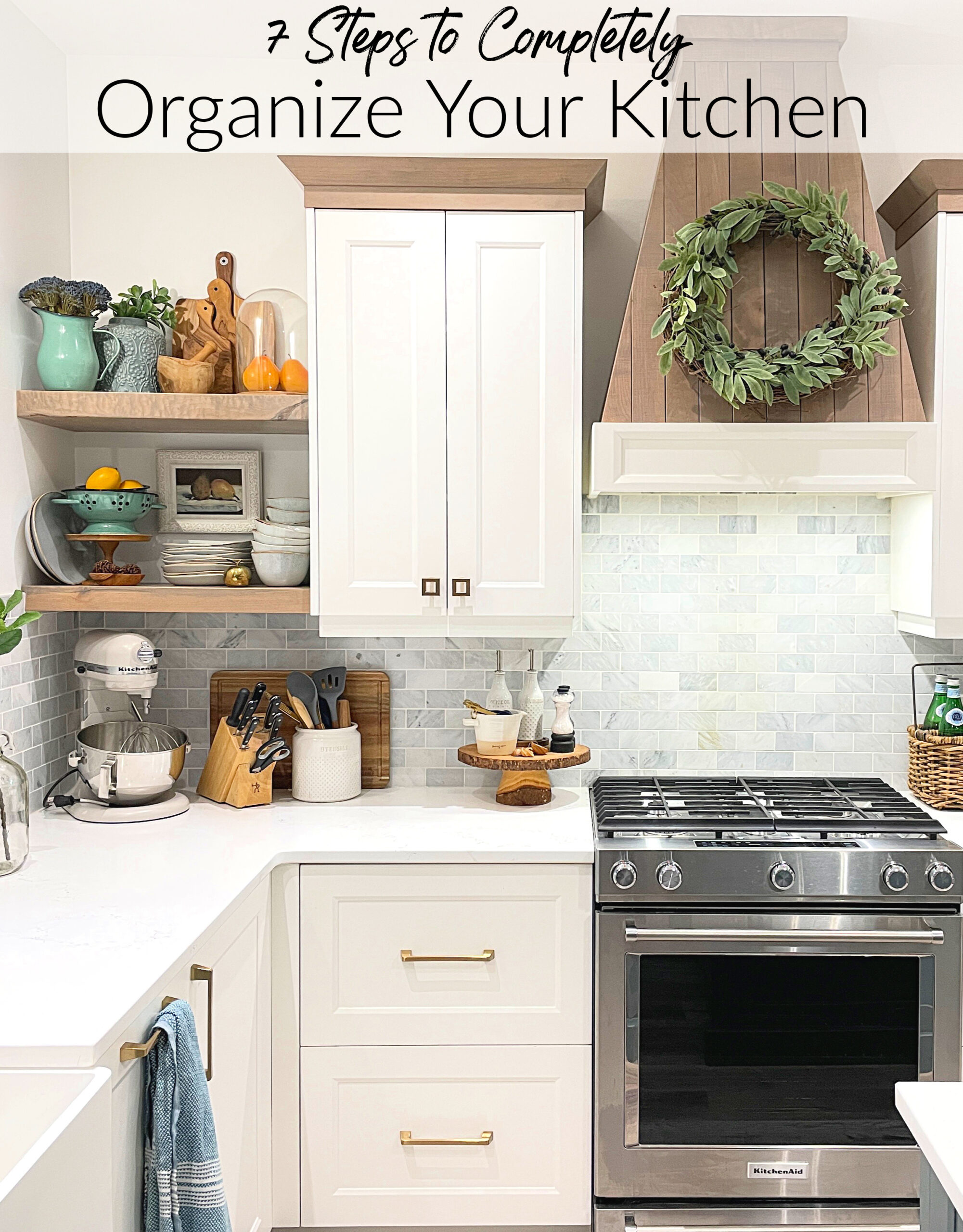
Image Source: www.thehappyhousie.com
The Foundation: A Thorough Declutter
Before you can arrange, you must clear out what you don’t need. A cluttered kitchen is an inefficient kitchen. This is the first, and arguably most important, step.
The “Keep, Donate, Toss” Method
This classic method is your best friend for decluttering kitchen items.
- Keep: These are items you use regularly, that are in good working order, and that you genuinely love or need.
- Donate: Anything in good condition that you no longer use but someone else could benefit from. Think duplicate gadgets, rarely used serving dishes, or extra linens.
- Toss: Broken items, expired food, stained linens, and anything that is beyond repair or use. Be ruthless here!
Tackling Specific Areas for Decluttering
Let’s break down where clutter often hides and how to tackle it:
Countertop Organization: Free Up Your Workspace
Countertops are prime real estate. If yours are covered, your kitchen feels smaller and cooking becomes a chore.
- Identify what needs to be on the counter: A coffee maker, maybe a frequently used appliance like a toaster. Everything else should have a home elsewhere.
- Relocate small appliances: If you only use your blender or stand mixer a few times a year, store them in cabinets or a pantry.
- Group similar items: If you must keep some things out, group them. Utensil crocks, knife blocks, and spice racks can look tidy when organized.
- Utilize vertical space: Use tiered shelves for fruit baskets or canisters to lift items off the main surface.
Cabinet Organization: The Hidden Heroes
Cabinets are often where good intentions go to die, becoming black holes of mismatched containers and forgotten ingredients.
- Empty them completely: This is the only way to truly see what you have.
- Wipe them down: A clean slate is a fresh start.
- Sort by category: Group like items together – baking supplies, dinnerware, glassware, pots and pans, serving dishes, etc.
- Evaluate condition: Discard chipped dishes, lids that don’t fit any containers, and anything that’s seen better days.
- Consider cabinet organizers: Shelf risers, lazy Susans, pull-out shelves, and pot lid organizers can transform chaotic cabinets into functional spaces.
Drawer Organization: The Detail Work
Drawers can be magnets for clutter, from tangled utensils to junk drawers filled with batteries and pens.
- Empty and sort: Just like cabinets, pull everything out.
- Use drawer dividers: These are essential for keeping utensils, gadgets, and even dish towels from becoming a jumbled mess.
- Assign specific purposes: Designate drawers for specific items – one for cooking utensils, one for cutlery, one for baking tools, one for cleaning supplies.
- The “junk drawer” strategy: If you must have one, contain it with small boxes or trays. Assign specific categories like “batteries and bulbs,” “office supplies,” etc.
Pantry Organization: The Heart of the Kitchen
A well-organized pantry is crucial for meal planning and reducing food waste.
- Check expiration dates: Toss anything past its prime.
- Group by type: Canned goods, dry goods (pasta, rice, beans), baking supplies, snacks, breakfast items.
- Use clear containers: Decant dry goods like flour, sugar, pasta, and cereal into airtight, clear containers. This keeps them fresh, prevents pests, and allows you to easily see what you have.
- Label everything: Even with clear containers, labels are vital, especially for bulk items or homemade mixes.
- Utilize vertical space: Tiered shelves for cans, stackable bins, and hanging organizers can dramatically increase pantry organization.
- Lazy Susans are your friend: Perfect for corners or for grouping oils, vinegars, and spices.
Arranging for Optimal Kitchen Workflow
Now that you’ve decluttered, it’s time to arrange your kitchen for efficiency and ease of use. This is about creating a logical flow for your cooking activities.
The Kitchen Work Triangle: A Classic Approach
The work triangle connects the sink, refrigerator, and stove/oven. The idea is that the distance between these three points should be manageable, allowing for efficient movement without excessive steps.
- Sink: Often the hub for prep and cleaning.
- Refrigerator: Where ingredients are stored.
- Stove/Oven: Where food is cooked.
Ideally, the sum of the lengths of the three sides of the triangle should be between 12 and 26 feet. There should be no major obstacles (like islands or cabinets) directly in the path of the triangle legs.
Beyond the Triangle: Modern Kitchen Layout Considerations
While the triangle is a good starting point, modern kitchens often incorporate more zones and work areas.
- Prep Zone: Needs easy access to the sink, trash/compost, and counter space. Store knives, cutting boards, and prep bowls here.
- Cooking Zone: Centered around the stove/oven. Keep pots, pans, cooking utensils, and spices within easy reach.
- Cleaning Zone: Around the sink and dishwasher. Store dish soap, sponges, dish towels, and cleaning supplies here.
- Storage Zone: Includes pantry and cabinets for food and dishes.
- Serving/Eating Zone: If you have a breakfast nook or island seating.
Maximizing Kitchen Space: Smart Solutions for Every Nook
Even the smallest kitchen can feel spacious with clever organization.
Vertical Space is Your Ally
- Wall-mounted shelves: For spices, oils, or decorative items.
- Hanging racks: Under cabinets for mugs, or on the wall for pots and pans.
- Pot racks: Ceiling-mounted or wall-mounted, these can free up significant cabinet space.
- Magnetic knife strips: Keeps knives off the counter and easily accessible.
Cabinet and Drawer Hacks
- Adjustable shelves: If your cabinets have fixed shelves, consider adding adjustable shelf risers to create extra levels for storage.
- Pull-out shelves/drawers: Transform deep, hard-to-reach cabinets into easily accessible storage.
- Corner cabinet solutions: Lazy Susans or pull-out corner organizers make use of awkward corner spaces.
- Drawer organizers: As mentioned earlier, these are crucial for keeping drawers tidy and functional.
- Stacking and nesting: Invest in cookware and storage containers that can nest or stack efficiently.
Small Kitchen Layout Tips
- Think multi-functional: A rolling kitchen cart can act as extra prep space, storage, and even a serving station.
- Wall-mounted everything: Consider wall-mounted cutting boards, spice racks, and even small utensil holders.
- Utilize the backsplash: Install small shelves or racks for frequently used items.
- Keep surfaces clear: This is paramount in a small kitchen. The less on your countertops, the more spacious it will feel.
- Door storage: Over-the-door organizers for pantries or cabinets can add significant storage capacity.
Styling Your Organized Kitchen
Once the functionality is in place, it’s time to add your personal touch and make your kitchen a place you love to be in.
Creating Cohesion with Color and Materials
- Consistent color palette: Choose a few complementary colors for your cabinets, walls, and accessories. This creates a visually pleasing and unified look.
- Material choices: Consider how different materials work together. Wooden cutting boards add warmth, stainless steel appliances offer a sleek look, and ceramic canisters can add texture.
- Accent pieces: Use pops of color in dish towels, canisters, or artwork to add personality.
Displaying What You Love
- Open shelving: If you have beautiful dishes, glassware, or cookbooks, open shelves can be a stylish way to display them.
- Decorative canisters: Choose canisters that are both functional and attractive.
- Cookbooks: Arrange your favorite cookbooks on a shelf or a dedicated stand.
- Plants and greenery: A small herb garden on the windowsill or a decorative plant can bring life into the kitchen.
Lighting Matters
Good lighting can transform the feel of your kitchen, making it more inviting and functional.
- Task lighting: Under-cabinet lighting is essential for illuminating your prep areas and eliminating shadows.
- Ambient lighting: Ceiling lights provide general illumination.
- Accent lighting: Pendant lights over an island or a chandelier in a dining nook can add style and focus.
The Power of Small Details
- Hardware: Updating cabinet knobs and drawer pulls can make a surprisingly big difference.
- Rugs: A comfortable and stylish rug can define zones and add warmth.
- Personal touches: Displaying family photos or handmade items can make your kitchen feel truly yours.
Maintenance: Keeping the Order
Organization isn’t a one-time event; it’s an ongoing process.
Daily Habits
- “Clean as you go”: Wipe down counters, wash dishes, and put ingredients away as you cook.
- Put things back immediately: Make it a habit to return items to their designated spots after use.
- Quick counter clear: Before bed, do a quick sweep of your countertops.
Weekly Tasks
- Pantry check: Quickly scan for items nearing their expiration date or anything that needs refilling.
- Fridge tidy: Wipe down shelves and discard any old produce.
- Drawer and cabinet quick sort: Address any items that have migrated to the wrong place.
Seasonal Deep Dives
- Quarterly: Revisit your pantry for a more thorough check of expiration dates and to wipe down shelves.
- Annually: Perform a full declutter of cabinets and drawers, similar to the initial process. This is a great time to reassess what’s working and what isn’t.
Frequently Asked Questions About Kitchen Arrangement
Q1: What is the best way to organize a small kitchen?
For a small kitchen layout, focus on maximizing kitchen space by utilizing vertical storage, employing drawer and cabinet organizers, keeping countertops as clear as possible, and choosing multi-functional items. Think about the kitchen workflow to ensure frequently used items are easily accessible.
Q2: How often should I declutter my kitchen?
It’s ideal to have small decluttering kitchen habits daily (cleaning as you go) and weekly (quick tidying). A more thorough declutter of cabinets and drawers should ideally happen seasonally or at least annually to maintain optimal organization.
Q3: What are the most important areas for kitchen organization?
While all areas benefit from organization, pantry organization, cabinet organization, and countertop organization are often the most impactful for overall kitchen efficiency and aesthetic. Good drawer organization is also key to finding what you need quickly.
Q4: How can I improve my kitchen workflow?
Improve your kitchen workflow by grouping items logically based on how you use them (e.g., baking supplies together, cooking utensils near the stove). Ensure a clear path between your sink, refrigerator, and stove (the work triangle) and assign specific zones for prep, cooking, and cleaning.
Q5: What are some essential kitchen storage solutions?
Essential kitchen storage solutions include drawer dividers, shelf risers, lazy Susans, clear airtight containers for pantry items, pot lid organizers, wall-mounted shelves, and magnetic knife strips. These help with maximizing kitchen space and maintaining order.
By following these steps, you can transform your kitchen from a cluttered and chaotic space into an organized, efficient, and beautifully styled heart of your home. Enjoy the process and the rewarding results!