
What is the standard kitchen counter height? The standard kitchen counter height in the United States is 36 inches from the finished floor to the top of the counter. This measurement is a cornerstone of kitchen design, impacting everything from your comfort while preparing food to the overall flow of your kitchen space. While 36 inches is the norm, understanding why and exploring alternatives is key to creating your ideal kitchen.
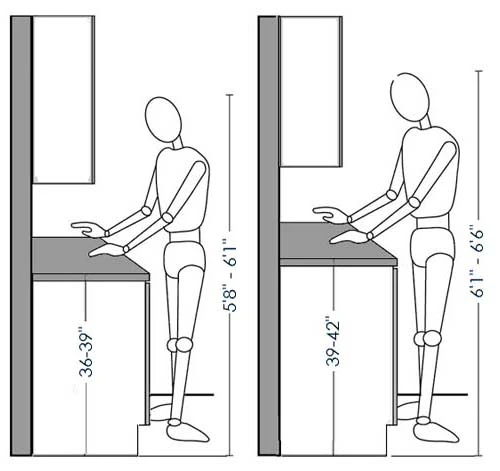
Image Source: www.regattaexports.com
Deciphering the Standard: The 36-Inch Rule
The 36-inch kitchen counter height isn’t an arbitrary figure; it’s a carefully considered dimension rooted in decades of ergonomic research and common practice. This height has become the de facto standard for good reason: it accommodates the majority of adults for a wide range of kitchen tasks.
Why 36 Inches? The Ergonomic Advantage
The prevailing kitchen workspace height of 36 inches strikes a balance for many common kitchen activities. When standing, most individuals can comfortably chop vegetables, knead dough, or mix ingredients without excessive bending or reaching. This height allows for a natural posture, reducing strain on the back and shoulders. Think about it: reaching for spices on a shelf or washing dishes at the sink are generally more comfortable when your primary work surface is at this level.
The Role of Standard Cabinetry
A significant factor in establishing the 36-inch kitchen counter height is the prevalence of standard kitchen cabinet height. Base cabinets, the foundation of most kitchen layouts, typically stand 34.5 inches tall. When you add a standard countertop material, which is usually 1.5 inches thick (a common standard countertop depth measure, though this can vary), you arrive at the familiar 36-inch mark. This uniformity makes appliance installation easier and simplifies the purchasing process for cabinetry and countertops.
Beyond the Standard: Exploring Counter Height Dimensions
While 36 inches is the benchmark, the world of kitchen design offers flexibility. Understanding different counter height dimensions allows you to tailor your kitchen to your specific needs and preferences.
Counter Height vs. Bar Height vs. Countertop Height
It’s important to distinguish between different height categories:
- Counter Height: This refers to the standard 36-inch height. It’s the most common for primary work surfaces.
- Bar Height: Typically around 42 inches, this height is often used for breakfast bars or casual dining areas. It’s comfortable for standing or for use with taller bar stools.
- Countertop Height: This is a more general term that can encompass any level of counter surface. However, in the context of kitchen design, it usually refers to the standard 36-inch height.
Adjusting for You: The Quest for Optimal Counter Height
The concept of optimal counter height is deeply personal. What works perfectly for one person might not for another. Several factors influence what the ideal height might be for you:
- Your Stature: Are you exceptionally tall or shorter than average? This is perhaps the most significant factor. Taller individuals might find a slightly higher counter more comfortable, while shorter individuals might benefit from a lower surface.
- The Tasks You Perform: If you spend a lot of time rolling out dough or doing intricate tasks that require significant wrist movement, a slightly lower surface might be more advantageous. Conversely, if you primarily use appliances like stand mixers or food processors, the standard height might be just fine.
- Physical Considerations: Individuals with back pain, arthritis, or other physical limitations may find that a custom ergonomic kitchen counter height can significantly improve their comfort and ability to work in the kitchen.
Customizing Your Kitchen Workspace Height
Creating a truly ergonomic kitchen counter involves more than just adhering to a single measurement. It’s about how the kitchen workspace height aligns with your body.
Customizing for Height
- For Taller Individuals: Raising the kitchen counter height by 1-3 inches can make a noticeable difference in comfort, reducing the need to stoop. A 37- or 38-inch counter can be ideal.
- For Shorter Individuals: Lowering the counter to 33-34 inches can alleviate the need to reach excessively, promoting a more natural and comfortable working posture.
Customizing for Specific Tasks
Consider creating different zones within your kitchen with varying counter heights. For instance:
- Baking Station: A slightly lower counter (perhaps 30-33 inches) can be perfect for rolling out dough, as it allows you to use your body weight more effectively.
- Prep Area: The standard 36 inches works well for general chopping and food preparation.
- Appliance Zone: For appliances like stand mixers, the standard height is often suitable.
The Island Counter Height: A Versatile Addition
Kitchen islands are popular features, offering extra prep space, storage, and often a casual dining area. The island counter height can be varied to serve multiple purposes.
Island Design Considerations
- Unified Height: Many islands feature a countertop that is the same height as the perimeter counters (36 inches). This creates a cohesive look and a continuous work surface.
- Multi-Level Islands: It’s common to see islands with different levels. A common configuration includes a standard 36-inch prep area and a raised section (often 42 inches, or bar height counter) to accommodate seating. This separation helps keep guests out of the main cooking zone while still allowing interaction.
- Appliance Integration: If your island houses specialized appliances, like a cooktop or a sink, the surrounding counter height might be adjusted to optimize usability. For example, a cooktop might be integrated at a standard height, while an adjacent landing zone remains at 36 inches.
Island Seating Heights
When planning for seating at your island, consider the height of your stools:
- Counter Height Stools (36-inch counter): These stools are typically 24-26 inches high, with a seat depth of about 15-18 inches. Aim for about 10-12 inches of legroom between the seat and the underside of the counter.
- Bar Height Stools (42-inch counter): These stools are usually 28-32 inches high, with a similar seat depth. Again, aim for that 10-12 inch clearance.
Countertop Depth and Other Important Dimensions
Beyond height, other counter height dimensions, particularly standard countertop depth, play a crucial role in kitchen functionality.
Standard Countertop Depth
The most common standard countertop depth for kitchen counters is 25 inches. This measurement is taken from the front edge of the counter to the back.
Why 25 Inches?
- Appliance Fit: This depth allows for standard-depth appliances, like dishwashers and base cabinets, to fit comfortably beneath the countertop without protruding excessively.
- Work Space: A 25-inch depth provides a good amount of usable workspace in front of your base cabinets and appliances.
- Ergonomics: It allows for comfortable reach and placement of items without feeling cramped.
Variations in Countertop Depth
While 25 inches is standard, you might see variations:
- Thicker Countertops: Some premium countertop materials, like granite or quartz, are available in thicknesses greater than 1.5 inches, which will affect the final kitchen counter height. For instance, a 3-inch thick countertop on a 33-inch base cabinet will result in a 36-inch work surface height.
- Custom Depths: In some cases, especially in larger kitchens or for specific design purposes, you might encounter custom countertop depths, either shallower or deeper than the standard. Deeper counters (e.g., 30 inches) can provide a more expansive workspace, but care must be taken to ensure comfortable reach to the back.
Standard Kitchen Cabinet Height and Depth
As mentioned, standard kitchen cabinet height for base cabinets is 34.5 inches. Standard wall cabinets often come in heights of 30, 36, or 42 inches, with depths typically ranging from 12 to 15 inches.
The Significance of Clearance
Adequate clearance around your kitchen workspace height is vital for safety and ease of use.
- Working Clearance: Aim for at least 36 inches of clear walking space between countertops and islands or other obstructions. This allows for comfortable movement, even when two people are working in the kitchen simultaneously.
- Appliance Clearance: Ensure there’s enough space for appliance doors to open fully without hitting other cabinets or counters.
Creating Your Ergonomic Kitchen Counter
Designing or renovating a kitchen with an ergonomic kitchen counter in mind means prioritizing comfort, efficiency, and your personal needs.
Step-by-Step to Your Ideal Height
- Measure Yourself: Stand naturally and have someone measure from the floor to your elbow. This measurement is a good starting point for determining your ideal kitchen workspace height. The ideal counter height is typically 3-6 inches below your elbow height.
- Consider Your Tasks: Think about the primary activities you’ll perform at your counters. If baking is a major focus, you might want a lower section.
- Experiment: If possible, try working at counters of different heights in showrooms or friends’ homes. This hands-on experience is invaluable.
- Consult Professionals: Kitchen designers and contractors are experienced in creating functional and ergonomic spaces. They can provide valuable insights based on your specific requirements.
- Factor in Stool Height: If you’re planning an island with seating, ensure the island counter height is compatible with standard stool heights for comfortable legroom.
Materials Matter
The material of your countertop can influence its thickness and, consequently, the final kitchen counter height. Common materials include:
- Laminate: Typically 1.5 inches thick.
- Granite/Quartz: Commonly 1.5 inches thick, but thicker slabs (2 or 3 inches) are available.
- Butcher Block: Usually 1.5 inches or 2 inches thick.
- Solid Surface: Typically 0.5 to 0.75 inches thick, often mounted on plywood for added stability, bringing the total thickness closer to 1.5 inches.
When choosing materials, always confirm the thickness and how it will affect your overall work surface height.
Frequently Asked Questions About Kitchen Counter Height
Q1: Can I have different kitchen counter heights in my kitchen?
A1: Absolutely! Many modern kitchens feature multiple counter heights to accommodate different tasks and users. A common setup includes a standard 36-inch main counter and a raised bar height counter (around 42 inches) on an island for seating. You can also incorporate lower workstations for tasks like baking.
Q2: How do I know if my kitchen counter height is correct for me?
A2: A good indicator is your comfort level. When standing at your counter, your elbows should be at a comfortable angle (around 90 degrees) when performing tasks like chopping. If you find yourself bending over too much or reaching too high, your counter height might not be optimal. Measuring from the floor to your elbow and subtracting 3-6 inches is a good starting point.
Q3: What is the standard countertop depth?
A3: The standard countertop depth is 25 inches. This allows for standard base cabinets and appliances while providing ample workspace.
Q4: Is 36 inches the only kitchen counter height option?
A4: No, while 36 inches is the standard, it’s not the only option. Custom kitchens often feature heights ranging from 30 inches for specialized baking stations to 38 inches or higher for taller individuals. Island counter height can also vary, often incorporating seating at 42 inches.
Q5: How high should my island counter be for seating?
A5: For comfortable seating, the island counter height for a dining or bar area is typically 40-42 inches. This accommodates standard bar stools (around 28-32 inches high) and provides adequate legroom.
Q6: What is the standard kitchen cabinet height?
A6: The standard kitchen cabinet height for base cabinets is 34.5 inches. This, combined with a 1.5-inch countertop, results in the common 36-inch kitchen counter height.
Q7: How much space do I need around my kitchen counters?
A7: For comfortable movement, aim for at least 36 inches of clear passage between countertops, islands, and other obstructions. This ensures you can work and move around your kitchen safely and efficiently.
By considering these dimensions and focusing on creating an ergonomic kitchen counter, you can design a kitchen that is not only beautiful but also a joy to work in for years to come.