
So, how high is a kitchen counter? The standard kitchen counter height is typically 36 inches (91.44 cm) from the finished floor to the top of the counter. This measurement is crucial for comfort and usability in the kitchen.
The kitchen countertop dimensions are more than just height; depth also plays a significant role in functionality. While the height is standardized, depth can vary, impacting how much usable space you have. Understanding these measurements helps in planning a kitchen that is both practical and comfortable for everyone who uses it.
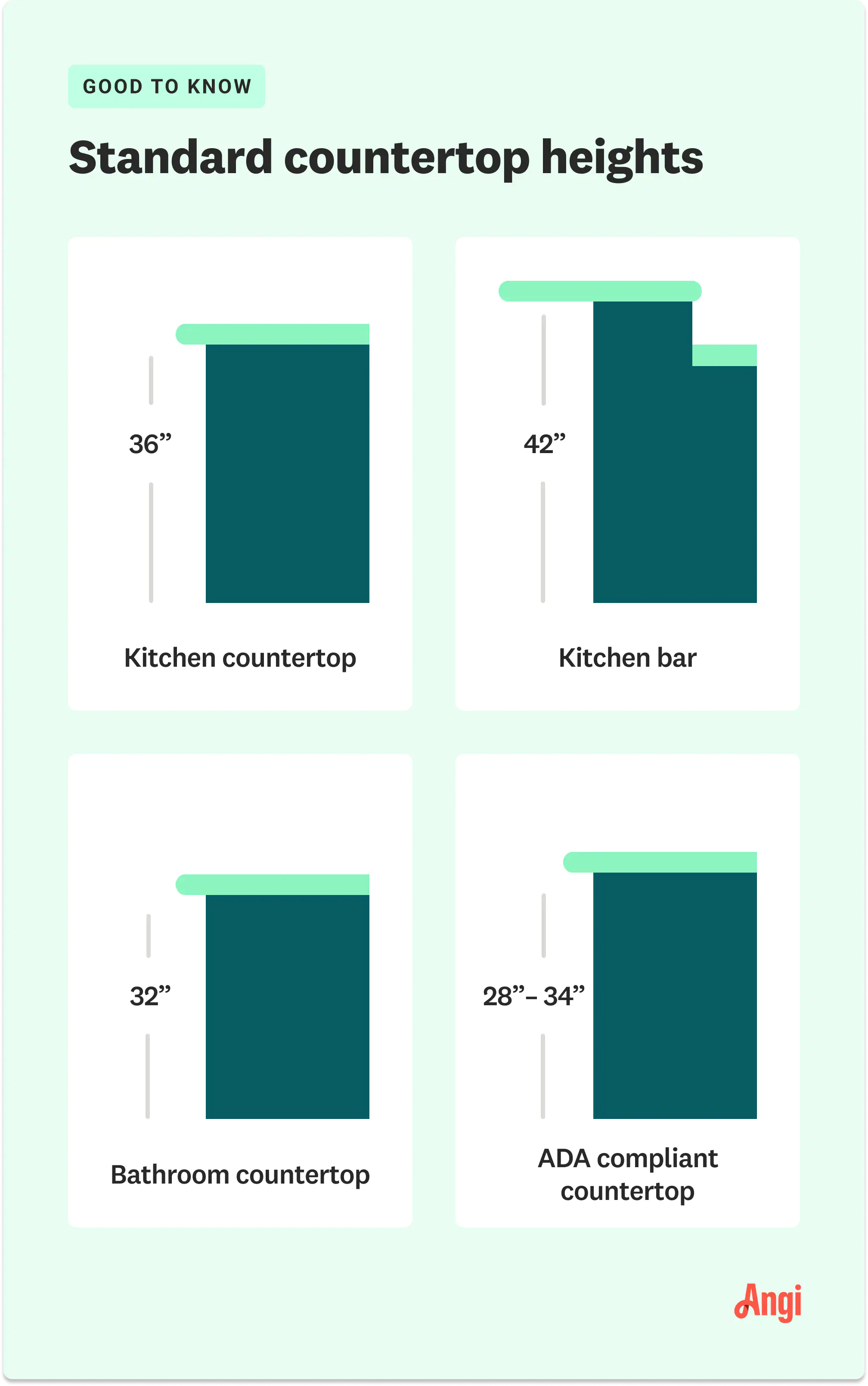
Image Source: media.angi.com
Grasping Standard Kitchen Counter Dimensions
When you think about kitchen design, the height of your counters is a foundational element. The standard kitchen counter height is set at 36 inches (91.44 cm). This common measurement ensures that most people can work comfortably while standing. It’s a widely adopted guideline because it balances the needs of different tasks, from chopping vegetables to mixing dough.
Typical Kitchen Counter Depth: Maximizing Your Workspace
Beyond height, the typical kitchen counter depth is usually 24 inches (60.96 cm) for base cabinets. This depth provides ample space for appliances like microwaves and toasters, as well as room to prepare food. A deeper counter might offer more workspace but could also make it harder to reach the back, while a shallower counter can feel cramped. The 24-inch standard is a good compromise that works for most kitchens.
The Importance of Kitchen Work Surface Height
The kitchen work surface height directly impacts how you feel while performing kitchen chores. If a counter is too high, you might experience shoulder or back strain. If it’s too low, you might find yourself hunching over, leading to neck pain. The 36-inch standard is designed to minimize these issues for the average adult. It allows for a relaxed posture, with elbows bent at roughly a 90-degree angle while working at the counter.
Exploring Different Kitchen Counter Heights
While 36 inches is the standard, kitchens are not one-size-fits-all. Different needs and preferences can lead to variations.
ADA Kitchen Counter Height: Accessibility for All
The Americans with Disabilities Act (ADA) provides guidelines for accessible design, including kitchen counters. An ADA kitchen counter height requirement is typically 34 inches (86.36 cm) from the finished floor to the top of the counter, with a clear knee space of at least 27 inches (68.58 cm) high, 30 inches (76.2 cm) wide, and 19 inches (48.26 cm) deep. This lower height and ample knee space allows individuals using wheelchairs or those with mobility issues to use the kitchen comfortably and safely.
Ergonomic Kitchen Counter Height: Tailoring to Your Body
Ergonomic kitchen counter height is all about customizing the kitchen to fit the user. This is where personal preference and individual body measurements come into play. For many people, the standard 36 inches works well. However, shorter individuals might find a slightly lower counter more comfortable, while taller individuals might prefer a higher surface to avoid bending.
- For taller individuals: Raising counters by a few inches can prevent slouching and back strain.
- For shorter individuals: Lowering counters slightly can make tasks easier and more comfortable.
- Consider specific tasks: Some tasks, like baking, might benefit from a slightly lower surface for easier kneading, while tasks like chopping might be comfortable at the standard height.
Measuring Your Kitchen Counters: A Practical Guide
Knowing how to measure your kitchen counters is essential, whether you’re planning a renovation or just curious about your current setup.
How to Measure Kitchen Counter
To accurately measure kitchen counter height, you’ll need a tape measure.
- Find the Finished Floor: Ensure you are measuring from the actual finished floor surface (not subflooring or any temporary coverings).
- Measure to the Top Surface: Place one end of the tape measure on the finished floor directly below the counter edge.
- Read the Height: Extend the tape measure straight up to the very top surface of the counter. Note this measurement.
You should also measure the depth. Place one end of the tape measure at the front edge of the counter and extend it straight back to the wall or the cabinet front.
Kitchen Islands and Bar Counters: Variations on a Theme
Kitchen islands and bar counters are popular additions that offer additional workspace and dining areas, and they often come with different height considerations.
Kitchen Island Height: Blending Function and Form
The kitchen island height can vary depending on its intended use. While many islands match the standard 36-inch counter height, some are designed to be higher for a more bar-like feel or lower for specific work zones.
- Standard Island Height: Often 36 inches, matching base cabinets.
- Raised Island Sections: Some islands feature a tiered design, with one section at 36 inches for food prep and another at a higher level (like 42 inches) for casual dining.
Bar Height Counter and Breakfast Bar Dimensions
When you think of a place to sit and eat in the kitchen, you might be thinking of a bar.
Bar Height Counter
A bar height counter is typically taller than a standard counter. The standard height for a bar stool is around 30 inches (76.2 cm) from the floor to the seat. Therefore, a bar height counter is generally around 42 inches (106.68 cm) from the finished floor to the top of the counter. This height allows people to comfortably sit at the counter and dine or socialize.
Breakfast Bar Dimensions
A breakfast bar is essentially a counter designed for eating. Its height can vary, but it often aligns with either standard counter height (36 inches) or bar height (42 inches). The key breakfast bar dimensions beyond height include:
- Depth: For comfortable seating, a breakfast bar typically needs a bit more depth than a standard counter. Aim for at least 15 inches (38.1 cm) of knee space, and ideally 18-24 inches (45.72-60.96 cm) of surface depth behind the seating area for plates and drinks.
- Overhang: To accommodate seating, there should be an overhang of at least 10-15 inches (25.4-38.1 cm) for legroom.
Considering Different Counter Heights for Various Needs
It’s becoming increasingly common to see kitchens with multiple counter heights to cater to a range of activities and users.
- The Baking Station: A slightly lower counter, perhaps 30-32 inches (76.2-81.28 cm), can be ideal for tasks like kneading dough, making the process more comfortable.
- The Prep Zone: The standard 36-inch height is usually perfect for most food preparation tasks like chopping and mixing.
- The Social Hub: A higher counter, at 42 inches, can serve as a breakfast bar or a place for guests to gather while you cook.
Ergonomic Design Tips for Your Kitchen Counter
Creating an ergonomic kitchen means designing it around the people who use it, making tasks efficient and comfortable.
Optimizing Your Kitchen Work Surface Height
The ideal ergonomic kitchen counter height is one that allows you to work without strain. As mentioned, the 36-inch standard is a good baseline. However, consider your own height and how you typically work in the kitchen.
- Elbow Test: Stand naturally with your arms relaxed at your sides. Bend your elbows to about a 90-degree angle. The height that aligns with your forearm is often a comfortable working height for tasks like chopping. For many, this falls around 32-36 inches.
- Task-Specific Heights: If you do a lot of kneading or rolling dough, a slightly lower counter (around 30-33 inches) might be beneficial. For tasks involving standing and whisking, a standard height might be fine, or even slightly higher if you are tall.
Incorporating Ergonomics into Kitchen Layout
Ergonomics extends beyond just height. Consider these factors:
- Counter Depth: Ensure adequate typical kitchen counter depth (around 24 inches) so you don’t have to lean too far forward.
- Adequate Spacing: Allow enough space between counters, islands, and appliances for comfortable movement. Aim for at least 42 inches (106.68 cm) of clearance in main work areas.
- Accessible Storage: Place frequently used items within easy reach. Store heavier items on lower shelves or drawers to reduce lifting.
- Good Lighting: Proper lighting reduces eye strain and makes it safer to work. Task lighting directly over work surfaces is crucial.
- Anti-Fatigue Mats: For tasks that require standing for extended periods, consider anti-fatigue mats in front of sinks and prep areas.
Planning for Different Users
If multiple people with different heights use the kitchen, or if accessibility is a concern, you need to plan accordingly.
Multi-Height Counter Solutions
Creating a kitchen with varied counter heights can significantly improve usability.
- Tiered Islands: A kitchen island can have sections at different heights. For example, a lower section for prep work and a higher section for a breakfast bar.
- Pull-Out Work Surfaces: Consider pull-out or fold-down countertops that can extend your workspace or provide a lower surface when needed.
- Adjustable Height Options: While more costly, some specialized cabinet systems offer adjustable counter heights.
Designing for Wheelchair Accessibility
When designing for wheelchair users, adhering to ADA kitchen counter height guidelines is paramount.
- Clear Knee Space: As mentioned, 27 inches high, 30 inches wide, and 19 inches deep is crucial.
- Forward and Side Reach: Ensure that controls, sinks, and work surfaces are within comfortable forward and side reach.
- Clear Floor Space: Adequate clear floor space is needed for maneuvering a wheelchair.
Frequently Asked Questions About Kitchen Counter Heights
Here are some common questions people have about kitchen counter heights.
What is the standard height for kitchen counters?
The standard kitchen counter height is 36 inches (91.44 cm) from the finished floor to the top of the counter.
Can I have different counter heights in my kitchen?
Yes, absolutely! Many modern kitchens feature multiple counter heights to accommodate different tasks and users. This could include a lower baking station, a standard prep area, and a higher breakfast bar.
How deep are kitchen counters usually?
The typical kitchen counter depth for base cabinets is 24 inches (60.96 cm). This provides ample space for most appliances and prep work.
What is ADA counter height?
An ADA kitchen counter height is designed for accessibility. The typical height is 34 inches (86.36 cm) from the finished floor, with at least 27 inches (68.58 cm) of clear knee space underneath.
How high is a bar counter?
A bar height counter is generally around 42 inches (106.68 cm) from the finished floor to the top. This is taller than a standard counter and designed for bar stools.
What are good breakfast bar dimensions?
For a breakfast bar, the height is often 36 or 42 inches. Crucially, ensure there’s at least 15 inches of overhang for comfortable seating and legroom.
How do I measure my kitchen counter height?
To measure kitchen counter height, place a tape measure at the finished floor directly below the counter edge and extend it straight up to the countertop’s surface.
What is the ideal ergonomic kitchen counter height?
The ideal ergonomic kitchen counter height varies by individual, but the 36-inch standard is a good starting point. The elbow test (forearm parallel to the floor at a 90-degree elbow bend) can help determine a comfortable personal height, often falling between 30-36 inches.
By considering these measurements and ergonomic principles, you can create a kitchen that is not only beautiful but also a joy to work in.