
The standard kitchen counter height is 36 inches from the floor to the top of the countertop. This common dimension is designed for comfortable and efficient use by the average adult, providing a good balance for various kitchen tasks.
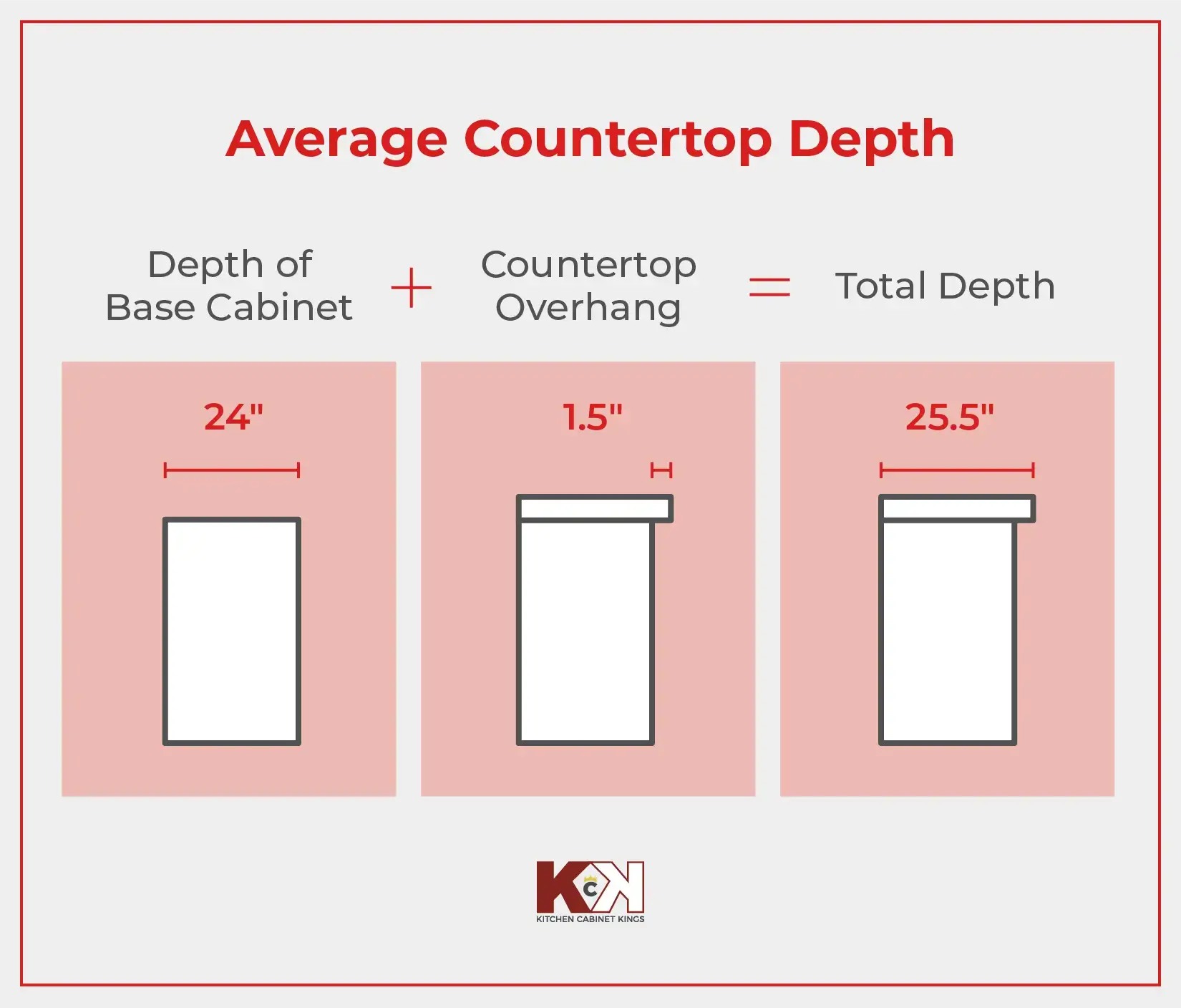
Image Source: cdn.kitchencabinetkings.com
Deciphering Kitchen Counter Dimensions
Kitchens are the heart of many homes, and the functionality of this space hinges on its design, especially the countertops. Getting the height right is crucial for comfort, efficiency, and even safety. Let’s delve into the world of counter height dimensions to ensure your kitchen works for you.
The Foundation: Standard Kitchen Counter Height
The industry standard for standard kitchen counter height is 36 inches (approximately 91.4 cm) measured from the finished floor to the top surface of the countertop. This height emerged from a desire to create a universally comfortable workspace for the majority of the population, allowing for ease of chopping, mixing, and general food preparation. This measurement accounts for the thickness of the countertop material itself, typically ranging from 1.5 to 2 inches.
Why 36 Inches?
The 36-inch benchmark isn’t arbitrary. It’s a result of ergonomic studies and practical experience.
- Ergonomics: This height generally allows individuals to stand with their elbows at a comfortable angle (around 90 degrees) when performing tasks directly on the counter. This reduces strain on the back, shoulders, and wrists during prolonged use.
- Appliance Integration: Standard base cabinets, which support most countertops, are typically 34.5 inches tall. When you add a standard countertop thickness of 1.5 inches, you arrive at the familiar 36-inch finished height. This also aligns with the height of most standard kitchen appliances like dishwashers and ranges.
Exploring Kitchen Counter Depth
Beyond height, kitchen counter depth is another critical factor in kitchen design.
Standard Kitchen Counter Depth
The typical kitchen counter depth is 25 inches. This measurement refers to the depth of the base cabinet. The countertop itself usually extends beyond the cabinet to create a counter overhang depth.
Counter Overhang Depth: Function and Form
The overhang is the portion of the countertop that extends past the front edge of the base cabinets.
- Standard Counter Overhang Depth: A typical overhang is 1.5 inches. This provides a comfortable edge to grip when opening cabinet doors and drawers, and it also protects the cabinet fronts from spills.
- Seating Overhang: For areas designed for seating, such as a breakfast bar or island, the overhang is usually deeper, often 10 to 12 inches, to comfortably accommodate knees and allow chairs to tuck underneath.
Variations and Customization: Beyond the Standard
While 36 inches is the norm, the beauty of kitchen design lies in its adaptability. There are situations where deviating from the standard is not only acceptable but beneficial.
Raised Counter Heights
Some homeowners opt for raised countertops for specific needs:
- Accessibility: For individuals who use wheelchairs or have mobility issues, a lower counter height might be more suitable. Conversely, some may prefer a slightly higher surface for easier transfer of items.
- Comfort for Taller Individuals: Taller individuals may find a standard 36-inch counter to be too low, leading to bending and potential back strain. Opting for counter heights of 37 or 38 inches can significantly improve comfort.
- Aesthetic Choices: Sometimes, a higher counter is chosen purely for its visual impact, creating a more dramatic or contemporary look.
Lowered Counter Heights
Conversely, lower counter heights can be advantageous:
- For Children or Shorter Adults: A dedicated lower section of the counter can be perfect for children helping in the kitchen or for shorter individuals who find the standard height uncomfortable.
- Specific Tasks: Some chefs prefer a lower surface for tasks like rolling dough, as it allows them to use their body weight more effectively.
The Kitchen Island: A Multifunctional Hub
Kitchen islands are popular additions that often incorporate different functionalities and, consequently, different counter heights. The standard island height is typically the same as perimeter counters – 36 inches. However, islands can also serve as breakfast bars or dining areas, necessitating variations.
Breakfast Bar and Bar Height Counters
When an island or a section of the counter is designed for casual dining or socializing, you often encounter different height configurations.
- Breakfast Bar Height: This is usually around 42 inches from the floor to the top of the counter. It’s designed to be used with counter-height stools (typically 24-26 inches high). The extra height accommodates the seating and creates a distinct social zone. A common counter overhang depth for a breakfast bar is 10-12 inches to allow for comfortable seating.
- Bar Height Counters: These are even taller, typically 48 inches from the floor. They are meant to be used with bar stools (typically 28-30 inches high). This height is less common for primary kitchen work surfaces but is often seen in entertaining spaces or secondary bars.
Multi-Level Islands
Many modern kitchens feature islands with multiple counter levels. This can combine a standard kitchen work surface height of 36 inches for food preparation with a raised breakfast bar height of 42 inches for seating, offering versatility in a single piece of furniture.
Countertop Thickness: More Than Just a Number
The countertop thickness plays a role not only in the final height measurement but also in the aesthetic and durability of the surface.
Common Countertop Thicknesses
- Standard Thickness: Most countertop materials, like granite, quartz, and laminate, come in a standard thickness of 1.5 inches (or 3 cm for stone). This thickness provides a substantial feel and good durability.
- Thicker Options: You can also find countertops that are 2 inches or even thicker. These create a more dramatic and luxurious appearance but can also add significant weight and cost. Thicker countertops will naturally increase the overall finished height if the base cabinet height remains the same. For example, a 2-inch thick countertop on a 34.5-inch base cabinet would result in a 36.5-inch finished height.
Material Matters: How Thickness Varies by Material
It’s important to note that what is considered “standard” can sometimes vary slightly depending on the countertop material.
| Material | Standard Thickness | Notes |
|---|---|---|
| Granite | 1.5 inches (3 cm) | Can be laminated for a thicker appearance (e.g., 2 inches). |
| Quartz | 1.5 inches (3 cm) | Also available in 2 cm, but 3 cm is more common for countertops. |
| Laminate | 0.75 to 1 inch | Typically mounted on a substrate, giving a finished look of 1.5 inches. |
| Solid Surface | 0.5 to 1 inch | Often installed with a built-up edge to achieve a 1.5-inch appearance. |
| Butcher Block | 1.5 to 2 inches | Often 1.5 inches as standard, with thicker options available. |
| Marble | 1.5 inches (3 cm) | Similar to granite, can be laminated for increased thickness. |
| Stainless Steel | 1.25 to 1.5 inches | Standard for commercial kitchens, often integrated with a substructure. |
Why Adhering to Standards (or Knowing When to Break Them) is Key
The standard kitchen counter height of 36 inches is a well-established guideline that works for most people and most kitchens. However, like any design standard, it’s a starting point, not a rigid rule.
Benefits of the 36-Inch Standard
- Ergonomic Comfort: As mentioned, it offers a good compromise for a wide range of users.
- Appliance Compatibility: Standard appliances are designed to fit seamlessly with this height.
- Cabinetry Availability: Most readily available base cabinets are designed to fit this standard.
- Resale Value: A kitchen that adheres to standard dimensions is generally more appealing to a broader range of buyers.
When to Consider Different Heights
- Custom Needs: If you or a primary user of the kitchen has specific physical requirements (height, mobility issues), customizing the counter height is a worthwhile investment in comfort and functionality.
- Specific Tasks: If you are a passionate baker who spends hours rolling dough, a slightly lower counter might be beneficial.
- Aesthetic Goals: While function should lead, a particular design aesthetic might call for a slightly different height, provided it doesn’t significantly compromise usability.
- Multi-Level Functionality: Islands are prime examples where multiple heights can enhance usability.
Measuring for Your Kitchen
When planning a new kitchen or renovating an existing one, precise measurements are essential.
Key Measurements to Take:
- Finished Floor to Desired Countertop Height: This is your primary target.
- Base Cabinet Height: Standard base cabinets are 34.5 inches. You’ll need to factor in the countertop thickness to reach your desired finished height.
- Counter Overhang Depth: Decide on the desired overhang for functionality and aesthetics.
- Island Dimensions: If installing an island, consider its height, depth, and overhang for seating.
Calculation Example:
- Desired standard kitchen counter height: 36 inches
- Selected countertop thickness: 1.5 inches
- Required base cabinet height = Desired Height – Countertop Thickness
- Required base cabinet height = 36 inches – 1.5 inches = 34.5 inches
This confirms that standard 34.5-inch base cabinets with a 1.5-inch countertop will achieve the 36-inch standard.
Frequently Asked Questions (FAQ)
Q: What is the standard height for kitchen counters in the US?
A: The standard kitchen counter height in the US is 36 inches from the finished floor to the top of the countertop.
Q: Can I have kitchen counters that are taller or shorter than the standard?
A: Yes, absolutely. While 36 inches is the standard, custom heights are common for ergonomic reasons, accessibility needs, or specific design preferences. For instance, taller individuals might prefer 37 or 38 inches, while shorter individuals or those with specific mobility needs might opt for lower heights.
Q: What is the standard depth of kitchen counters?
A: The typical kitchen counter depth, referring to the cabinet, is 25 inches. The countertop itself usually extends beyond this to create an overhang.
Q: How much counter overhang depth is standard?
A: The standard counter overhang depth is typically 1.5 inches. This provides clearance for cabinet doors and drawers and a comfortable edge. For seating areas like breakfast bars, a deeper overhang of 10-12 inches is common.
Q: How thick are kitchen countertops usually?
A: The standard countertop thickness for most materials like granite and quartz is 1.5 inches (or 3 cm). Laminate and solid surface countertops are often thinner but designed to appear thicker with sub-bases or built-up edges.
Q: What is the standard island height?
A: The standard island height is usually the same as perimeter counters, 36 inches. However, islands can also incorporate breakfast bar heights (around 42 inches) for seating.
Q: What is considered “breakfast bar height”?
A: Breakfast bar height is typically around 42 inches from the floor to the countertop surface, designed for use with counter-height stools.
Q: How does countertop thickness affect the overall height?
A: The countertop thickness directly adds to the height of the base cabinets. For example, using a 2-inch thick countertop on a standard 34.5-inch base cabinet will result in a finished counter height of 36.5 inches.
Q: Are there ergonomic benefits to a specific counter height?
A: Yes, the standard 36-inch height is ergonomically designed to allow most adults to stand with their elbows at approximately a 90-degree angle, reducing strain during food preparation. Custom heights can further optimize ergonomics for individual users.
Q: What are some common materials for kitchen countertops?
A: Common materials include granite, quartz, laminate, solid surface, marble, butcher block, and stainless steel. Each material has different standard thicknesses and aesthetic qualities.