
Building kitchen cabinets from scratch can seem daunting, but with the right approach, it’s an achievable and rewarding project for any DIY enthusiast. You can build kitchen cabinets from scratch by carefully planning your design, selecting appropriate materials, mastering essential joinery techniques, and meticulously assembling and finishing your creations.
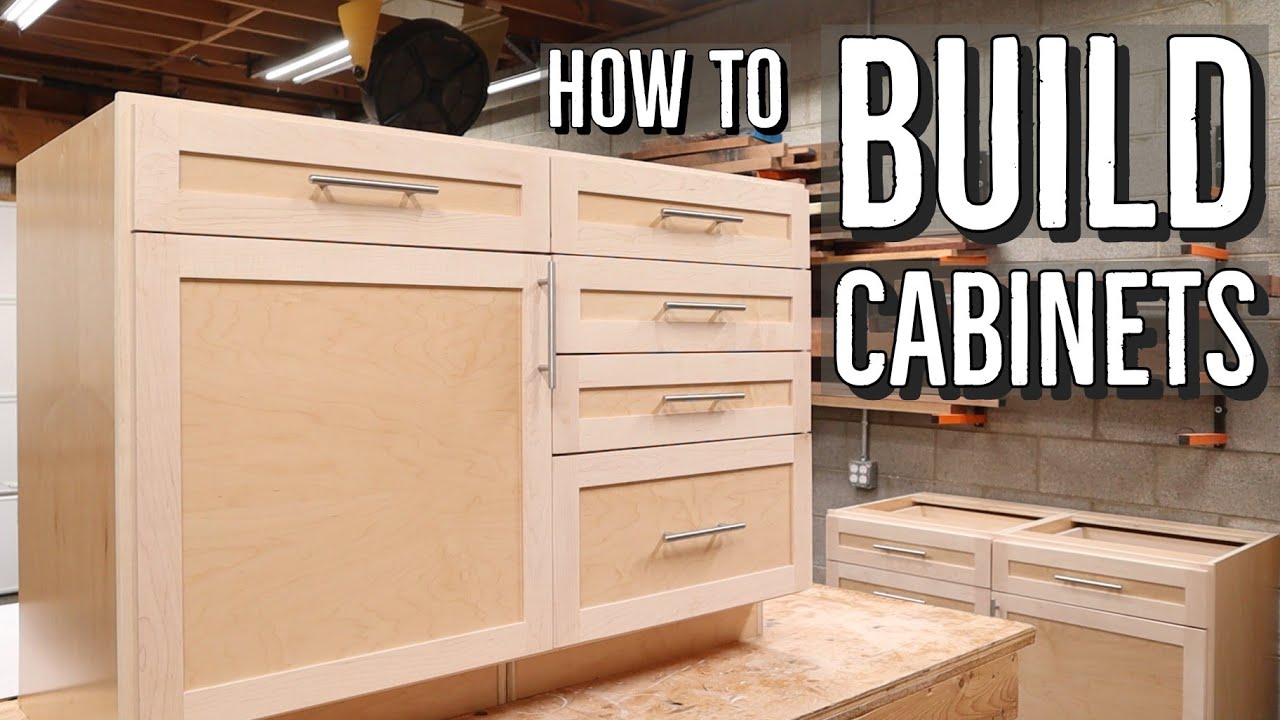
Image Source: i.ytimg.com
Deciphering Cabinet Design: Your Kitchen’s Blueprint
The first step in building kitchen cabinets from scratch is cabinet design. This is where your vision for your kitchen comes to life. You’ll need to think about the layout, functionality, and style you want to achieve.
Planning Your Layout
- Measure your kitchen space: Accurately measure the length, width, and height of all walls where cabinets will be installed. Note the locations of windows, doors, plumbing, and electrical outlets.
- Determine cabinet types: Will you build base cabinets, wall cabinets, or both? Consider specialized cabinets like pantry units, corner solutions, or appliance garages.
- Consider workflow: Think about how you use your kitchen. Place frequently used items in easily accessible cabinets. Ensure adequate counter space and clearance for opening doors and drawers.
- Sketch your ideas: Start with rough sketches to visualize the placement of each cabinet. This helps you identify potential issues and refine your layout.
Creating Cabinet Blueprints
Once you have a general layout, it’s time to create detailed cabinet blueprints. These drawings are crucial for accurate cutting and assembly.
- Cabinet dimensions: For each cabinet, specify its height, width, and depth. Standard base cabinet depth is usually 24 inches, and wall cabinets are typically 12 inches deep. Height varies, with base cabinets around 34.5 inches before the countertop and wall cabinets often 30 or 36 inches tall.
- Component breakdown: Detail the dimensions of each part: sides, top, bottom, back, shelves, and doors/drawers.
- Joinery details: Indicate the type of joinery you’ll use for each connection (more on this later).
- Hardware placement: Mark where hinges, drawer slides, and handles will be installed.
You can use graph paper for simple plans or specialized software for more complex designs. Many online resources and books offer detailed cabinet plans and templates.
Choosing Cabinet Materials: The Foundation of Your Build
The cabinet materials you select will significantly impact the durability, appearance, and cost of your project.
Wood Species
- Plywood: High-quality hardwood plywood (like birch, maple, or oak) is an excellent choice for cabinet boxes. It’s strong, stable, and resistant to warping. ¾-inch thickness is standard for cabinet sides and bottoms, while ½-inch is often used for backs and drawer bottoms.
- Solid Wood: Pine, poplar, and oak are popular choices for cabinet doors, drawer fronts, and face frames due to their workability and appearance.
- Pine: Affordable and easy to work with, but softer and prone to dents.
- Poplar: A good balance of hardness and affordability, paints well.
- Oak/Maple: Hardwoods, durable, and offer beautiful grain patterns. They are more expensive.
Hardware and Accessories
Don’t forget about the essential cabinet hardware. This includes:
- Hinges: For cabinet doors (e.g., concealed European hinges, butt hinges).
- Drawer Slides: For smooth operation of drawers (e.g., ball-bearing slides, undermount slides).
- Handles and Knobs: For opening doors and drawers.
- Shelf Pins: To support adjustable shelves.
- Screws and Fasteners: Appropriate types and sizes for cabinet construction.
Mastering Cabinet Joinery: The Secrets to Strength
Cabinet joinery refers to the methods used to connect the different pieces of your cabinets. Strong and precise joinery is key to building durable, long-lasting kitchen cabinets.
Essential Joinery Techniques
- Butt Joints: Simple to make but not the strongest on their own. Often reinforced with screws, nails, or glue.
- Dado Joints: A groove cut across the grain of one piece to accept another. Great for shelf support and cabinet backs.
- Rabbet Joints: A step cut along the edge of one piece to house another. Good for joining cabinet sides to tops and bottoms, or for setting cabinet backs.
- Dovetail Joints: Considered one of the strongest and most aesthetically pleasing joinery methods, often used for drawer construction. This involves interlocking “pins” and “tails.”
- Biscuit Joints: Using small, football-shaped wooden biscuits inserted into slots cut in mating pieces. They help align parts and add some strength.
- Pocket Holes: Created with a specialized jig, these angled holes allow screws to be driven at an angle, creating strong and hidden joints. This is a popular choice for DIYers due to its speed and ease.
Pocket Hole Joinery Example
Pocket holes are a fantastic way to achieve strong cabinet construction with relatively simple tools.
| Joint Type | Tool Needed | Description | Strength Level |
|---|---|---|---|
| Pocket Hole Joint | Pocket Hole Jig | Angled holes drilled to accept screws, creating strong bonds. | High |
| Dado Joint | Router or Table Saw | Groove cut into one piece to fit another, providing support. | High |
| Rabbet Joint | Router or Table Saw | Step cut on edge to house another piece, good for alignment. | Medium-High |
The Building Process: From Wood to Walls
This section details the step-by-step process of cabinet construction.
Cutting Your Parts
Accuracy is paramount when cutting your cabinet components according to your cabinet blueprints.
- Plywood panels: Use a circular saw with a good quality blade and a straightedge guide for clean, straight cuts. A table saw offers more precision for ripping and crosscutting.
- Solid wood pieces: A table saw is ideal for cutting face frames and door components. A miter saw is useful for precise crosscuts.
- Router for joinery: A router with appropriate bits (dado stack, rabbeting bit) is essential for creating strong joints.
Assembling the Cabinet Box
Kitchen cabinet assembly requires patience and precision.
- Sides, Top, and Bottom: Join the sides to the top and bottom pieces using your chosen joinery. Pocket holes and glue are a common and effective method for this. Ensure all corners are square.
- Back Panel: Slide or fit the back panel into rabbets or dadoes. Secure it with glue and screws or brad nails. This greatly adds to the rigidity of the cabinet.
- Shelf Supports: Install shelf pins or dadoes for adjustable or fixed shelves.
- Face Frames (Optional but Recommended): For a more traditional look and added strength, attach a face frame to the front of the cabinet box. This is typically made from solid wood and can be attached with glue and pocket screws or nails.
Building Drawers
Drawers are a vital part of custom kitchen cabinets.
- Drawer Box Construction: Use stronger joinery for drawer boxes, like dadoes for the bottom panel or even dovetails for the strongest build.
- Drawer Slides: Install drawer slides on both the drawer box and the cabinet interior according to the manufacturer’s instructions. Proper alignment is critical for smooth operation.
- Drawer Fronts: Attach the drawer front to the drawer box, ensuring it’s square and flush.
Making Doors
Cabinet doors are the most visible element.
- Door Styles: Decide on your door style (e.g., flat panel, raised panel, shaker).
- Construction: This often involves making a frame from solid wood and inserting a panel. Glue and biscuits or dowels are good for joining the frame pieces.
- Hinge Installation: Precisely drill for and install hinges, ensuring doors hang straight and operate smoothly.
Cabinet Finishing: Adding Protection and Polish
Cabinet finishing protects your wood and enhances its appearance.
Sanding
Thorough sanding is crucial for a smooth finish.
- Start with a coarser grit sandpaper (e.g., 120 grit) to remove imperfections and smooth rough edges.
- Progress to finer grits (e.g., 180, 220 grit) for a silken surface.
- Always sand with the grain of the wood.
Staining or Painting
- Stains: Apply wood stain to enhance the natural beauty of the wood. Apply evenly with a brush or rag, wiping off excess.
- Paints: Use a high-quality cabinet-grade paint for a durable finish. Apply thin, even coats, allowing each coat to dry thoroughly. Consider a primer first.
Applying Topcoats
A protective topcoat is essential for durability in a kitchen environment.
- Polyurethane: A durable clear finish, available in oil-based (ambering) and water-based (clear) formulations.
- Lacquer: Dries quickly and provides a hard, durable finish.
- Varnishes: Offer good protection against moisture and wear.
Apply multiple thin coats, sanding lightly between coats with very fine grit sandpaper (e.g., 320 or 400 grit) for a smooth, professional result.
Cabinet Installation: The Final Touches
Cabinet installation is the final stage, where your built cabinets are secured in your kitchen.
Preparation
- Mark cabinet locations: Use a level and chalk line to mark the desired placement of your cabinets on the wall.
- Locate studs: Identify wall studs using a stud finder. Cabinets must be securely fastened to these studs for stability.
Mounting Base Cabinets
- Position the first cabinet: Place the first base cabinet in its intended location, ensuring it’s level and plumb.
- Secure to wall studs: Drive long wood screws through the cabinet’s back or through a cleat attached to the back, directly into the wall studs.
- Connect cabinets: Once the first cabinet is securely mounted, position the next cabinet and use clamps to hold them tightly together. Drill pilot holes and screw them together through the face frames or cabinet sides.
- Check for level and plumb: Continuously check that cabinets remain level and plumb as you install them.
Mounting Wall Cabinets
- Install mounting cleat (optional): For extra security and ease of installation, you can install a sturdy wooden cleat along the wall at the desired height of the bottom of your wall cabinets.
- Position the first cabinet: Lift the first wall cabinet into place and rest it on the cleat or hold it securely.
- Secure to wall studs: Drive screws through the back of the cabinet into the wall studs.
- Connect cabinets: Clamp adjacent cabinets together and screw them to each other.
Installing Doors, Drawers, and Hardware
- Adjust hinges: Fine-tune door alignment using the adjustment screws on the hinges.
- Install drawer fronts: Attach drawer fronts to the drawer boxes, ensuring they are aligned and have consistent gaps.
- Attach handles and knobs: Mark and drill holes for hardware, then screw them into place.
Frequently Asked Questions About Building Kitchen Cabinets
Q1: What tools are absolutely essential for building kitchen cabinets?
Essential tools include a circular saw with a good blade, a tape measure, a speed square, a drill/driver with various bits, clamps, a level, sandpaper, and safety gear (glasses, hearing protection). A table saw and a router are highly recommended for more precise cuts and joinery.
Q2: Can I build custom kitchen cabinets without a lot of woodworking experience?
Yes, you can! By starting with simpler designs, focusing on accurate measurements, and utilizing user-friendly joinery like pocket holes, beginners can successfully build their own custom kitchen cabinets. Patience and careful adherence to your plans are key.
Q3: How long does it typically take to build a set of kitchen cabinets?
The time required varies greatly depending on the complexity of the design, your skill level, and the tools you have. For a beginner, a small kitchen might take several weekends or even a few weeks of dedicated work. Experienced woodworkers can complete them much faster.
Q4: What is the best type of wood for cabinet boxes?
High-quality hardwood plywood, such as birch, maple, or oak, is generally considered the best material for cabinet boxes due to its stability, strength, and resistance to warping.
Q5: How do I ensure my cabinets are level and plumb during installation?
Use a good quality level frequently as you install. For base cabinets, shim the cabinet until it’s level side-to-side and front-to-back before securing it. For wall cabinets, a ledger board or cleat can help hold them at the correct height while you fasten them. Always check for plumb (verticality) as well as level (horizontality).
Q6: What is the difference between cabinet joinery and cabinet assembly?
Cabinet joinery refers to the specific methods used to connect individual wood pieces to form parts of the cabinet (like dados for shelves or pocket holes for box construction). Cabinet assembly is the process of putting all those individual parts and sub-assemblies together to create the complete cabinet unit.
Building your own kitchen cabinets is a significant undertaking, but the satisfaction of creating beautiful, functional custom kitchen cabinets that perfectly fit your space is immense. With careful planning, the right materials, and a commitment to quality craftsmanship, you can achieve professional-looking results. Happy building!