
What is the standard height of kitchen base cabinets? Generally, kitchen base cabinets are 34.5 inches tall, designed to bring the countertop to a comfortable 36 inches when the countertop material is added. This standard height is crucial for ergonomics and functionality in most kitchens.
When planning your kitchen renovation or building a new home, one of the most fundamental questions revolves around the size of your cabinets. Specifically, how tall are kitchen base cabinets? Getting these dimensions right is essential for creating a functional, comfortable, and aesthetically pleasing kitchen space. This article will delve into the standard heights and dimensions of kitchen base cabinets, explore why these measurements are important, and discuss variations you might encounter.
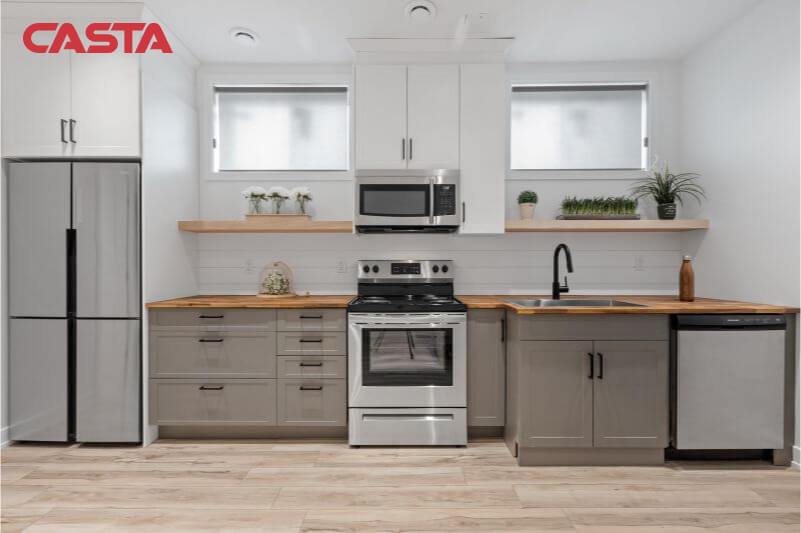
Image Source: castacabinetry.com
The Foundation of Your Kitchen: Base Cabinet Basics
Kitchen base cabinets are the workhorses of your kitchen storage. They sit directly on the floor and support your countertops, providing ample storage for pots, pans, dishes, small appliances, and pantry items. Their height is a critical factor in how you interact with your kitchen daily.
Standard Kitchen Cabinet Height: The 34.5-Inch Rule
The widely accepted standard kitchen cabinet height for base cabinets is 34.5 inches. This measurement refers to the cabinet box itself, without the countertop. When you add a typical countertop, which is usually 1.5 inches thick, you arrive at the standard kitchen counter height of 36 inches. This 36-inch height is considered the ideal ergonomic height for most adults to work comfortably at their kitchen counter for tasks like chopping vegetables, kneading dough, or preparing meals.
This standard height isn’t arbitrary; it’s based on years of design and user experience. It allows for comfortable reach, efficient workflow, and compatibility with standard appliance sizes like dishwashers and ovens.
Deciphering Base Cabinet Dimensions: Beyond Height
While height is a primary consideration, base cabinet dimensions encompass more than just their vertical measurement. Understanding these different aspects of base cabinet measurements is vital for proper planning and ensuring a perfect fit for your kitchen layout.
Lower Cabinet Depth: The Functional Footprint
The lower cabinet depth is another critical dimension. Most standard base cabinets have a depth of 24 inches for the cabinet box itself. This depth is important because it dictates the usable storage space inside and how far the cabinet extends into your kitchen.
- Standard Depth: 24 inches. This allows for ample storage and usually provides enough space to recess standard appliances like dishwashers and ranges.
- Countertop Overhang: Most countertops extend beyond the base cabinet box by about 1 to 1.5 inches, creating a total countertop depth of around 25 to 25.5 inches. This overhang offers a comfortable space for your hands when working at the counter and helps catch drips.
- Wall Clearance: It’s important to consider the wall behind the cabinets. Sometimes, pipes or uneven walls might require adjustments, but generally, the 24-inch depth is designed to fit flush against most walls.
Base Cabinet Width: A Range of Options
Base cabinets come in various widths, offering flexibility for different kitchen layouts and storage needs. The width is measured from one side of the cabinet box to the other.
- Common Widths: Standard widths typically range from 9 inches (for filler or narrow storage) to 48 inches.
- Grid System: Cabinet manufacturers often produce cabinets in 3-inch increments (e.g., 9, 12, 15, 18, 21, 24, 27, 30, 33, 36, 42, 48 inches). This modular approach allows for customization and efficient use of space.
- Corner Cabinets: These are specialized cabinets designed to handle corners and often have larger widths to accommodate the corner space. Their dimensions can vary significantly depending on the corner solution (e.g., lazy susan, pull-out shelves).
The Significance of Standard Kitchen Cabinet Height
Why stick to the standard 34.5-inch base cabinet height and 36-inch counter height? The reasons are deeply rooted in practicality and user comfort.
Ergonomics and Comfort: Designing for People
The typical kitchen cabinet height is designed with the average human body in mind. A 36-inch counter height allows most people to stand and work without excessive bending or reaching.
- Reduced Strain: Standing at a counter that’s too low can lead to back strain. Conversely, a counter that’s too high can cause shoulder and neck discomfort. The standard height strikes a balance.
- Efficient Workflow: The ability to comfortably chop, mix, and prepare food without awkward positioning contributes to a more efficient and enjoyable cooking experience.
- Accessibility: For individuals with mobility issues or those who use wheelchairs, a lower counter height might be preferred. However, the standard height is generally accessible for a broad range of people.
Appliance Compatibility: A Universal Fit
Many standard kitchen appliances are designed to fit within the space created by standard base cabinets and countertops.
- Dishwashers: Most built-in dishwashers are designed to fit under a standard 36-inch countertop, with their height typically adjustable between 34 and 35 inches.
- Ranges and Cooktops: Freestanding ranges are usually 36 inches tall. Drop-in cooktops are designed to sit within the countertop, and their installation height is directly influenced by the base cabinet and countertop height.
- Built-in Ovens: While less common in base cabinets (often in wall units), built-in ovens also have standard height considerations for integration.
Design Cohesion and Aesthetics: Creating a Unified Look
The consistent height of base cabinets and countertops creates a clean, continuous line around the kitchen. This visual cohesion is essential for a well-designed space.
- Seamless Transitions: It allows for a smooth transition between different cabinet configurations and countertop materials.
- Backsplash Harmony: The standard height provides a predictable space for the backsplash, ensuring it fits proportionally and aesthetically. The under cabinet height (the space between the countertop and the upper cabinets) is also impacted by the base cabinet height.
Variations in Base Cabinet Height and Dimensions
While 34.5 inches is the standard, there are situations where base cabinet heights might differ.
Customization for Specific Needs
Sometimes, custom solutions are required to meet specific ergonomic or design preferences.
- Lower Countertops: For individuals who are shorter or prefer to sit while working, base cabinets can be ordered or modified to be shorter, resulting in a lower counter height. For example, a 32-inch base cabinet would result in a 33.5-inch countertop.
- Taller Countertops: Conversely, taller individuals might opt for slightly taller base cabinets to achieve a higher counter height. A 35-inch base cabinet would lead to a 36.5-inch countertop.
- Appliance Requirements: Certain specialty appliances might have unique height requirements that necessitate a deviation from the standard.
Non-Standard Kitchen Cabinet Sizes
While less common, you might encounter kitchen cabinet sizes that deviate from the norm, especially in older homes or unique architectural designs.
- Older Homes: Kitchens built decades ago might have different standard measurements. It’s always wise to measure existing cabinets if you’re undertaking a renovation.
- European Standards: Some imported kitchens may adhere to different sizing conventions.
Understanding the “Toe Kick”
The toe kick is the recessed area at the very bottom of base cabinets, typically about 4 inches high and 3 inches deep. It allows you to stand closer to the counter without bumping your toes against the cabinet box. This is an integral part of the overall base cabinet design and contributes to the 34.5-inch total height.
Impact on Kitchen Cabinet Installation Height
The kitchen cabinet installation height for base cabinets is straightforward: they sit directly on the floor, with their top edge at 34.5 inches from the finished floor. The critical aspect of installation is ensuring they are level, plumb, and securely fastened to the wall studs for stability.
Common Kitchen Base Cabinet Dimensions Summary
To consolidate the key information, here’s a table summarizing the typical standard base cabinet dimensions:
| Dimension | Standard Measurement | Notes |
|---|---|---|
| Height | 34.5 inches | Cabinet box height (without countertop). |
| Counter Height | 36 inches | 34.5″ cabinet + 1.5″ standard countertop thickness. |
| Depth | 24 inches | Cabinet box depth (standard lower cabinet depth). |
| Counter Depth | 25-25.5 inches | 24″ cabinet depth + 1-1.5″ countertop overhang. |
| Widths | 9″ – 48″ (increments of 3″) | Common widths for standard base cabinets. Varies based on type. |
| Toe Kick Height | 4.5 inches (approx.) | Recessed area at the bottom, allowing foot clearance. |
| Toe Kick Depth | 3 inches (approx.) | Recessed area at the bottom, allowing foot clearance. |
Exploring Different Types of Base Cabinets and Their Measurements
The dimensions can vary slightly based on the type of base cabinet:
Standard Base Cabinets
These are the most common and are available in a wide range of widths, typically from 9 inches to 48 inches. Their height and depth usually adhere to the 34.5-inch height and 24-inch depth.
Sink Base Cabinets
These cabinets are designed to accommodate a kitchen sink and its plumbing.
- Width: Sink base cabinets are often wider than standard base cabinets to fit the sink bowl and any under-sink plumbing. Common widths are 30, 33, 36, and 48 inches.
- Height & Depth: They generally maintain the standard 34.5-inch height and 24-inch depth, though some modifications might be made to allow for sink installation.
Corner Base Cabinets
These are specifically designed to utilize corner spaces effectively.
- Dimensions: Their dimensions are calculated to fit into a corner and can be more complex. For example, a cabinet designed for a 90-degree corner might have a “L” shape or a specific width measurement that dictates how it meets another cabinet at the corner. They are often wider to compensate for the corner.
- Internal Storage: Often feature specialized storage solutions like lazy Susans or pull-out shelves to maximize accessibility in the deep corner.
Appliance Garage Base Cabinets
These are less common as base cabinets but can exist in specialized island designs or custom kitchens. They are integrated into the base cabinet structure to hide small appliances.
The Role of Upper Cabinets and Their Relationship to Base Cabinets
While this article focuses on base cabinets, it’s worth noting their relationship with upper cabinets. The standard under cabinet height (the vertical space between the countertop and the bottom of the upper cabinets) is typically 18 inches. This spacing is crucial for comfortable working and is directly influenced by the height of the base cabinets and the countertop.
Factors Influencing Your Base Cabinet Choices
When selecting kitchen cabinet sizes, consider these factors:
Your Height and Stature
If you are significantly taller or shorter than average, you might want to consider custom-height base cabinets for optimal ergonomics.
Cooking Habits and Preferences
Do you do a lot of baking that requires rolling dough? A slightly higher counter might be beneficial. Do you prefer to sit while prepping? A lower counter could be ideal.
Kitchen Layout and Workflow
The arrangement of your cabinets and appliances impacts how you move around the kitchen. Ensure your chosen dimensions support an efficient workflow.
Appliance Specifications
Always check the exact dimensions and installation requirements for any appliances you plan to integrate into your cabinetry.
Building Codes and Regulations
While less common for standard cabinet heights, some regional building codes might have specific requirements related to kitchen design and accessibility.
Frequently Asked Questions About Kitchen Base Cabinets
Q: Can I install base cabinets that are taller or shorter than the standard 34.5 inches?
A: Yes, you absolutely can. While 34.5 inches is the standard, many manufacturers offer custom height options, or you can work with a cabinet maker to create bespoke base cabinets. This is often done to achieve a custom counter height that better suits individual needs or specific appliance requirements.
Q: What is the standard depth for kitchen base cabinets?
A: The standard depth for the cabinet box itself is 24 inches. This allows for ample storage and accommodates standard countertop overhangs and appliance recessing.
Q: How much space should I leave between my base cabinets and upper cabinets?
A: The typical space, often referred to as the under cabinet height, is 18 inches. This provides comfortable working clearance for most tasks at the countertop.
Q: Does the toe kick affect the overall height of my kitchen counter?
A: The toe kick is part of the base cabinet structure. The 34.5-inch height of the base cabinet already accounts for the toe kick. When a countertop is added, it brings the total working height to the standard 36 inches.
Q: What are the most common widths for base cabinets?
A: Base cabinets are commonly available in widths ranging from 9 inches up to 48 inches, typically in 3-inch increments.
Q: What is the purpose of the toe kick on base cabinets?
A: The toe kick is a recessed area at the bottom of the cabinet. It allows you to stand closer to the countertop without bumping your toes against the cabinet box, improving comfort and ergonomics while working.
Q: How do I ensure my base cabinets are the correct height for my new countertop?
A: Always confirm the final desired counter height first. If you want a 36-inch counter and your countertop material is 1.5 inches thick, you’ll need base cabinets that are 34.5 inches tall. Double-check measurements with your countertop fabricator.
Q: Are there different depths for base cabinets?
A: While 24 inches is the standard lower cabinet depth, some custom options or specialized cabinets might exist with different depths, but these are less common for primary base cabinetry.
Conclusion: Building on a Solid Foundation
The standard kitchen cabinet height of 34.5 inches for base cabinets, leading to a 36-inch kitchen counter height, is a cornerstone of modern kitchen design. It is a carefully considered dimension that balances ergonomics, appliance compatibility, and aesthetic appeal. By understanding these base cabinet dimensions, you can make informed decisions during your kitchen planning process, ensuring a functional, comfortable, and beautiful space that serves you well for years to come. Whether you are embarking on a full renovation or simply replacing a few cabinets, knowing the standard kitchen cabinet sizes will set you on the right path for a successful project.