
The standard kitchen countertop depth is typically 25 inches. This measurement refers to the depth of the countertop from the front edge to the back, before any countertop overhang depth is considered. This standard depth is designed to accommodate the kitchen cabinet depth, which is usually 24 inches, allowing for a comfortable overhang.
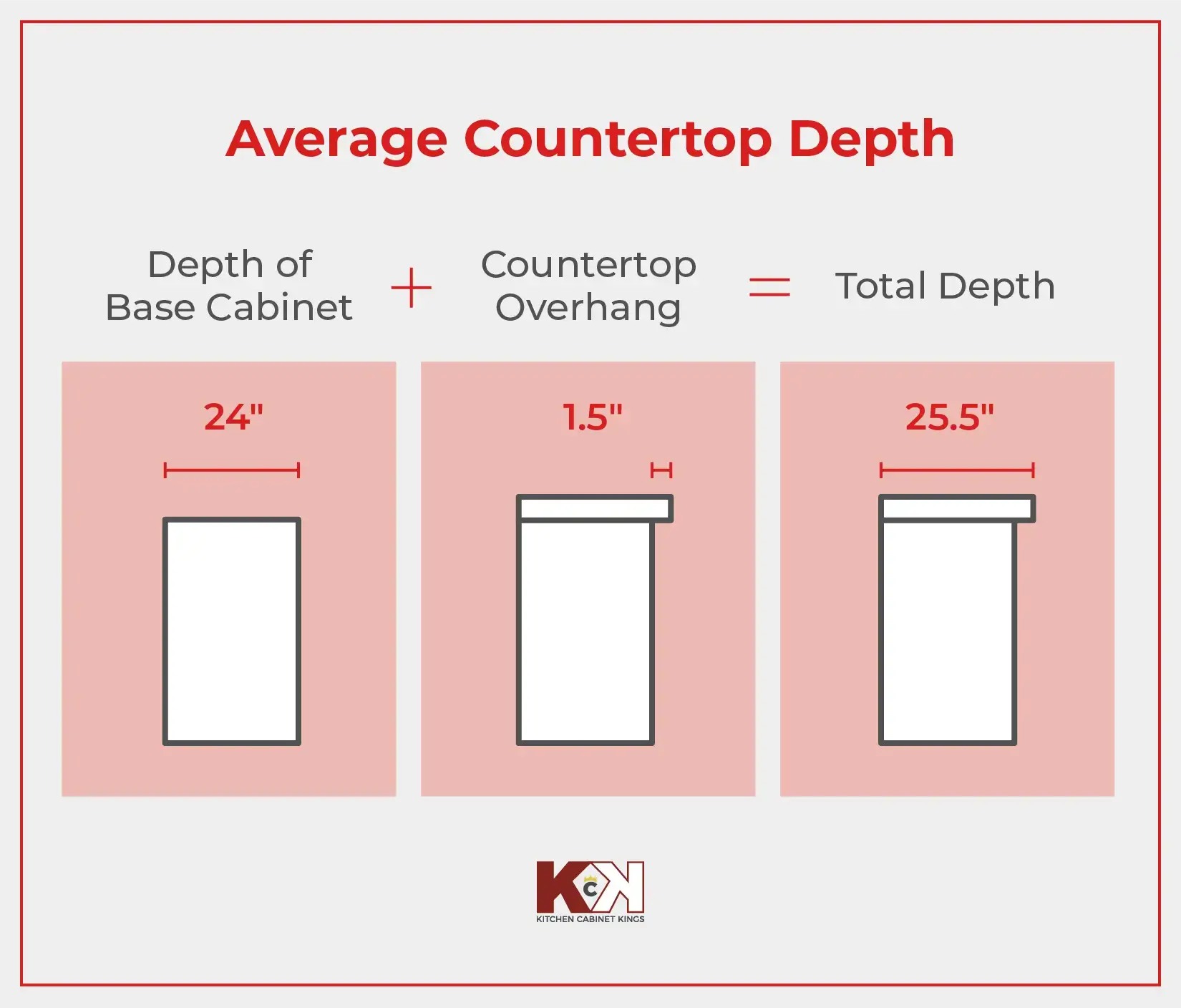
Image Source: cdn.kitchencabinetkings.com
The Foundation of Functionality: Standard Countertop Dimensions
When you’re planning a kitchen renovation or building a new one, the size of your countertops matters a lot. The depth of your kitchen countertops plays a huge role in how you use your kitchen. It affects how much you can place on them and how comfortably you can work. Let’s dive into the typical measurements that make a kitchen functional.
Standard Kitchen Counter Depth Explained
The standard kitchen counter depth is the measurement from the front edge of your countertop to the back, where it meets the wall or backsplash. For most kitchens, this depth is 25 inches. This measurement isn’t arbitrary; it’s carefully chosen to balance usability with the space available within the kitchen.
Why 25 Inches? The Rationale Behind the Standard
The 25-inch depth is a widely accepted standard counter depth inches because it perfectly complements the kitchen cabinet depth, which is generally 24 inches. This extra inch provides a slight countertop overhang depth at the front. This overhang serves several crucial purposes:
- Protection: It shields the front edge of your cabinets from spills and drips, making cleanup easier and protecting the cabinet finish.
- Ergonomics: It allows for comfortable elbow placement when standing at the counter, preventing you from bumping into the cabinets.
- Aesthetics: It creates a clean, finished look for the cabinetry.
Countertop Overhang Depth: More Than Just an Extension
The countertop overhang depth is the part of the countertop that extends beyond the front of the base cabinets. While the standard overhang is 1 inch (making the total countertop depth 25 inches when cabinets are 24 inches deep), this can be adjusted.
- Standard Overhang: 1 inch. This is the most common and recommended for most kitchens.
- Seating Overhang: If you plan to have seating at your countertop (like an island or breakfast bar), you’ll need a deeper overhang. Typically, 12 to 15 inches is recommended for comfortable legroom when seated. This will require a deeper countertop slab or specialized support.
The Relationship Between Countertop and Cabinet Depth
It’s essential to remember that your countertop’s depth is directly tied to your kitchen cabinet depth. Base cabinets are the foundation of your countertop installation.
- Standard Base Cabinet Depth: 24 inches. This is the typical measurement from the front of the cabinet doors or drawers to the back panel.
- Countertop Fit: The countertop is installed on top of these cabinets. The 25-inch kitchen counter depth (including the 1-inch overhang) allows the countertop to sit flush with the front of the cabinet doors/drawers and extend slightly beyond them.
Exploring the Spectrum of Countertop Depths: Beyond the Standard
While 25 inches is the standard, the world of kitchen design allows for variations. Sometimes, you might encounter or even desire deep kitchen counters or shallower options. These variations are often driven by specific needs, design choices, or appliance requirements.
The Benefits of Deep Kitchen Counters
Deep kitchen counters can offer significant advantages, especially for those who love to cook or entertain. A greater workspace depth kitchen means more room to work with.
- Enhanced Workspace: A deeper countertop provides more workspace depth kitchen. This is invaluable for prepping meals, placing appliances side-by-side, or spreading out ingredients. Imagine a recipe requiring lots of chopping or multiple small appliances; a deeper counter makes this much less cluttered.
- Appliance Accommodation: Some larger or specialized appliances, like deeper refrigerators or professional-style ranges, might benefit from or even require deeper countertops to sit flush or integrate seamlessly.
- Aesthetic Statement: Deeper countertops can create a more substantial and luxurious look, adding visual weight and grandeur to your kitchen design.
Common Deeper Countertop Depths
If you opt for deeper countertops, you might encounter dimensions like:
- 30 inches: This offers a substantial increase in workspace depth kitchen.
- 36 inches: This is quite deep and usually found on large islands or specialized workstations.
When choosing deeper countertops, consider the following:
- Cabinet Availability: Standard cabinets are typically 24 inches deep. To achieve a 30-inch countertop depth, you might need custom cabinets that are 29 inches deep to accommodate the standard 1-inch overhang.
- Kitchen Size: Very deep countertops can make smaller kitchens feel cramped. Ensure the depth complements the overall scale of your room.
- Reachability: Extremely deep countertops can make it difficult to reach items placed at the back. This is where a good countertop overhang depth at the front can help, but it’s a balance.
When Might You Need Shallower Countertops?
In some specific situations, shallower countertops might be considered:
- Very Small Kitchens: In extremely compact kitchens where every inch counts, slightly shallower countertops (perhaps 24 inches) might be chosen to maximize walking space. However, this often means foregoing the standard overhang and potentially the full functionality of standard cabinets.
- Appliance Depth: If you’re installing a specific appliance that is shallower than standard, you might adjust countertop depth for a more flush appearance, though this is less common.
Factors Influencing Countertop Depth Choices
Deciding on the perfect kitchen counter depth involves more than just picking a number. Several factors should guide your decision to ensure your kitchen is both beautiful and highly functional.
Design and Layout Considerations
The overall kitchen layout and design style significantly impact the ideal countertop depth.
- Kitchen Size and Flow: In large, open-plan kitchens, deeper countertops or substantial islands can be a design feature. In smaller kitchens, sticking to the standard depth (or even slightly less on specific runs) can help maintain better traffic flow and prevent the space from feeling claustrophobic.
- Island Design: Kitchen islands are often where you’ll see variations in depth. A larger island might feature a deeper countertop section for prep work or a significant countertop overhang depth for seating.
- Aesthetic Goals: A more minimalist design might favor clean lines and standard depths, while a grander, more traditional kitchen might incorporate deeper countertops for a sense of substance.
Ergonomics and User Comfort
How you use your kitchen is paramount. The kitchen work surface depth should support your activities.
- Cooking Habits: Avid cooks often appreciate more workspace depth kitchen. If you frequently use multiple appliances or need ample room for food preparation, a deeper counter can be a game-changer.
- Appliance Placement: Consider the depth of your appliances. Standard ranges are around 24-27 inches deep. Newer professional ranges can be deeper. If you want your countertop to be flush with or extend beyond a deeper appliance, you’ll need to factor that into your countertop depth.
- Seating Needs: As mentioned, if your island or peninsula will serve as a dining spot, the countertop overhang depth is critical. A 12-15 inch overhang is standard for bar stools. This requires the countertop to extend significantly beyond the supporting cabinets.
Appliance Integration and Clearance
The countertop depth dimensions need to work seamlessly with your appliances.
- Refrigerators: Standard refrigerators are often 30-33 inches deep, with counter-depth models being around 25-27 inches. If you have a counter-depth refrigerator and want the countertop to be flush or overhang it slightly, a standard 25-inch countertop depth usually works well. For standard refrigerators, a 25-inch countertop will overhang the appliance by a few inches.
- Ranges and Cooktops: The depth of your range or cooktop will influence your countertop needs, especially around the cooktop area.
- Dishwashers: Most dishwashers are 24 inches deep and are installed flush with the front of base cabinets. Your countertop will typically overhang them by about 1 inch.
Material Considerations and Support
The material you choose for your countertops can also influence the practicalities of depth and overhang.
- Material Strength: Materials like granite, quartz, and marble are strong and can support overhangs without issues, provided they have adequate support.
- Overhang Limitations: Very deep overhangs, especially on islands without sufficient support, can put stress on the countertop material. It’s crucial to consult with your fabricator about the maximum overhang possible for your chosen material and how to provide adequate support (e.g., hidden brackets, thicker slabs).
- Seams: Deeper countertops, especially on islands, might require seams in the material, depending on the slab size available.
Measuring and Planning Your Countertop Depth
Accurate measurements are the bedrock of a successful kitchen project. When planning your kitchen counter depth, careful consideration of your existing or planned cabinetry is essential.
How to Measure Your Existing Countertop Depth
If you have existing countertops and are looking to replace them or simply want to know your current measurements:
- Locate the Front Edge: Find the very front edge of your countertop.
- Locate the Back Edge: Identify where the countertop meets the backsplash or wall.
- Measure: Use a tape measure to get a straight line measurement from the front edge to the back edge. This measurement is your kitchen counter depth.
- Check the Overhang: Measure from the front of your cabinet doors/drawers to the front edge of the countertop. This will tell you your countertop overhang depth.
Planning for New Countertops: What to Consider
When ordering new countertops, you’ll be working with your cabinet measurements.
- Cabinet Box Depth: The primary measurement is the depth of your base cabinet boxes. This is usually 24 inches for standard cabinets.
- Door/Drawer Fronts: Remember that cabinet doors and drawer fronts add a small amount of depth (usually about 3/4 inch to 1 inch) to the cabinet box itself.
- Countertop Slab Depth: You’ll typically order a countertop slab that is 25 inches deep for a standard 24-inch cabinet box to achieve the 1-inch overhang.
- Custom Depths: If you are opting for custom cabinets or a specific look, communicate your desired kitchen counter depth to your cabinet maker and countertop fabricator to ensure everything aligns.
The Role of Kitchen Cabinet Depth in Countertop Dimensions
As highlighted, kitchen cabinet depth is the foundation.
- Standard 24-inch cabinets: Result in a 25-inch countertop depth with a 1-inch overhang. This is the most common setup and provides an excellent workspace depth kitchen.
- Shallower cabinets (e.g., 18 inches): If you use shallower cabinets, you’ll need shallower countertops to avoid an excessive overhang that looks awkward or compromises support. A 19-inch countertop would be standard for 18-inch cabinets.
- Deeper cabinets (e.g., 30 inches): If you opt for deeper cabinets, you would order 31-inch countertops for the standard 1-inch overhang. This creates a very generous workspace depth kitchen.
Common Kitchen Countertop Depth Scenarios
Let’s look at some typical scenarios you might encounter when thinking about countertop depth dimensions.
Scenario 1: The Standard Kitchen
- Cabinets: Standard 24-inch deep base cabinets.
- Countertop Depth: 25 inches.
- Overhang: 1 inch.
- Outcome: This provides the typical, highly functional kitchen work surface depth that most kitchens are designed around. It offers good prep space and accommodates most standard appliances.
Scenario 2: The Island with Seating
- Cabinets: Standard 24-inch deep base cabinets.
- Countertop Depth: 36 inches (or more, depending on the desired seating).
- Overhang: 12-15 inches for seating, with the remaining depth covering the cabinets and potentially a decorative panel at the back.
- Outcome: This creates a multi-functional island with ample workspace depth kitchen for cooking and a comfortable area for dining. The deeper countertop slab and support are critical here.
Scenario 3: Appliance-Focused Design
- Appliance: A deeper professional range (e.g., 30-inch depth).
- Cabinets: Standard 24-inch deep base cabinets.
- Countertop Depth: 25 inches, allowing the countertop to be flush with the cabinet fronts and overhang the range by about 1 inch.
- Outcome: This provides a visually cohesive look where the countertop and appliance front are aligned. If a deeper countertop was desired, say 30 inches, it would significantly overhang the range and potentially make the kitchen work surface depth feel overwhelming in that area.
Frequently Asked Questions (FAQ)
What is the standard kitchen countertop depth?
The standard kitchen counter depth is 25 inches. This measurement includes a 1-inch overhang beyond the typical 24-inch deep base cabinets.
Can I have deeper kitchen counters?
Yes, you can have deep kitchen counters. Common deeper depths include 30 inches or even 36 inches, often used for kitchen islands or specific workspace needs. This requires deeper cabinets and consideration for material support.
What is the standard countertop overhang depth?
The standard countertop overhang depth at the front of the cabinets is typically 1 inch. For seating areas like islands or peninsulas, overhangs of 12 to 15 inches are common.
How does kitchen cabinet depth affect countertop depth?
The kitchen cabinet depth is the base upon which the countertop sits. A standard 24-inch cabinet depth pairs with a 25-inch countertop depth to create a 1-inch overhang. Deeper or shallower cabinets will require corresponding countertop depths to maintain the desired overhang and aesthetic.
What are typical counter depth dimensions?
Typical counter depth dimensions for countertops are 25 inches (standard), with deeper options often being 30 inches or 36 inches.
What is the average kitchen counter height?
While the question is about depth, it’s worth noting that the average kitchen counter height is 36 inches from the floor to the top of the countertop. This height is ergonomic for most adults.
What is the ideal workspace depth kitchen?
For most tasks, a workspace depth kitchen of 25 inches (the standard) is ideal. For more extensive prep work or appliance use, deeper counters (30 inches or more) can be beneficial.
How do I choose the right kitchen counter depth?
Consider your kitchen size, cooking habits, appliance needs, and aesthetic preferences. The standard 25-inch depth is versatile, but deeper counters can enhance functionality if space and budget allow. Always ensure adequate support for any significant overhangs.